
The Difference Between Crypto Casinos and Traditional Online Casinos
Two online casino models have developed in parallel since the late 1990s. One grew out of the European licensing regime; the other emerged from the cryptocurrency culture of the early 2010s. The technical and regulatory distances between them remain considerable.
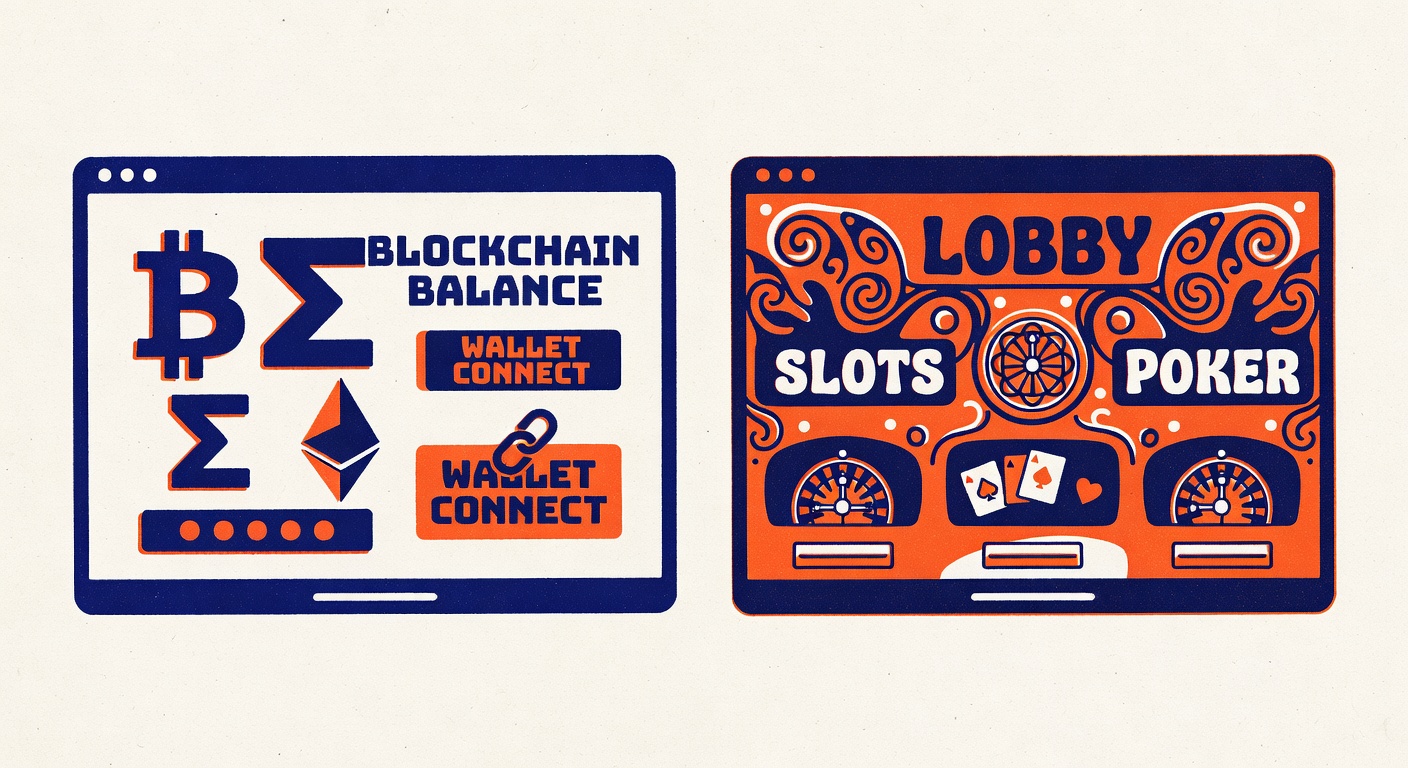
The question is whether crypto casinos and traditional online casinos belong to the same industry at all.
On the surface, both offer slot machines, blackjack tables, and sportsbooks to remote users. Both accept funds, hold balances, and pay winners. Yet their regulatory lineage, their technical stacks, and their assumptions about the player diverge so sharply that treating them as a single category tends to obscure more than it clarifies. The distinction is worth drawing carefully, because it determines which consumer protections apply, which tax regime governs winnings, and how disputes are actually resolved.
The lineage of the traditional online casino
The first generation of online casinos appeared in 1994 and 1995, shortly after Antigua and Barbuda passed the Free Trade and Processing Act. Microgaming, a software provider, is generally credited with the first functional casino software that year, and InterCasino launched in 1996 under an Antiguan license. The model inherited from those early years has been durable: a player deposits fiat currency via bank card, wire transfer, or an e-wallet such as Neteller (founded 1999) or Skrill (founded 2001, then called Moneybookers); the operator holds the balance in a segregated account; a regulator such as the Malta Gaming Authority (established 2001) or the UK Gambling Commission (established 2005) oversees the operator.
Two structural features of this model matter. First, the chain of custody over player funds is long. Deposits pass through a payment processor, a card network, and sometimes an acquiring bank before reaching the operator. Second, the regulator has a claim on the operator that is enforceable in a recognizable court system. If a player in Hamburg disputes a withdrawal from a Maltese-licensed operator, there is a known procedure, and the operator's license is at stake.
The lineage of the crypto casino
The crypto casino model emerged much later, from a different cultural substrate. SatoshiDice, launched in April 2012, is often cited as the first recognizably crypto-native gambling site; it ran on Bitcoin and used the blockchain itself as the settlement rail. BitStarz, Stake, and similar operators followed, frequently incorporated in Curacao (whose gaming framework dates to 1996 but became disproportionately popular with crypto operators in the 2017 to 2020 period).
The technical architecture differs in a way that has legal consequences. A deposit at a crypto casino is a blockchain transaction from the player's wallet to the operator's wallet. No card network is involved; no bank sits between the player and the operator. Withdrawal, similarly, is a wallet-to-wallet transfer. Know-your-customer checks exist, but they often trigger only above certain thresholds and are applied by the operator itself rather than by an upstream payment processor.
Some crypto casinos take the additional step of publishing provably fair mechanisms, in which the player can verify, using a cryptographic hash, that the outcome of a given hand or spin was not altered after the fact. Traditional online casinos rely instead on third-party testing laboratories, such as eCOGRA (founded 2003) or GLI (Gaming Laboratories International, which traces to 1989), to certify their random number generators.
The regulatory gap
The practical difference for a player is most visible when something goes wrong. A player with a grievance against a UK-licensed operator can escalate through the UK Gambling Commission's ADR framework, and ultimately to the Commission itself. Operators know this, and the threat of license revocation shapes behavior.
A player with a grievance against a Curacao-licensed crypto casino has fewer levers. The Curacao framework underwent substantial reform beginning in 2023 with the introduction of the Landsverordening op de Kansspelen (LOK), which replaced the older master-and-sublicense system with direct licenses. The reform is still being implemented, and the effective strength of consumer protection in that jurisdiction remains a subject of active debate.
The regulatory gap also explains why crypto casinos have been able to operate in grey areas of the market that traditional operators cannot touch. A traditional casino that accepts a deposit from a jurisdiction where online gambling is prohibited risks its license, its banking relationships, and, in some cases, criminal prosecution of its executives. A crypto casino operating from a permissive jurisdiction faces a different risk profile: blockchain transactions are harder to block at the payment-rail level, though not impossible, as the United States Department of Justice demonstrated in its 2021 seizure actions against certain operators.
Volatility, bankroll, and the meaning of a balance
The ledger of a traditional online casino is denominated in a fiat currency. A balance of one thousand pounds is one thousand pounds today and one thousand pounds tomorrow. The ledger of a crypto casino is often denominated in cryptocurrency itself, or in a stablecoin pegged to a fiat currency. A player who deposits one Bitcoin at 30,000 US dollars and withdraws one Bitcoin at 40,000 US dollars has, in one sense, broken even; in another sense, has made 10,000 US dollars.
This introduces a second source of variance that is independent of the games. Some operators offer fiat-denominated wallets even when deposits arrive in cryptocurrency, converting at the moment of deposit. Others keep the balance in the native asset. The distinction is not trivial. It changes the tax treatment in most jurisdictions, because crypto-to-crypto transactions are generally taxable events in the United States, the United Kingdom, and Germany, among others.
Convergence, or continued divergence
There are signs of convergence at the edges. Some traditional operators have added cryptocurrency as a deposit method while keeping a fiat ledger. A handful of jurisdictions, notably Isle of Man and Gibraltar, have issued licenses to crypto-native operators under essentially traditional frameworks. The 2023 to 2025 period in Curacao may produce a regulatory regime that looks more familiar to observers of Malta or the United Kingdom.
There are also signs of continued divergence. The decentralized finance protocols that have appeared since 2020, in which the casino itself is a smart contract rather than a corporate entity, do not map onto any existing regulatory framework. Whether those protocols are casinos in the legal sense, or something else entirely, is a question the courts have not yet fully resolved.
The two models, then, are not simply different interfaces to the same product. They rest on different trust assumptions, different dispute resolution mechanisms, and different theories of what a casino's relationship to its players should be. A player who understands the distinction is better placed to choose which set of trade-offs suits them.