
Don Johnson: The Blackjack Player Who Beat Atlantic City for $15M
Between December 2010 and April 2011, Don Johnson extracted roughly fifteen million US dollars from three Atlantic City casinos without counting cards or hiding his play. The episode exposes a recurring vulnerability in the casino's pricing of its own promotional programs.
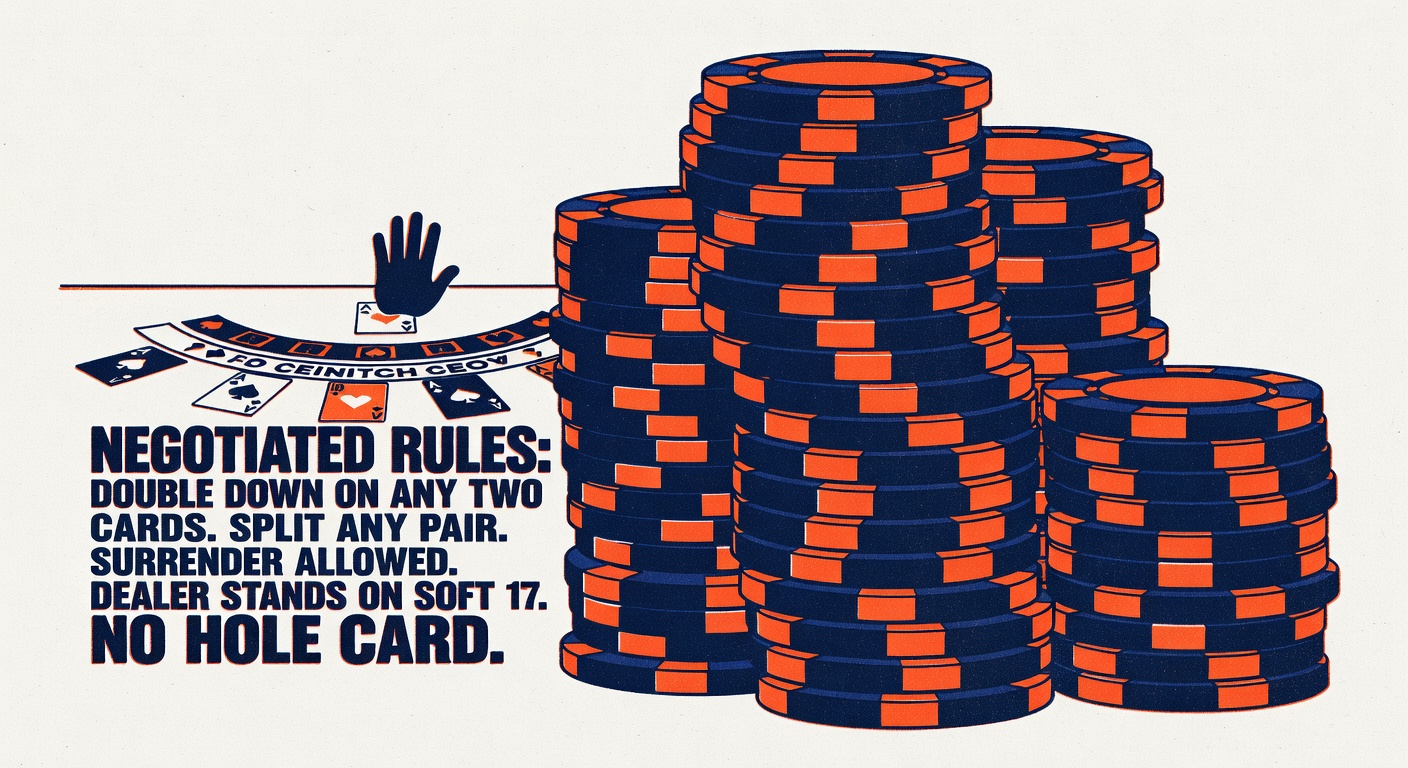
Don Johnson did not cheat, and he did not count cards. He negotiated.
The case is significant precisely because the casino industry tends to treat beating the house as a matter of mathematics or deception. Johnson's story is neither. It is the story of a professional gambler who understood, better than the pit bosses across from him, the value of the terms being offered in a promotional contract.
The subject and the setting
Don Johnson, born in 1962 and at that point CEO of a horse-racing handicapping firm called Heritage Development, was a known player in the Atlantic City market. He had played at several East Coast properties for roughly a decade. He was not a high-profile celebrity, but he was a recognized customer who brought steady, substantial blackjack action. The Atlantic City properties he played at in late 2010 and early 2011 were the Tropicana, the Borgata, and Caesars.
The timing matters. Atlantic City revenue was in serious decline. Total gaming revenue for Atlantic City had fallen from its 2006 peak of approximately 5.2 billion US dollars to well below 4 billion US dollars by 2010, and it would continue to fall. Several Atlantic City properties were operating under financial pressure, and competition for high-limit table game customers was intense. Pennsylvania's casino expansion had drained a meaningful share of Atlantic City's traditional customer base.
The negotiation
Johnson approached the casinos with a proposition. He would play blackjack at high stakes, up to 100,000 US dollars per hand, and in exchange he wanted specific concessions.
- A 20 percent loss rebate on any net losses over a session. That is, if he lost 1 million dollars, the casino would refund 200,000 dollars.
- Favorable rules, including the ability to split pairs up to four times, double down on any two cards, and for the dealer to stand on soft seventeen.
- A hand-shuffled single shoe of six decks, with deep penetration.
- Elimination of the usual comps and promotional chips, replaced with the straight rebate.
The casinos agreed. Each believed that the edge of the game plus Johnson's expected variance would produce a house win on average even with the rebate. The edge of blackjack under the specified rules, with basic strategy play and without counting, is approximately 0.26 percent. For a player wagering 100,000 dollars per hand, the expected loss per hand is 260 dollars. Over a session of several hundred hands, the expected house win is in the low six figures.
The mathematics the casinos missed
What the casinos underestimated was the effect of the loss rebate on the player's effective edge under optimal stopping. A rebate paid only if the player is down at the end of a session creates an asymmetry. The player's upside is uncapped; the downside is compressed by twenty percent. If the session ends when the player is ahead, the rebate does not apply, and the player keeps the full win. If the session ends with the player behind, the rebate returns a fifth of the loss.
A player who chooses her stopping point to maximize the asymmetry can convert the rebate into a substantial effective edge. The optimal strategy is to continue while ahead, stop and collect when behind past a certain threshold, and avoid long sessions whose expected loss would consume the rebate's value. Under plausible assumptions about bet size, session length, and stopping rules, a 20 percent loss rebate can produce a net player advantage of roughly 0.5 to 1 percent, which is large by casino-game standards.
Johnson appears to have known this. Whether he worked out the mathematics independently or received advice from a consulting firm is a detail he has declined to fully clarify in subsequent interviews. The arithmetic was within reach of anyone with a background in advantage play.
The sessions
The actual sessions occurred over December 2010, January and February 2011, and April 2011. Johnson won approximately 5 million US dollars from the Tropicana in one April session, roughly 4.2 million from the Borgata over several sessions, and approximately 4 million from Caesars. The exact figures varied in different press accounts. The combined total, widely reported as 15 million US dollars, is close to accurate based on regulatory filings in New Jersey.
The Tropicana session in April 2011 had a specific and public consequence. Mark Giannantonio, then president of the Tropicana, was terminated in the following months. The property's Q1 2011 earnings were materially affected by the loss.
What happened afterward
Johnson did not hide his story. He sat for a lengthy interview with The Atlantic in April 2012, published under the title The Man Who Broke Atlantic City by Mark Bowden, which remains the canonical account. He spoke freely about the rebate structure, the rule conditions, and the reasoning behind his play.
The casino industry's response was incremental. Atlantic City properties tightened the terms of their rebate offers and became more cautious about extending them to unknown high-limit players. The mathematical insight, however, is not new and had been known to quantitative advantage players for decades. Similar structures had been exploited in baccarat rebate programs in Las Vegas and in junket operator arrangements in Macau. Johnson's contribution was to execute it publicly at a scale and in a jurisdiction where the results were regulatory matters of record.
What the episode reveals
The Don Johnson case reveals a structural feature of the casino industry that is easy to miss. The house edge on the table game is one source of revenue. The promotional program is another, ostensibly revenue-neutral or mildly revenue-positive. When the two are combined without careful mathematical analysis, the promotional program can overwhelm the game's edge and produce a net negative for the house.
Most promotional programs are calibrated such that this does not happen. Johnson's achievement was to identify, negotiate, and execute under terms in which it did happen. The casinos that agreed to those terms did so because they wanted the action and because they believed their models accounted for the rebate. In at least three cases, the models did not.
The broader lesson, familiar to quantitative traders and to advantage players alike, is that the party with the deeper understanding of the contract's tails tends to capture its value. Atlantic City learned the lesson at the cost of about 15 million dollars. Don Johnson, after the dust settled, returned to his handicapping business, having delivered one of the better-documented demonstrations of the principle in recent gambling history.