
Fear and Loathing in Las Vegas: Gambling Culture on Acid
Hunter Thompson's 1971 trip report is usually read as a drug book. Read as a gambling book, it is a better one. Here is how the Thompson version of the Strip compares to what the math actually says about the house.
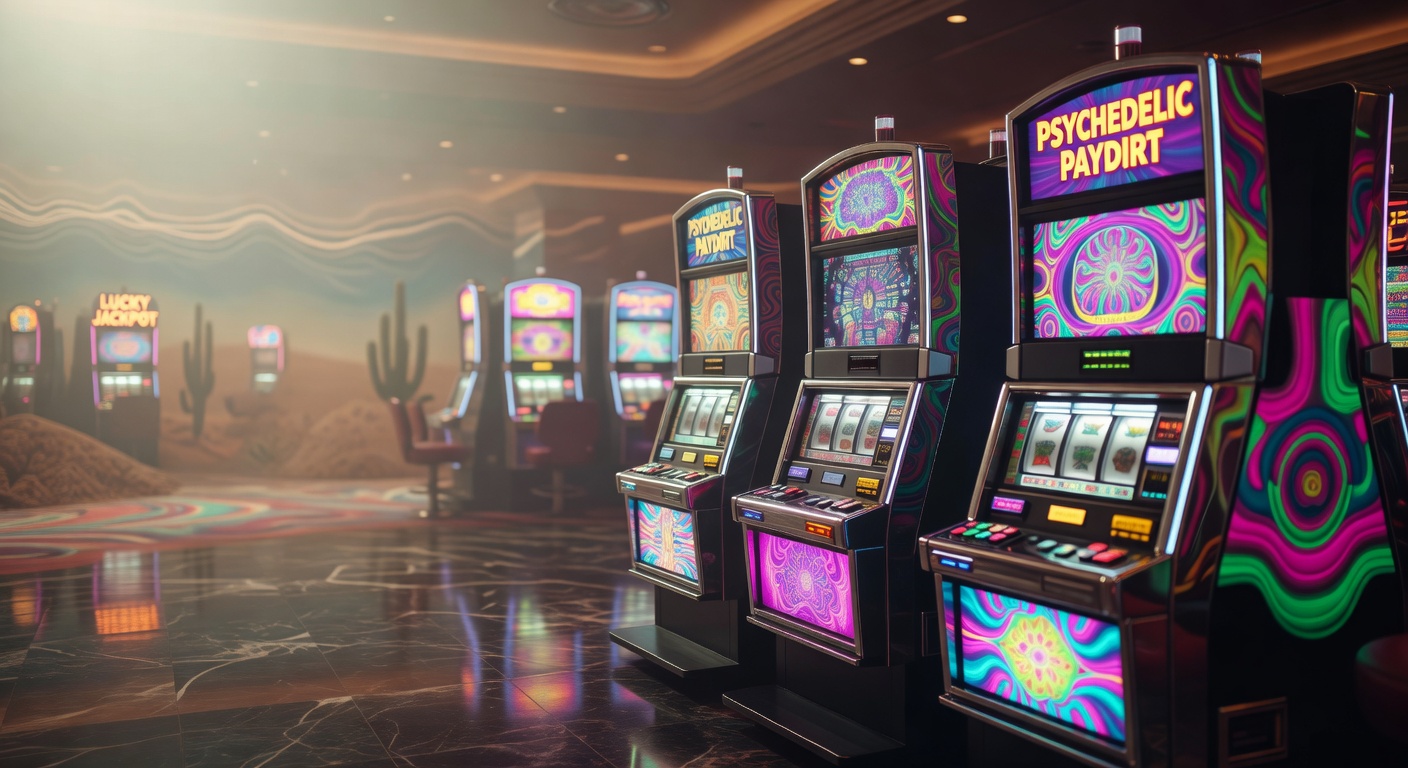
Hunter Thompson published Fear and Loathing in Las Vegas in 1971. My job is modeling sports markets, not literary criticism. But the book is set inside two casinos I have studied the expected value of, and it remains one of the few serious pieces of writing about the feeling of a losing session. Worth comparing, on the same axes, against the numbers.
I will compare two gambling cultures here. First, the Thompson Vegas of 1971: the Circus-Circus, the Flamingo, the Desert Inn. Second, the current Strip: MGM Resorts properties, Caesars, Station, plus the online sportsbooks that now sit inside those same apps. Same dimensions, same order.
The house edge the player was facing
In 1971, single-deck blackjack was still easy to find on the Strip. Rule sets varied, but a player using basic strategy on a single deck with dealer standing on soft 17 was up against a house edge of roughly 0.15 percent. Craps pass line plus full odds, same story, tiny edge. Roulette was the European wheel at a few downtown shops, single zero, 2.70 percent.
Today the Strip is six-deck shoes, dealer hits soft 17, 6:5 payouts on blackjack at most tables under 25 dollars. That is a house edge closer to 1.8 to 2.0 percent depending on rules. Roulette on the Strip is dominantly double-zero, 5.26 percent. The Thompson-era mug punter was getting a better game than today's mug punter. By a lot.
Speed of play
1971 blackjack ran around 60 to 80 hands per hour at a full table. Craps rolled through a shooter in real time. The expected loss per hour for a 25 dollar bettor at a single-deck table with 0.15 percent edge was under 2 dollars an hour. You could lose your mind on drugs and still be roughly flat.
Today the same 25 dollar bettor on a 6:5 shoe loses 30 to 40 dollars an hour in expectation. Add a side bet, double it. The online version inside your phone? 300 to 700 spins per hour on slots at whatever volatility you pick. Expected loss scales linearly with decisions per hour. More decisions, same edge, more burn.
Signal versus noise in the room
Thompson's Vegas was a low-signal environment. No in-room sportsbook app, no promotional pings, no live odds on a screen above the toilet. The only decisions a gambler made came from a pit boss writing a marker or a cocktail waitress refilling a drink. Dead time between bets functioned as a natural governor on bankroll depletion.
Present-day Vegas is a high-signal environment by design. The BetMGM app pushes in-game parlays during the cab ride. The casino floor has digital side-bet displays every 20 feet. Every minute of dead time has been monetized. If you care about closing line value or model edge, none of this signal is useful to you. It is targeted at the customer whose process is worst.
What a professional would conclude
I make bets on NFL totals and MLB run lines. I do not play the tables. Every time a friend asks me whether the Strip is still worth a trip, my answer is the same: it is a better show than it was in 1971, and it is a worse bet than it was in 1971. Those two facts are not independent. The show is financed by the worse bet.
The worst thing you can say about modern Vegas is that it took a game where the house had a 0.15 percent edge and sold it back to the same customer as a show with a 2 percent edge.
A couple of dimensions where Thompson's Vegas was worse:
- Marker enforcement was rougher. The collection side of a line of credit was not all lawyers.
- Comp structures were ad hoc and not math-driven. A loose pit boss could hand out rooms well above expected loss.
- Counting blackjack was still live. Today you will be backed off in six shoes if you spread your bets with any pattern.
A recommendation, since the comparison produced one
If you want the Thompson experience, read the book. The 1971 games are not coming back. If you want to play tables in Vegas in 2024, your only decent +EV angle is to skip the 25 dollar 6:5 tables on the Strip entirely and drive to a locals property where 3:2 blackjack with better rules still exists at 10 dollars. The math rewards the drive.
If you want to bet sports, do it inside one of the apps that offers same-game parlay boost tokens, take the tokens, fade the parlays. The tokens are a real edge. The parlays are not.
None of this will feel like 1971. It will, however, lose you less money.