
What Is Online Gambling Regulation and Why Does It Exist?
Online gambling regulation gets bashed as overreach or lauded as protection, depending on who you ask. Here are the biggest claims on both sides and what is actually going on underneath.
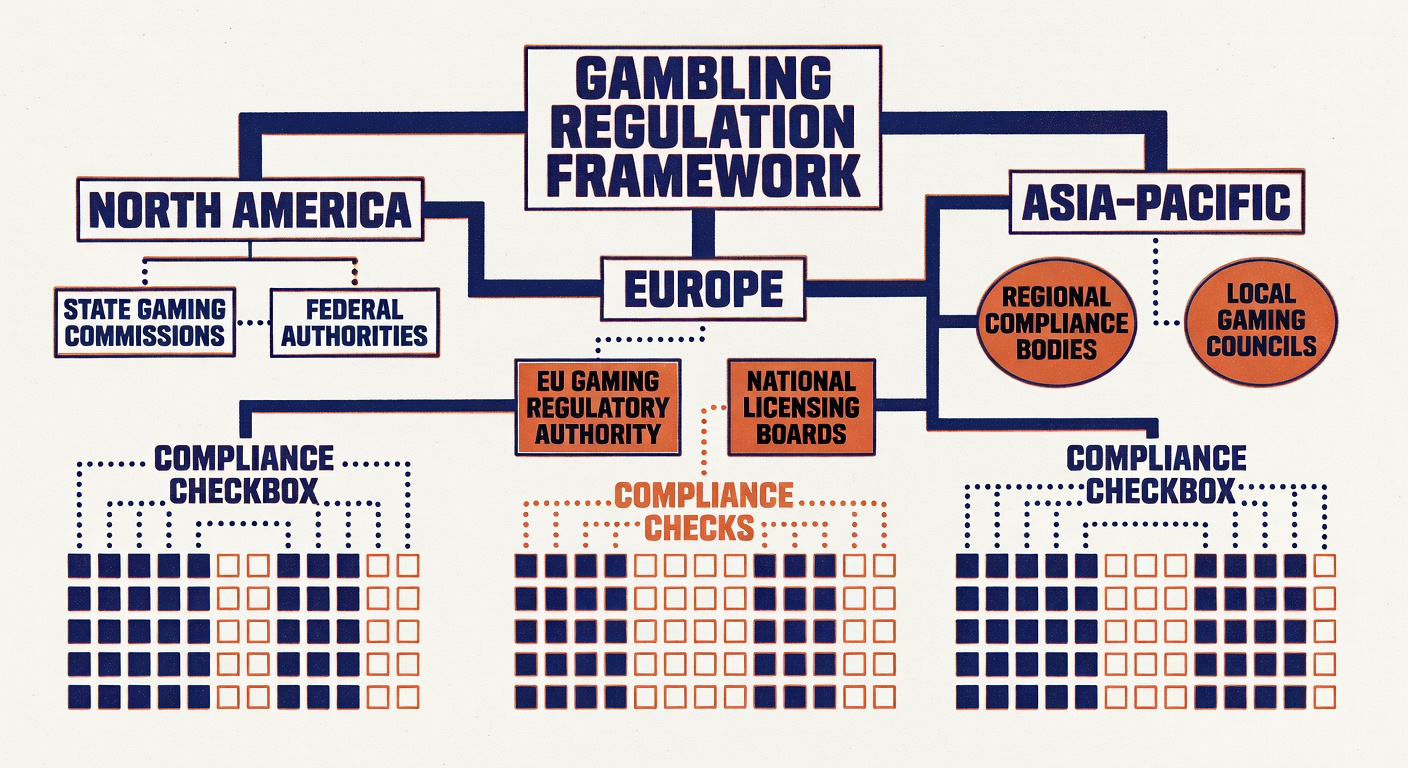
Online gambling regulation. Everyone has an opinion. Half of it is wrong. Let me actually walk through the claims and realities because this affects you as a player more than most people realize.
Claim 1: Regulation Is Just About Taxes
The claim: Governments regulate online gambling because they want a cut of the revenue. Everything else is window dressing.
Reality: Tax revenue is a motivator, but not the only one. The UK Gambling Commission, formed under the Gambling Act of 2005, explicitly lists three objectives: keeping gambling crime-free, ensuring gambling is fair and open, and protecting children and the vulnerable. Tax is not on the list. That does not mean tax is irrelevant in practice, but the legal framework was built around consumer protection and anti-money-laundering, not just revenue. Looking at the actual regulatory workload, tax collection is a smaller piece of the job than licensing reviews, complaint adjudication, and AML compliance monitoring.
Claim 2: Regulation Means the Games Are Fair
The claim: If a casino has a license, the games are automatically fair and you can trust the RNG.
Reality: Fair, yes. Fair means the stated RTP matches the actual output over a large sample, which regulated games have to demonstrate to certification labs like eCOGRA, iTech Labs, or GLI. But fair does not mean winning. A game with a 96 percent RTP is fair and will take 4 percent of your money over the long run. Licensing ensures the math is what the casino says it is. It does not change the math.
Claim 3: Unlicensed Sites Are Always Scams
The claim: Any site without a license is a scam and will not pay out.
Reality: Most unlicensed sites do actually pay on small wins. The scam scenarios are usually at the withdrawal stage, especially for big wins or after bonus play. The deeper issue is not that unlicensed sites literally steal your deposit. It is that if anything goes wrong, you have no recourse. No regulator will take your complaint. No dispute resolution body will investigate. Your contract is with a company incorporated in a jurisdiction you cannot effectively sue in. Unlicensed sites pay until they do not, and when they do not, you are alone.
Claim 4: Regulation Kills Innovation
The claim: Regulatory burden stops new games and new features from coming out.
Reality: Partially true, partially not. New game mechanics, especially around feature buys, high volatility slots, and crash games, have been slowed in some jurisdictions like the UK and the Netherlands. But licensed operators in Malta, Curacao, and Isle of Mann have continued to launch new mechanics at speed. The innovation is not dead, it is geographically stratified. Some markets are conservative, some are experimental. Regulators set the pace and the pace varies.
Claim 5: Responsible Gambling Tools Are Just Theater
The claim: Deposit limits and self-exclusion programs are box-ticking. They do not actually help.
Reality: The evidence is mixed but not dismissive. Studies from the Behavioural Insights Team in the UK and researchers at the University of Bergen in Norway have shown that mandatory deposit limits reduce total gambling spend among high-risk players by meaningful percentages. Self-exclusion schemes like GamStop have registered over 400,000 users in the UK as of recent data. Not everyone who uses them sticks with it, and the tools are more helpful for moderate risk than severe problem gambling. But dismissing them as theater misreads the actual effectiveness data.
Claim 6: Cross-Border Regulation Is Coherent
The claim: Major jurisdictions coordinate regulation globally.
Reality: Not at all. The EU has no unified gambling regulation. Each member state handles it separately. The US has state-by-state regulation with federal law layered on top for sports betting. Australia's regulation is split between federal and state. Asia is a mix of total prohibition and permissive licensing. Macau is its own thing. Africa is fragmented. The idea of a global regulatory framework is a long way off, and operators routinely structure themselves to take advantage of the fragmentation.
Claim 7: Regulation Exists Because of Public Pressure
The claim: Regulation exists because the public demanded it after seeing problem gambling harms.
Reality: Regulation exists for a mix of reasons: consumer protection, tax revenue, criminal enforcement (gambling is a classic money laundering vector), and international treaty obligations. Public pressure is real, especially in the UK where the 2005 Gambling Act and its 2023 review have been shaped by campaigners. But the machinery of regulation predates most public campaigns. The casino industry has been regulated in one form or another since the 19th century. The online era is the latest chapter, not the origin story.
Claim 8: You Can Just Ignore Regulation If You Are Careful
The claim: If you know what you are doing, you can gamble at unlicensed sites safely.
Reality: Careful does not protect you from a locked account after a big win. Careful does not get your funds back if the site folds. Careful does not give you a dispute resolution body to escalate to. Regulation is not about protecting you from bad luck. It is about giving you somewhere to go when something goes wrong. The value of that option is invisible until you need it, at which point it becomes the only thing that matters.