
Crypto Gambling Regulation: Why It's So Fragmented Globally
Crypto gambling regulation is the least coherent corner of an already incoherent global gambling regulatory landscape. The fragmentation is not a temporary glitch. It is the equilibrium. Here is why.
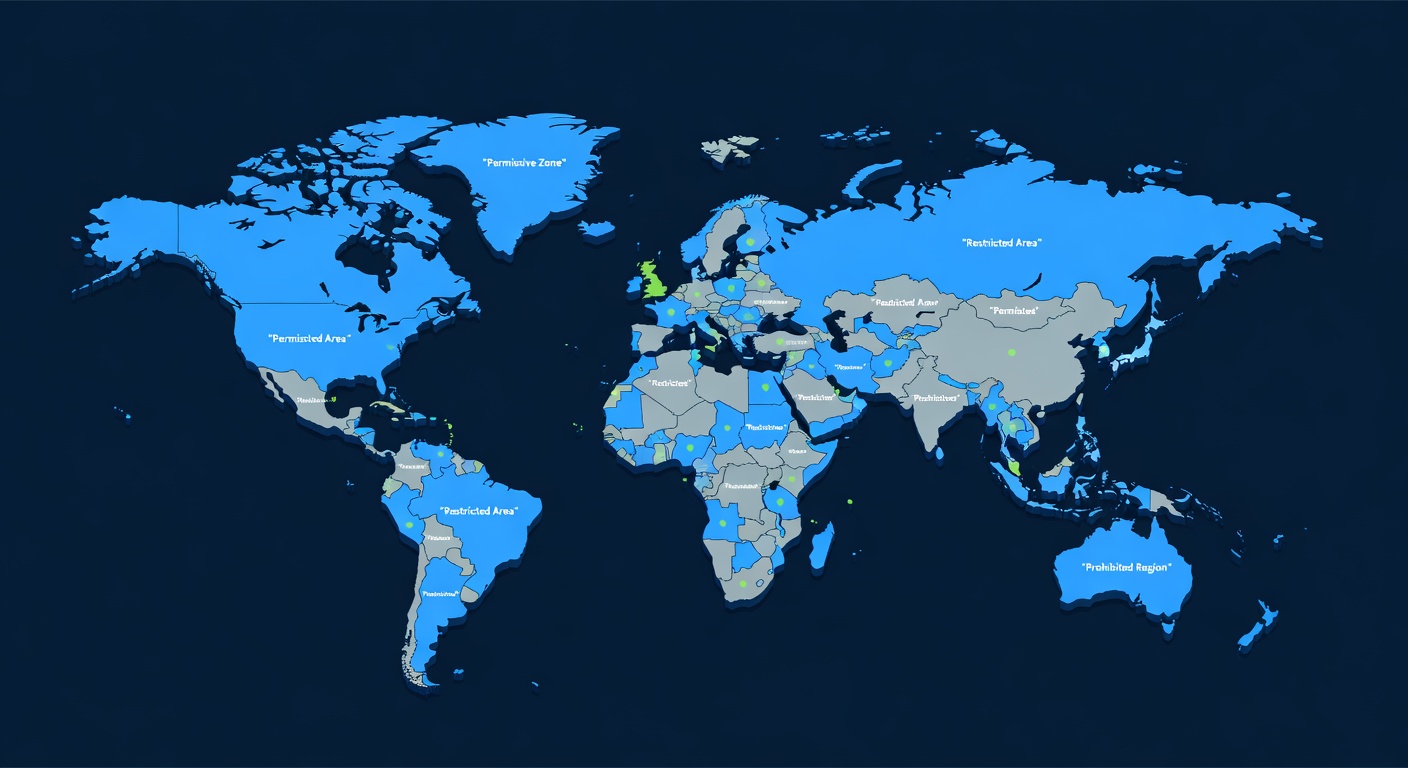
Thesis: crypto gambling regulation is fragmented because it sits at the intersection of two already-fragmented regulatory regimes (gambling and crypto), and no international body has the authority or incentive to harmonize them. The fragmentation is not going to resolve in the next decade.
This matters for operators, investors, and players, because the fragmentation is not an abstract legal curiosity. It produces specific exploitable and un-exploitable situations in specific jurisdictions.
The Two-Layer Fragmentation
Gambling regulation is already fragmented by design. The EU has no unified gambling framework; each member state regulates its own market. The US has 50 state regulators plus federal law. Asia is a patchwork. Africa is nascent. South America is mixed.
Crypto regulation layered on top of that is its own patchwork. Some jurisdictions (Singapore, Switzerland, Dubai) have built clear frameworks. Some (the US, India) have regulatory ambiguity that changes with every administration. Some (China) have outright bans. Some (El Salvador) have legal tender status.
Crypto gambling is what happens when these two fragmented regimes have to overlap at a specific operator. The result is that the same product (a crypto-native casino) can be fully legal in one country, gray-market in another, and explicitly illegal in a third, with the legal status sometimes changing based on the specific coin accepted rather than the gambling activity itself.
Why Curacao Became the Default
Curacao issued most of the crypto gambling licenses between roughly 2015 and 2023 because its licensing framework was old enough to pre-date crypto, flexible enough to accommodate it, and cheap enough for startups to afford. A master license plus sublicenses covered hundreds of operators with minimal oversight.
The Curacao license was the path of least resistance. It was also a badge of low credibility for sophisticated players. Most knew that a Curacao-only license meant the operator was unlikely to have strong compliance, but that the operator would generally pay out on small wins and that going to court would be pointless if things went wrong.
The 2023 Curacao licensing reform is trying to change this by issuing direct licenses with more active oversight. Whether it succeeds in raising the standard is an open question with a lot of incumbent inertia against it.
The UK and Malta Won't Touch Crypto
The UK Gambling Commission has been explicit that crypto as a deposit method at UKGC-licensed operators is not permitted for retail players. The reasoning combines AML concerns, volatility risks for vulnerable players, and the regulator's general conservatism.
The Malta Gaming Authority has been slightly more permissive but practical adoption has been limited. Most MGA-licensed operators do not accept crypto directly; those that do usually convert at deposit time into fiat-denominated balances.
The combination means that the two most credible European gambling licenses are both de facto crypto-hostile. Crypto-native operators end up in Curacao or in emerging markets, with the knock-on effects on player protection.
The US Is Its Own Thing
In the US, crypto gambling at any legal gambling site is basically not allowed. State-licensed sportsbooks and iCasinos in New Jersey, Pennsylvania, Michigan, and elsewhere operate under frameworks that require bank-integrated payment methods. Crypto does not fit.
There is a parallel ecosystem of offshore crypto gambling sites that serve US customers despite being technically illegal to access from the US. Operators like Stake.com block US IPs nominally but are accessible through VPNs. The enforcement against US players has historically been minimal, but operator-side enforcement actions (like the Department of Justice pursuing operators who accept US customers) have shut down several sites over the years.
Asia Is Where It Actually Grows
The biggest markets for crypto gambling are in Asia, where crypto-permissive jurisdictions (some Southeast Asian countries, limited sections of the Philippines PAGCOR-licensed market) overlap with cash-hostile banking systems that make crypto attractive as a payment rail.
The Philippines' POGO licensing regime has allowed offshore-facing operators to accept crypto for years. The Isle of Man and Gibraltar have accepted crypto in limited circumstances. Vietnam, Indonesia, and Thailand have varying degrees of prohibition that are often ignored in practice.
The result is that "crypto gambling regulation in Asia" is not a thing. There are 15 different regimes with 15 different enforcement postures, and operators structure themselves to take advantage of the gaps.
The Concession
The obvious counter-argument to "fragmentation is permanent" is that crypto adoption is still early, and eventually harmonized frameworks will emerge.
I would push back specifically on the timeline, not the direction. Global gambling regulation has been fragmented since the invention of online gambling in 1994. Thirty years later, it is still fragmented. The structural reasons (member-state sovereignty in the EU, federalism in the US, political diversity in Asia) have not changed and are not going to change in the next ten years. Crypto gambling specifically piles on crypto regulation uncertainty, which adds more friction to harmonization rather than less.
A coherent global crypto gambling regime would require both a coherent global gambling regime AND a coherent global crypto regime, neither of which is within five years of reality.
The Practical Implication
For operators: pick your regulatory posture based on which market you are serving and accept that you cannot serve all markets compliantly with a single license.
For investors: discount crypto gambling revenue multiples to reflect the regulatory risk asymmetry relative to fiat gambling operators.
For players: assume that your chosen crypto gambling site is operating in at least one jurisdiction where they should not be, and that the dispute resolution options are limited accordingly.
Fragmented regulation is not a bug in the system. It is the system.
Everything else follows from that observation.