
KYC vs Anonymous Crypto Casinos: What Players Should Know
A whale from Shenzhen once told me, between hands, that he preferred the regulated rooms for a reason that had nothing to do with fairness. Here is that story, and what the two kinds of casinos actually offer.
He came to the junket room in Macau twice a year, always the same week in March and the same week in September, and always for four nights. He had made his money in precision manufacturing in Shenzhen and he liked the quiet of the private salon and the specific way the bead-plate was arranged for baccarat in our room. He spoke to me between hands in a soft Mandarin that I followed more from habit than from skill.
On his third night of one particular trip, he asked me whether I played online. I said no, not in any serious way. He said he had been playing on what he called an anonymous site for about a year and had recently moved back to a licensed one. The reason surprised me.
"If you win enough on the anonymous site," he said, "nobody knows you won it. If you lose enough, nobody knows you lost it. It sounds good. It is not good."
I asked him what he meant. He said that when he won a large amount, the site would sometimes delay the withdrawal for reasons that were not clear. When he complained, there was nobody to complain to. There was a support email and an address in a jurisdiction he had never visited. His money was in the account and also not in the account. He waited three weeks for one particular withdrawal and eventually received it, but the experience changed how he thought about the site.
On the licensed site, where he had to upload his passport and provide proof of address and sit through a process he described as tedious, the money moved on a schedule. He could see the regulator who oversaw the license. He could file a complaint with the regulator if the site did not pay. The process was slower, but it was a process.
He went back to the licensed site after the delayed withdrawal, and he told me this as he was squeezing a third card on a Banker hand that ended up winning on a natural 8.
The story stayed with me because it captured something that most of the marketing around anonymous crypto casinos obscures. The sites are often described as the free alternative, the jurisdictional arbitrage, the privacy-preserving option. In a narrow sense they are all of those things. In a practical sense, anonymity is also the absence of recourse.
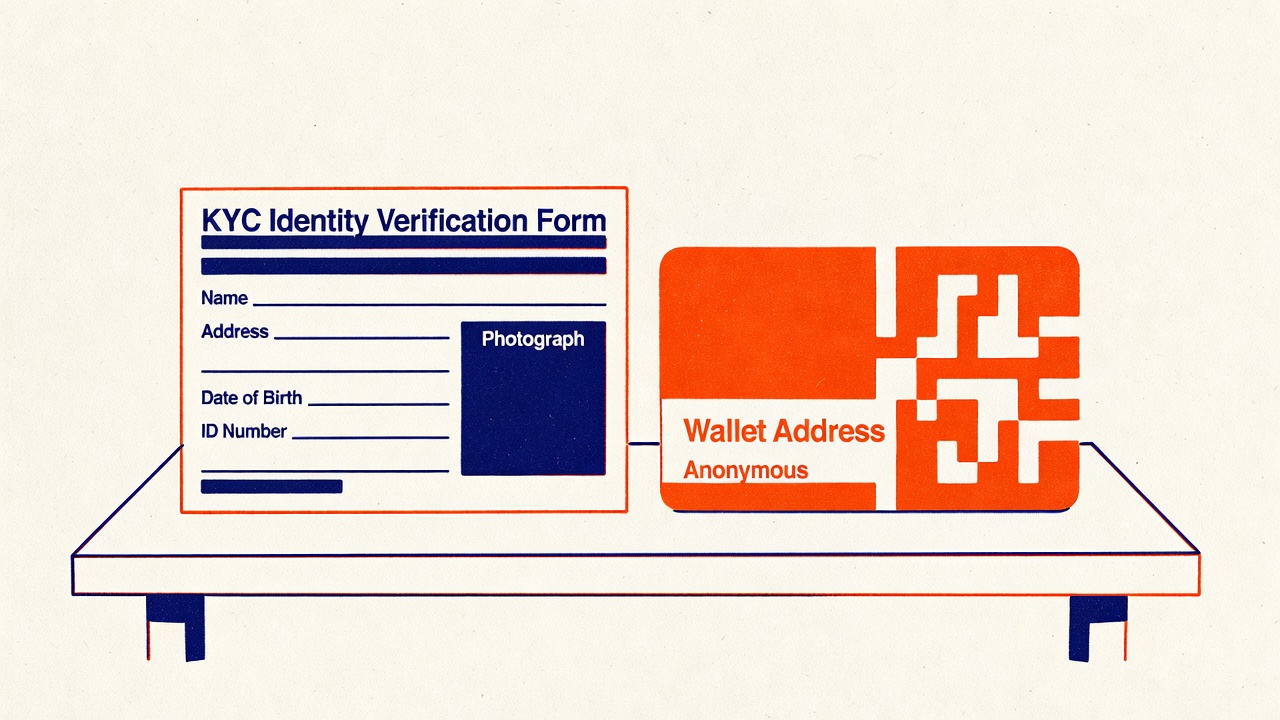
A regulated online casino operates under a license from a specific jurisdiction: Malta, Gibraltar, Curacao, Ontario, New Jersey, the UK Gambling Commission, and so on. The license imposes requirements. The site must hold player funds in a segregated account. The site must submit to regular audits. The site must resolve disputes through a defined process that includes regulator escalation. The site must implement KYC to satisfy anti-money-laundering rules, which means verifying identity at some threshold of activity.
The KYC process is intrusive. You upload a passport or national ID. You provide a utility bill or bank statement. You may be asked to verify the source of funds for large deposits. The process takes hours to days. It is the cost of the regulatory umbrella.
An anonymous crypto casino operates under a different model. Many are licensed in Curacao or similar jurisdictions where the license is cheap and the regulatory requirements are lighter. Some operate without any license, relying on cryptographic provable-fair systems to substitute for regulatory trust. KYC is not required, or is required only above high deposit or withdrawal thresholds.
The appeal is obvious. You can play without uploading documents. You can withdraw without waiting for compliance review. The site cannot freeze your account for reasons related to your source of funds, because the site does not know your source of funds.
The cost is recourse. When the site delays a withdrawal, you have no regulator to complain to. When the site closes without notice, you have no scheme to claim from. When the site changes its terms mid-session, you have no legal framework to push back with. You have a cryptographic proof that a specific roll was fair, which is useful for one kind of trust, but not the kind of trust the Shenzhen whale was describing.
He said something to me that afternoon that I have repeated to other players since: "The best thing about the regulated site is that someone is afraid of losing their license. The worst thing about the anonymous site is that nobody is afraid of anything."
There is a third category, which is the licensed site that accepts crypto. These sites exist in Ontario and a few European markets. They require KYC. They operate under a regulator. But they accept Bitcoin, Ethereum, and sometimes a handful of stablecoins for deposits and withdrawals. The crypto aspect is a payment rail, not an anonymity feature. Players who want the ease of on-chain settlement without giving up the regulatory umbrella can use these sites.
The Shenzhen whale does not use crypto. He uses bank transfer and sometimes a private settlement arrangement through his junket agent. He told me that the idea of using cryptocurrency for gambling made him uncomfortable because it combined two categories of risk, and combining risks was not a practice he favored in his business life either.
I dealt three more shoes for him that night. He won modestly, tipped modestly, and left around 2 a.m. to sleep before a morning flight. He flies back to Shenzhen from Macau on the early direct, the one that lands before 9.
The next time he came, in September, he told me the licensed site had paid out a modest five-figure win in four hours, and he had decided the choice was the right one. He still did not trust the regulator fully. He trusted the regulator more than he trusted the site to operate unsupervised. That is the calculus, for the serious player who has the choice. Some players will read these trade-offs and choose the anonymous site anyway, and they may be right for their own reasons. The trade-off is worth understanding before the choice is made, not after the withdrawal is stuck.