
VIP Programs at Online Casinos: What Table Game Players Should Evaluate
VIP programs for table game players have changed a lot since the comped-steak era. Here is how they evolved and what a blackjack or baccarat player should actually check before signing up.
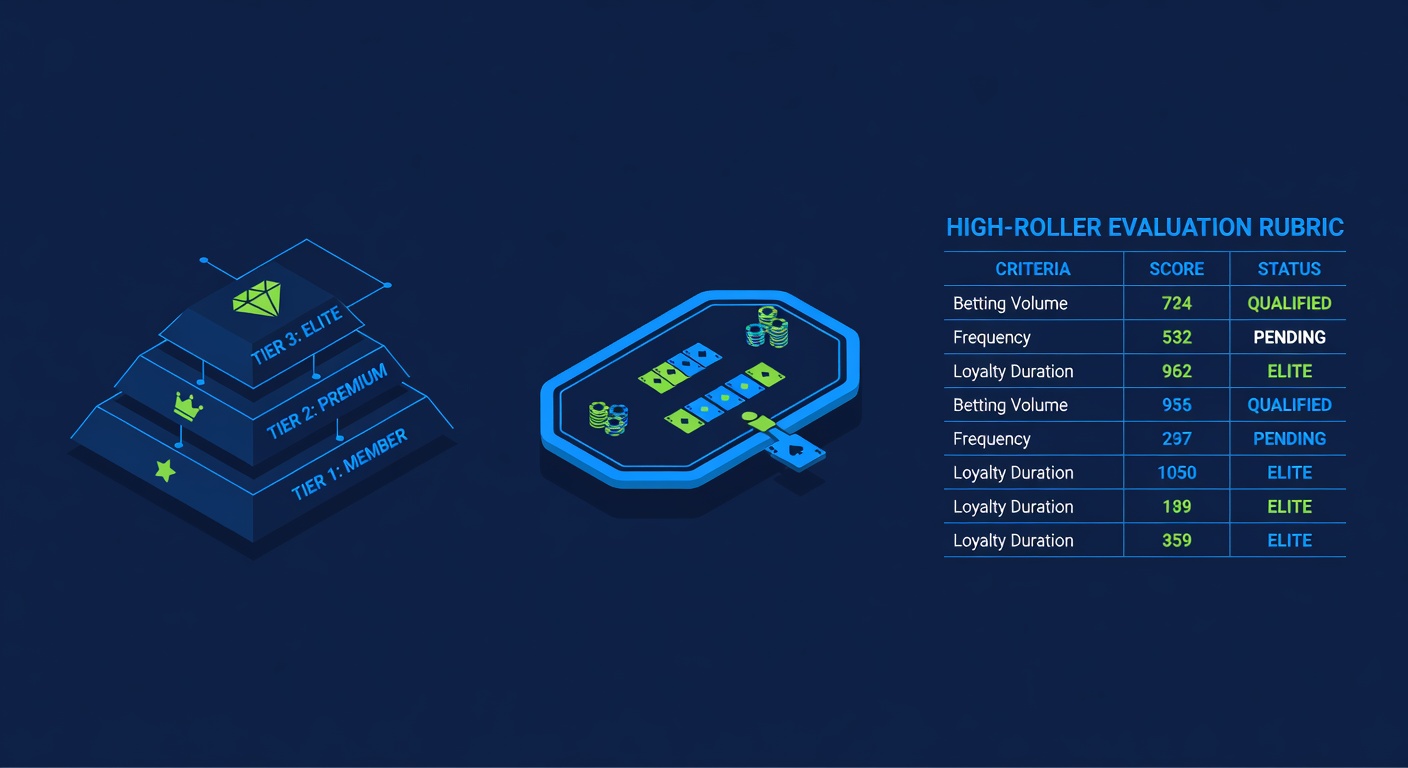
I spent most of my career with screwdrivers under slot cabinets, but I learned the rewards game from the floor managers who came through our shop for coffee. Table game loyalty programs are a different animal than slot clubs, and they have evolved in ways that matter for anyone who plays blackjack, baccarat, or roulette online. Here is the history, and the questions to ask today.
1980s: Harrah's invents the modern comp
Rewards programs existed before Harrah's, but the industry standard came from a 1980s effort at Harrah's properties to track play electronically. Gary Loveman, who joined Harrah's in 1998 and ran Total Rewards as chief operating officer, is usually credited with the data-driven loyalty model. Players got a card, the card tracked theoretical loss, and theoretical loss drove comps. For slots, this was easy: the machine logged every coin-in. For table games, it was harder: pit bosses estimated average bet and hours played, and fed those numbers into the rating system. Theoretical loss for a table game player became average bet, times hands per hour, times house edge, times hours played. Comps came back as a percentage of that theoretical.
Late 1990s: The first online clubs
When InterCasino launched in 1996 and Microgaming's first casinos followed, the reward model was cruder. Early online VIP programs were often ad hoc: a player who deposited enough might get a personal account manager and a cash bonus. There was no cross-property tracking because there were no other properties. What they did bring was speed: a table game hand online runs at 60 to 200 hands per hour versus 60 to 80 at a live table, so theoretical loss accumulated faster.
Early 2000s: Comp points and wagering requirements
By about 2002, most online casinos had moved to a points system. Every wager earned points, points converted to bonus cash or real cash. The twist for table game players was game weighting, which I will come back to. Blackjack often earned points at 10 or 25 percent of the slot rate, sometimes zero. This was the first moment where a table game player had to read the fine print before picking a casino.
2005 to 2010: Tiered programs arrive online
Microgaming's Loyalty Programme, PartyGaming's player rewards, and the Playtech network all introduced tiered systems in this period. Bronze to Diamond, or similar. Each tier brought better point-to-cash conversion, higher withdrawal limits, and often a personal VIP host for the top tiers. For a baccarat player wagering 50 euros a hand at 80 hands per hour, the top tier was reachable in weeks, not years. The question was whether the comps offset the edge.
2012 to 2015: The high-roller host era
This is when online casinos started poaching the live casino playbook seriously. Operators like 888, Betsson, and several Asian-facing brands hired former live pit hosts to run VIP desks. They offered cash rebates on losses, sometimes 5 to 15 percent on table game losses, paid monthly. Rebates on losses became the most valuable single feature of a VIP program for serious table players, because unlike bonus points, they came with no wagering requirement on the rebate itself.
2016 to 2019: Regulatory scrutiny
The UK Gambling Commission began publishing enforcement actions against operators whose VIP programs had enabled problem gamblers. The 2019 announcement from William Hill and several follow-on actions against Ladbrokes and Betway highlighted that VIP teams had in some cases been rewarding players exhibiting clear harm indicators. In response, the UKGC issued new VIP guidance in October 2020 requiring affordability checks, source of funds verification, and enhanced due diligence. Many UK-licensed operators scaled back their VIP programs significantly. Offshore-licensed sites, particularly crypto-first operators, kept the old model.
2020 to present: The split
Today the VIP landscape is bifurcated. Regulated-market operators in the UK, Sweden, Netherlands, and most of Germany run lean, compliance-heavy programs. Offshore and crypto operators, especially those licensed in Curacao or Anjouan, run aggressive rebate-driven programs aimed at table game players. The Stake VIP program and several Asian-facing brands will rebate losses and offer weekly reload bonuses that scale with play volume.
What to evaluate now
This is what I run through when someone asks me about an online VIP program for table play.
- Game weighting on points accrual. Does blackjack earn at 10, 25, 50, or 100 percent of the slot rate? A program that advertises 1 percent cashback might be 0.1 percent on blackjack.
- Wagering requirements on VIP bonuses. A 500 dollar bonus with 40x wagering and blackjack counted at 10 percent is worthless. You would need to wager 200,000 dollars to clear it.
- Loss rebates and their frequency. Monthly rebates with no wagering requirement on the rebated cash are the most valuable feature. Look for 5 to 15 percent on table losses.
- Withdrawal limits by tier. Some programs cap monthly withdrawals at 10,000 dollars for lower tiers and 100,000 for top tiers. If you win, this matters.
- Tier retention rules. How many points per month to hold a tier? Some programs reset quarterly, some annually, some use a rolling 90-day window.
- VIP host responsiveness. A real program has a named host who answers within an hour. A fake one has a generic team email.
- Country eligibility. Many VIP perks exclude residents of heavily regulated markets. Read the terms.
- Withdrawal speed for VIPs. Top tiers should have same-day or two-hour withdrawals on crypto, same-day on e-wallet. If it takes three days, the tier is cosmetic.
The program that says "exclusive rewards" in marketing copy but does not answer any of these questions in writing is not a program. It is a marketing funnel. The one that publishes its weighting, its rebate schedule, and its tier thresholds in a table you can read in two minutes is the one worth joining.