
Responsible Gambling Tools for Table Game Players
Responsible gambling tools get dismissed as corporate lip service. Some of them actually work if you use them right. Here are ten that matter, for a table game player.
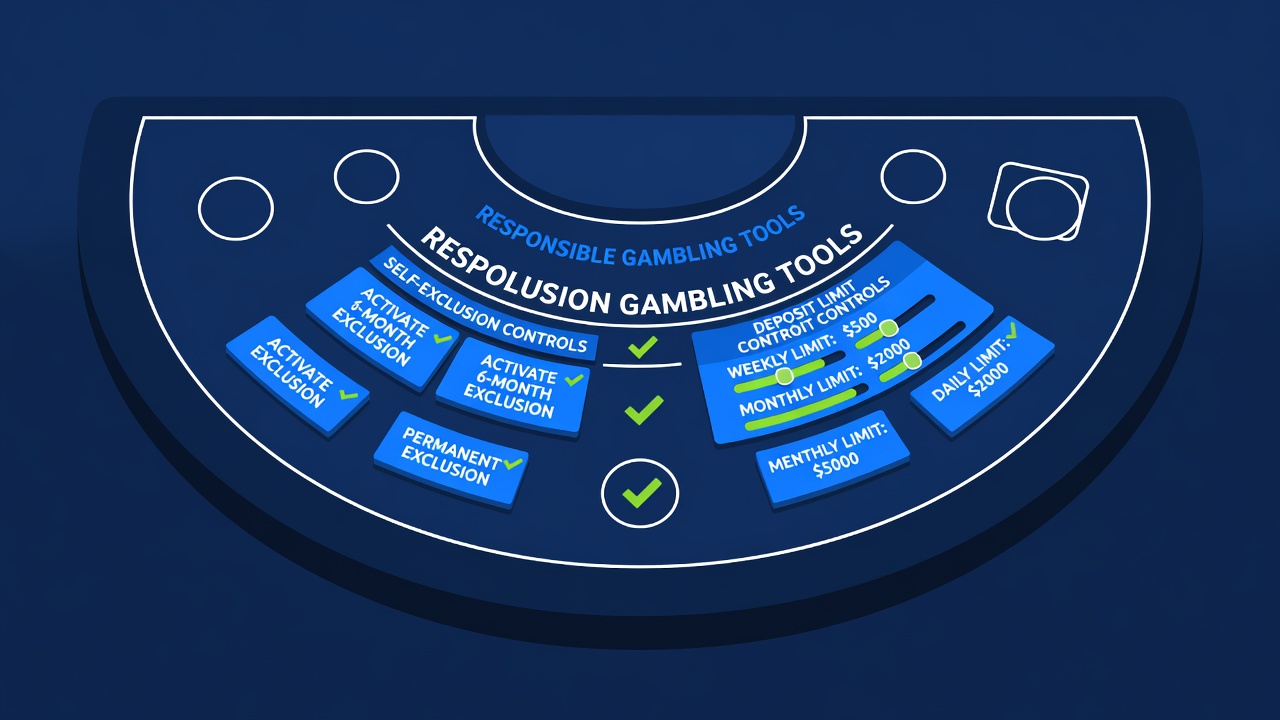
Responsible gambling tools. I know. Everyone rolls their eyes. But listen, the ones that actually work are not the ones in the marketing materials. They are the ones in the settings menu, and most players never look at them. Here are ten that matter for table game players, with honest takes.
1. Deposit limits
The single most effective tool. Set a deposit limit when you open the account. Daily, weekly, monthly, whatever makes sense for you. The important thing is that when you hit the limit, you cannot deposit more until the period resets. No amount of in-the-moment rationalization can override this.
Important detail: many operators apply a 24-hour cooling period to increases and let decreases take effect immediately. So if you want to lower your limit, do it before you start playing. If you want to raise it, you have to wait a day. This asymmetry is intentional and it protects you.
2. Loss limits
Different from deposit limits. A loss limit caps how much you can lose in a period, not how much you can deposit. You might deposit 200 dollars, win back to 500, and then lose back to 200. Deposit limit does not trigger. Loss limit would trigger at a threshold you set (say, 150 dollars net down for the day).
Loss limits are more careful than deposit limits. Use both if the operator offers both. Most experienced table game players find loss limits more useful because they track actual damage rather than activity.
3. Session time limits
A session time limit logs you out after a set period. Thirty minutes, an hour, two hours, whatever. The value of this is not about money directly. It is about breaking the trance. Table games, especially online, pull you into a rhythm. Time passes without you noticing. A forced logout at 60 minutes is a good interruption.
You can log back in, yes. But the interruption creates a decision point. Usually, the decision at that moment is smarter than the decision you would have made continuing the session on autopilot.
4. Reality checks
A reality check is a pop-up that tells you how long you have been playing and how much you are up or down. Most UK and European operators offer these. US operators are catching up. Set the interval short, like 15 or 30 minutes.
The reality check does not force anything. It just shows you data. The data is often sobering. "You have been playing for 2 hours and 15 minutes and you are down 340 dollars" is a sentence that changes behavior. Seeing the number in a clean pop-up is different from tracking it yourself.
5. Cool-off periods
A cool-off is a short temporary self-exclusion. You set it to lock your account for 24 hours, 48 hours, a week, whatever. You cannot log in during the cool-off. Useful when you sense you are in a bad mental space (bad day, frustrated, chasing losses). Cool off for a day, sleep, come back with a clearer head.
Most operators make this easy to activate and hard to reverse. That is the point. The friction to ending the cool-off early is intentional. Do not fight it. That is the tool doing its job.
6. Self-exclusion (long-term)
For players who recognize they have a problem that a cool-off cannot fix. Self-exclusion is months or years. Once activated at a regulated operator, they are legally required to keep you out for the duration. Most jurisdictions have shared self-exclusion databases so you cannot just switch to a competitor.
This is a serious tool and not to be used lightly, but if you are using it, use it. Do not try to circumvent it. Do not open a new account under your spouse's name. That defeats the point and creates a bigger problem.
7. Deposit method restrictions
Some operators let you restrict which deposit methods you can use, or disable certain ones. If you know your credit card is your weak point (large available credit, easy to overspend), disable credit as a deposit method on the account. Debit only. Or, switch to a single specific e-wallet with a smaller balance.
Your cousin Tony disabled his Amex on two casinos specifically because he kept using it impulsively. Took him two years to admit he should do that. Worked immediately. Do not wait two years.
8. Withdrawal time limits
Some operators let you lock withdrawals to a specific time delay, often 24 hours. If you request a withdrawal, you cannot reverse it for 24 hours. This prevents the common cycle where you win, request a withdrawal, then cancel it and play it back. The cancellation reversal is the point at which casinos recapture an enormous amount of otherwise-final winnings.
If the operator has this toggle, enable it. If not, move to an operator that does. Zero-pending-period casinos with no cancellation option are the best on this axis.
9. Activity statements
Every regulated casino is required to provide downloadable activity statements showing your full deposit, withdrawal, and bet history for a period. Download and review yours monthly. Quarterly at minimum.
The numbers on paper are always worse than the numbers in your head. This is a feature, not a bug. Honest accounting is the first step to seeing whether your play is entertainment or a problem.
10. External supports
The internal tools matter, but the external supports matter too. GamCare (UK), Gamblers Anonymous (global), the National Council on Problem Gambling (US), GambleAware (UK), BetBlocker (software that blocks gambling sites device-wide). These exist. They are free. They work.
If the internal casino tools are not enough, if you keep finding yourself at the edge of the lines you set, external help is the right next step. Not waiting. Not hoping the next win will reset things. External help. And no shame about it, because the only people ashamed of asking for help are the ones who need it most.