
International Sports Betting: Differences Between Markets
The sports betting map of 2026 is the product of a century of divergent regulatory choices. Tracing those choices clarifies why a Londoner and a New Yorker, placing the same bet on the same match, experience the activity so differently.
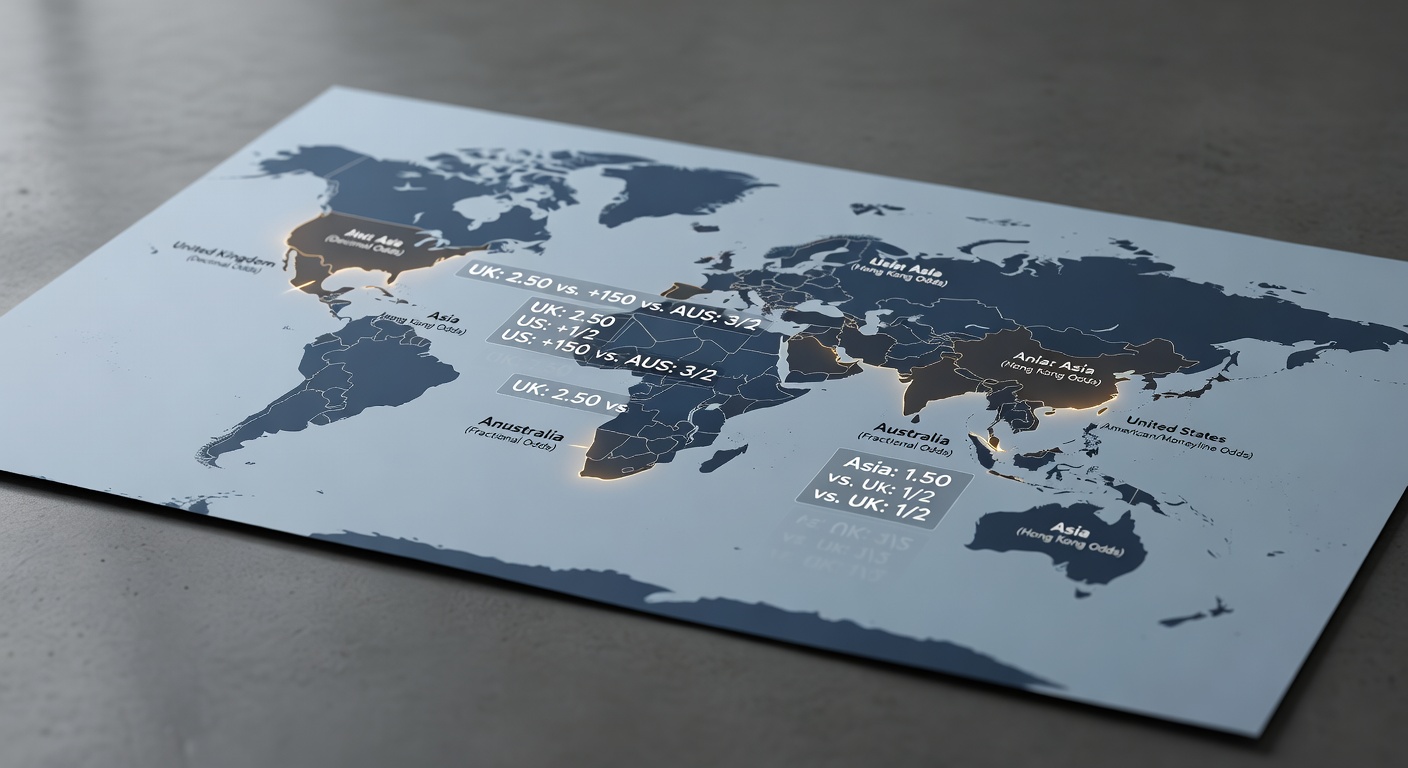
The differences between national sports betting markets are not cosmetic. They are the accumulated results of regulatory decisions taken over roughly a century.
1930s to 1950s: the foundations
The United Kingdom licensed the pool-betting operator known as Vernons Pools in the 1920s and introduced broader licensing of bookmakers through the Betting and Gaming Act 1960, which legalized licensed betting offices beginning on May 1, 1961. The British model from this period, in which independent bookmakers competed on prices posted against a fixed list of events, shaped a century of British punting culture. Fixed-odds betting became the default and remains so.
The American path diverged. The Professional and Amateur Sports Protection Act of 1992, building on earlier state-level prohibitions and on the broader federal hostility to sports betting inherited from the 1961 Wire Act, effectively restricted sports betting in the United States to Nevada, where it had been legal at the state level since 1949. The resulting legal landscape produced a Las Vegas casino-floor sportsbook culture that existed nowhere else in the world.
Australia's federation-era racing clubs operated under state-level totalizator legislation from the early twentieth century, producing a pari-mutuel tradition on horse racing that persists in the TAB operators of each state. Fixed-odds sports betting on Australian rules football and rugby league developed later, initially through Northern Territory licenses in the 1990s.
1960s to 1990s: the pools, the totes, and the bookies
Through the later twentieth century, three broad models coexisted.
- The Anglo-Saxon bookmaker model, in which private firms posted fixed odds and competed for customers. Dominant in the United Kingdom, Ireland, and, later, a version of it in Nevada.
- The continental European monopoly model, in which a state-owned operator held exclusive rights. The French Pari Mutuel Urbain, founded in 1930, held a monopoly on horse-race betting; the Finnish Veikkaus held broad gambling rights; Italy's SNAI and the state-owned network ran under CONI and later the Autonomous Administration of State Monopolies.
- The pari-mutuel model, in which all bets on a given event formed a pool, the house took a percentage, and the remaining funds were distributed among winning bettors according to their share. Dominant in horse-race betting in many jurisdictions and in some lottery-adjacent products.
These were not airtight categories. The United Kingdom had the Tote, a pari-mutuel operator, alongside its fixed-odds bookmakers. France had PMU alongside private bookmakers operating in a grey zone until the 2010 Online Gambling Act.
2005 to 2014: remote operators and the Gambling Act
The United Kingdom Gambling Act 2005, which came into force in September 2007, created the licensing framework under which remote sports betting operators such as Bet365, founded in 2000 by Denise Coates, Ladbrokes, William Hill, and Paddy Power grew into the European scale they now hold. The UK Gambling Commission, established by the same Act, oversees the market. The regime permitted, and to some extent encouraged, the development of exchange betting: Betfair, founded in 2000 by Andrew Black and Edward Wray, allowed users to lay as well as back bets, creating a peer-to-peer market within a regulated framework.
In continental Europe during the same period, the state-monopoly model came under pressure from European Union law. A series of European Court of Justice decisions, including Gambelli in 2003 and Placanica in 2007, held that national monopolies could be maintained only if consistently and proportionately aimed at reducing gambling-related harm. The decisions precipitated liberalization in France in 2010, in Spain in 2011, and in a more fractured process in Germany through the 2012 Interstate Treaty on Gambling and its 2021 successor.
2018: the American reopening
The United States Supreme Court decision in Murphy v. National Collegiate Athletic Association, issued on May 14, 2018, struck down the Professional and Amateur Sports Protection Act as unconstitutional on commandeering grounds. The effect was not to legalize sports betting nationally but to permit each state to legalize it independently. New Jersey moved first, opening retail sports betting at Monmouth Park on June 14, 2018. Pennsylvania followed in November 2018; a cascade of other states through 2019 and 2020; New York's mobile sportsbook market launched in January 2022; Ohio in January 2023.
The American market that emerged is structurally different from the European markets. Operators are frequently affiliated with established casino companies or with sports data firms: DraftKings and FanDuel, both founded as daily fantasy operators in the 2010s, became the two largest online sportsbooks. State-by-state licensing means that an operator must hold a separate license in each state where it operates, leading to the patchwork in which New York, New Jersey, and Pennsylvania residents face different operators, different promotional offers, and different tax treatment.
2020 onward: Australia, Asia, and the live betting question
Australia tightened its Interactive Gambling Act restrictions on in-play betting in online channels, producing the present configuration in which pre-match betting online is fully legal but in-play betting online is restricted to voice-call placement in many cases. The restriction shaped the Australian sportsbook industry in a way that distinguishes it from the British industry, where in-play betting is the single largest product category.
Asian markets vary widely. Macau's casino-based sportsbooks are limited in scope; Hong Kong's Jockey Club operates a pari-mutuel monopoly on horse racing and has branched selectively into football betting. Mainland China's state-run sports lotteries, principally China Sports Lottery and China Welfare Lottery, offer tightly limited products. Japan's licensed betting sectors, covering horse racing, bicycle racing, motorboat racing, and keirin, are large in turnover terms but segregated into individual legal structures.
The present
A bettor in London in 2026 opens an app from any of several dozen operators, sees in-play markets on every fixture, and faces a single national regulator. A bettor in Dallas in the same week has no legal option, because Texas has not legalized sports betting. A bettor in Sydney has legal pre-match options but must call a voice line to place an in-play bet. A bettor in Paris can back any outcome she wishes on FDJ or a licensed competitor but faces tax treatment that would surprise her British counterpart.
The differences are not merely about price, though price varies. They are about what products are available, which operators may offer them, how disputes are resolved, and what taxes and levies sit between the operator's posted odds and the bettor's net return. Anyone who wagers across borders should know which regime applies to which wager, because those regimes are, for now, stubbornly national.