
What to Do When a Sportsbook Limits Your Account
An email at 2:47 in the afternoon. A maximum bet cut from two thousand dollars to fifty cents. The moment a winning bettor becomes an unwanted customer, and the playbook for what comes next.
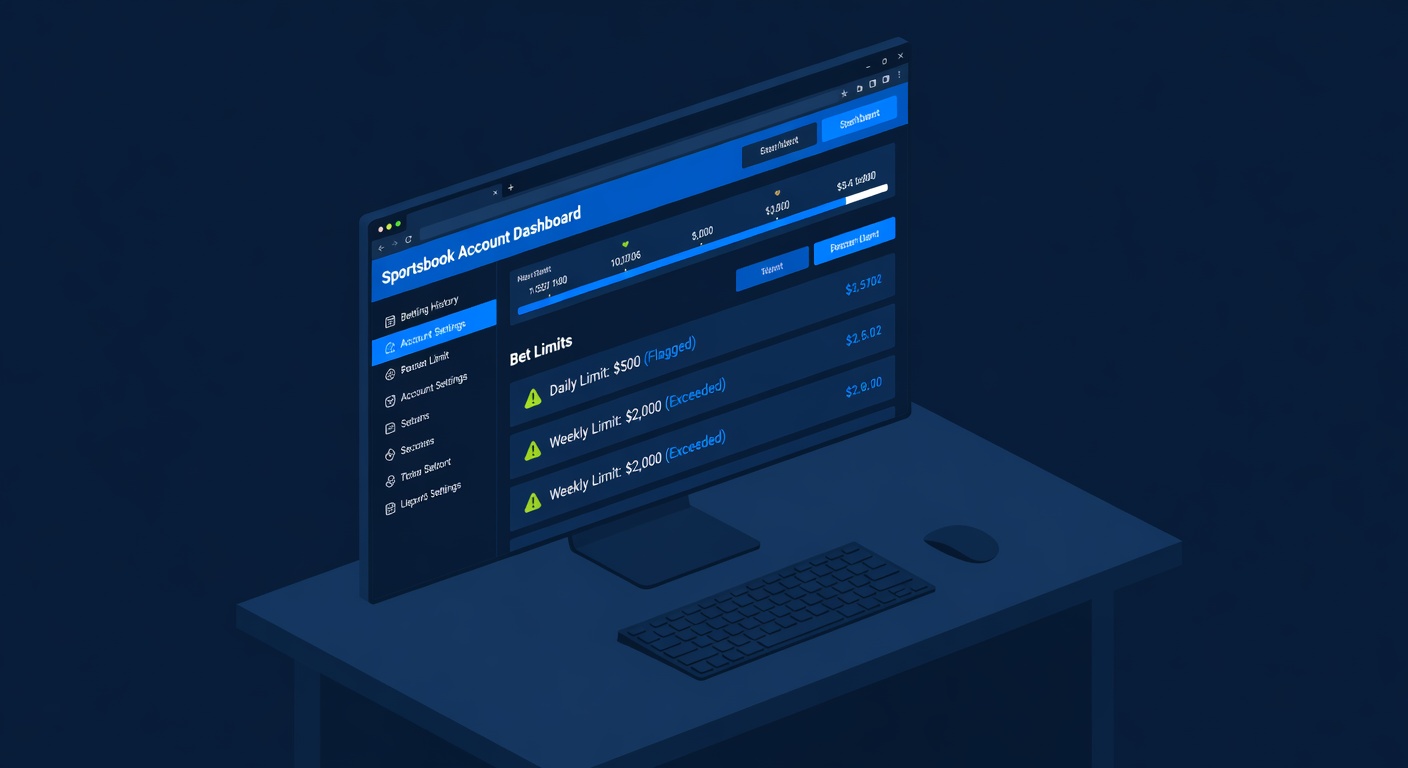
The email arrived at two forty-seven on a Tuesday afternoon. It was polite. It was short. It did not use the word banned. It said that, based on a review of his account activity, his maximum bet on baseball sides had been adjusted. He opened the app. His usual limit of two thousand dollars per game was now fifty cents.
Not fifty dollars. Fifty cents.
This happens every day, at every major sportsbook, to customers who have done nothing wrong except win. The industry has a word for it, though they try not to use it in public. Limiting. The bettor has become a profile the risk department no longer wants to hold, and rather than close the account outright, which attracts scrutiny and bad press, the book simply reduces the maximum bet to a level that makes further play pointless.
The man refreshing his app that Tuesday afternoon was not a professional. He was a software engineer in Colorado who had spent about eighteen months slowly learning how to read totals, with particular attention to MLB unders in summer day games. He had won about thirteen thousand dollars net across roughly nine hundred bets. He was, by the standards of the industry, a small winner. By the standards of the customer base, he was the wrong kind of account.
Here is what to do when it happens to you.
What the scene was really about
The first thing to understand is that there is no appeal mechanism. Sportsbooks are private businesses, and in virtually every jurisdiction where they are licensed, they reserve the right to refuse service to any customer. The terms and conditions you agreed to at signup include language, usually buried in a clause titled something like Responsible Account Management, that grants the operator full discretion to set limits. You will not win a court case over this. You will not win a regulator complaint over this, unless the operator refuses to pay out a winning balance, which is a separate issue.
The second thing to understand is that the limit is usually permanent on that particular account. Sportsbooks do not un-limit profiled customers. Calls to customer service will produce sympathetic noises and no change. Emails will produce templated responses. Threads on Reddit begging the book to reconsider will produce dozens of other limited players sharing the same experience.
What you can do, practically, is the following.
First, withdraw your balance. Before anything else, move your money out. Limited accounts sometimes see tightening of withdrawal processes as well, and in rare cases, delayed payments. Request a full cashout before you do anything else.
Second, preserve your history. Take screenshots of your bet history, your account balance, your lifetime profit or loss, and the notification email. This matters if a withdrawal dispute arises, or if you later want to share your experience with a community that tracks these things.
The turn in the road
Third, do not open a second account with the same operator using a different name, address, or payment method. This is called gnoming, and it is a clear violation of every sportsbook's terms. It will result in account closure, balance forfeiture, and, in some jurisdictions, a referral to the state regulator. Some sportsbooks share limiting data across books owned by the same corporate parent. A DraftKings limit may carry over to other DraftKings products. An entity like Flutter, which owns FanDuel and several others, may have integrated risk systems across its brands, though this is not always the case.
Fourth, accept that the market is fragmenting. You likely have several other legal sportsbooks available in your state. Your action, at the margin you were betting, will be profitable until each of those books profiles you and limits you in turn. The professional sharp community has a term for the process of spreading limited action across many books. It is called beards or stables, and at the high-volume level, it involves dozens of accounts held by trusted associates. Most recreational winners do not have the time or inclination for this. The practical answer, for most winning amateurs, is to bet smaller relative stakes across more books, which slows the detection process and extends your account life.
Fifth, consider the exchange alternative. Betting exchanges, such as Betfair or the prediction-market products that have launched in some American jurisdictions, take a commission rather than profit from customer losses. They have no incentive to limit winners. The liquidity is lower, the products are narrower, and the commission eats into your edge, but the account will remain open regardless of how much you win.
Sixth, know that the limiting pattern has been sped up dramatically since the 2018 Murphy decision opened American sports betting. Ten years ago, a recreational bettor in Nevada might have taken two or three seasons to hit a limit. Today, the big regulated operators run real-time risk algorithms that can flag an account after as few as twenty-five bets. If your first twenty-five wagers include correlated parlays, steam moves, or certain market patterns, you can be limited before you are profitable.
Finally, reflect on what the limit is telling you. It means you are probably beating the closing line. The closing line, on average, is what a sportsbook considers the most accurate price it will offer on a given market. Bettors who consistently wager earlier and at prices that move toward the close tend to win over long samples. That is a genuine indication of skill. It is not consolation for a fifty-cent limit. It is, however, a signal that what you learned is transferable.
The man in Colorado, the software engineer with the baseball totals, eventually spread his action across four different books. Three of the four have since limited him. The fourth is still open. He bets smaller now. He keeps better records. And he has stopped expecting to be welcomed as a customer by businesses whose margin depends, in the end, on customers who lose.