
Landscape vs Portrait Mode for Live Dealer Games
The orientation question in live dealer gaming looks trivial, yet its history reveals a specific tension between the needs of a broadcast product and the actual behavior of mobile users.
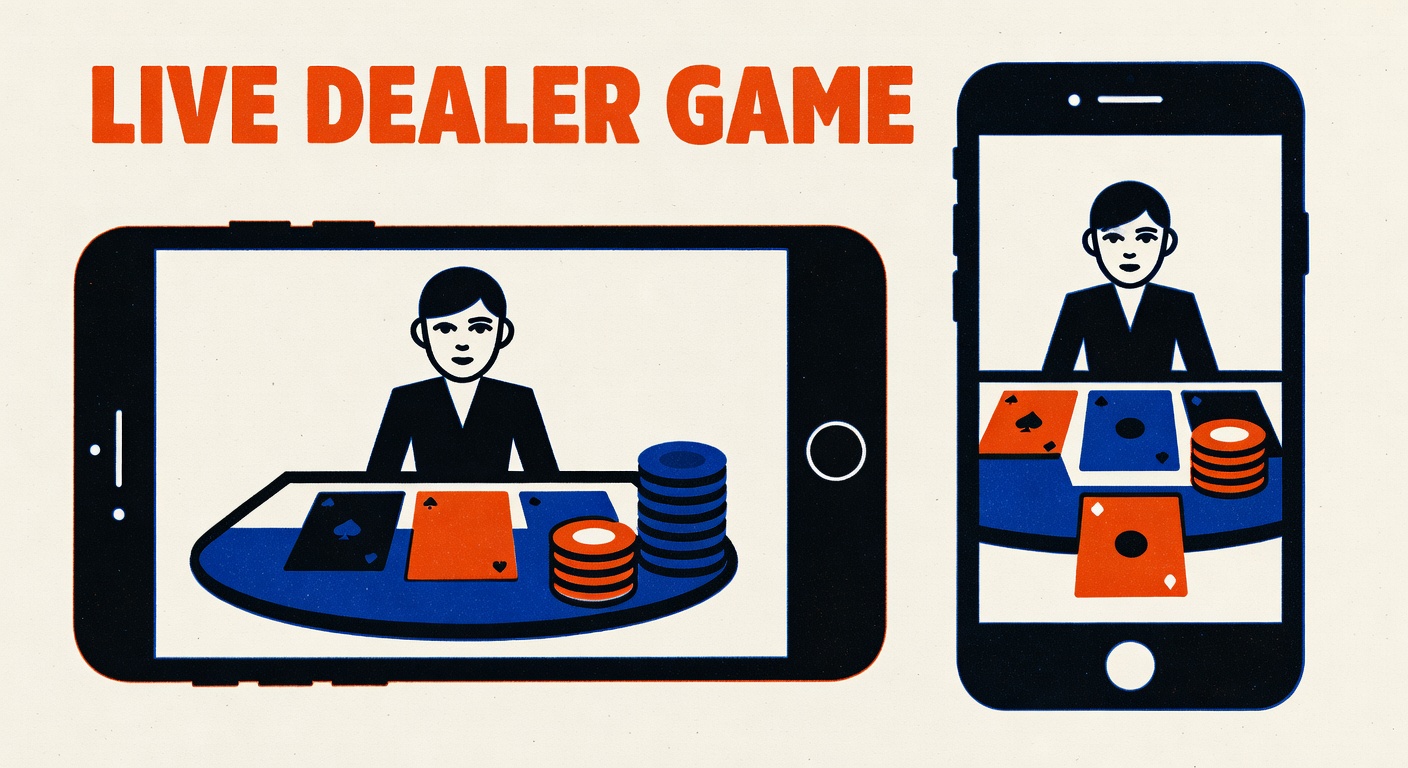
The question of whether to play live dealer games in landscape or portrait has a longer history than one might expect.
2006 to 2012: landscape as the default
The first commercial live dealer products were built for the desktop browser. Evolution Gaming, founded in 2006 in Riga, Latvia, delivered its earliest products to desktop PCs with screens of 1024 by 768 pixels or larger. The layout was wide: a central video feed of the dealer and the table, flanked by a statistics panel, chat window, and betting interface. The horizontal configuration matched the aspect ratio of the television broadcast from which the live dealer format inherited its visual grammar.
Playtech's Live Casino product, which entered the market around 2007 through 2009 from studios in Latvia and the Philippines, followed the same model. NetEnt Live, launched substantially later in 2013, also built initially for landscape. The underlying reason was simple: the camera shots composed for live dealer gaming, of the dealer, the wheel, and the table felt, were designed for a rectangular horizontal frame. A square or vertical crop would lose essential information.
2012 to 2015: the mobile question
The transition of casino gaming to mobile devices, driven by HTML5 adoption between 2011 and 2014, raised the orientation question directly for the first time. Mobile users hold their phones in portrait mode by default. Studies of smartphone usage consistently find that roughly ninety percent of handheld use occurs in portrait, with landscape reserved for specific activities such as video viewing and gaming.
Live dealer operators faced a choice. One option was to require landscape orientation for live dealer games, accepting the friction of asking the user to rotate the device. A second was to redesign the interface entirely for portrait, compressing or rearranging the visual elements to fit a vertical frame. A third was to produce both versions, at substantial development and content cost.
The industry's initial response, through roughly 2015, was to require landscape. The user experience was familiar to desktop players but inconvenient on mobile. The video feed was cropped awkwardly, the chat box was often hidden under an overlay, and the betting interface was cramped.
2015 to 2019: the portrait experiment
From 2015 onward, several providers began releasing portrait-mode versions of popular live dealer products. Evolution's mobile blackjack interface from this period stacked the video feed on top, with the betting interface and user information below. Pragmatic Play, which launched its live casino product in 2018, built portrait-first from the start.
The results were mixed. Portrait mode made casual session entry easier for mobile players. A user could open the app, glance at a live table, and place a bet without rotating the device or repositioning their grip. But the video feed in portrait mode was necessarily smaller, and the detailed visual cues that make live dealer gaming feel authentic, the dealer's hands, the wheel, the spread of cards, were harder to see. Players engaged in serious sessions tended to prefer landscape; players engaged in quick casual play tended to prefer portrait.
2019 to 2022: the bet-behind and side-bet revolution
The introduction of bet-behind mechanics in live blackjack, bet-behind-all-seats features, and the explosion of side bet offerings, changed the calculation. These features require additional interface real estate. In portrait mode, the betting interface had to accommodate both the primary bet but multiple side bets, bet-behind selections, and seat indicators. The interface became cluttered.
Several providers responded by creating hybrid layouts that rearranged dynamically based on orientation. Evolution's mobile interface from around 2020 onward presents substantially different layouts in portrait and landscape, with the betting options collapsing into swipeable panels in portrait. Pragmatic Play and Playtech adopted similar approaches.
2022 to present: the current configuration
The present state of the market reflects three stable patterns.
- Major providers offer both orientations, with portrait as the default for mobile and landscape available by rotation.
- Game types with complex betting interfaces, such as live baccarat with squeeze, live roulette with twelve betting zones, and live blackjack with six side bets, tend to display more information in landscape and are easier to play that way.
- Game types with simple betting interfaces, such as Lightning Dice, Monopoly Live, and the other game-show-format products, work naturally in portrait because they have fewer simultaneous decisions to surface.
The game-show format specifically, pioneered by Evolution's Dream Catcher in 2017 and expanded with Monopoly Live in 2019 and Crazy Time in 2020, was designed from the start with portrait mobile in mind. The single large wheel or board dominates the vertical frame, and the betting interface accommodates the straightforward set of outcomes below.
What actually works
For a player choosing orientation in 2026, the practical guidance is narrow.
- For live blackjack, live baccarat with side bets, and live roulette, landscape mode presents more information and a clearer view of the dealer's action.
- For live game shows and single-wheel products, portrait mode is as good or better and matches typical mobile grip.
- For a casual session of any type, portrait is less effortful to enter and exit.
- For a long session where the player cares about reading the dealer's rhythm, landscape remains the choice professionals tend to prefer.
The evolution of the interface question, from uniform landscape to uniform portrait to hybrid, tracks a broader observation about mobile media. Formats inherited from horizontal television tend to resist vertical compression when the visual detail is load-bearing. Live dealer gaming, at its core, is a video product in which specific visual cues matter. The industry has found a reasonable compromise, but the underlying tension between the broadcast format and the mobile grip has not been fully resolved, and probably cannot be, as long as players continue to hold their phones one way by default.