
Famous Blackjack Teams and What They Taught the Industry
Three blackjack teams moved the industry from "nobody can beat the house" to "we need countermeasures on every shoe." Here is how the MIT team, the Hyland team, and the Griffin-era pros compare, and what each taught the casinos.
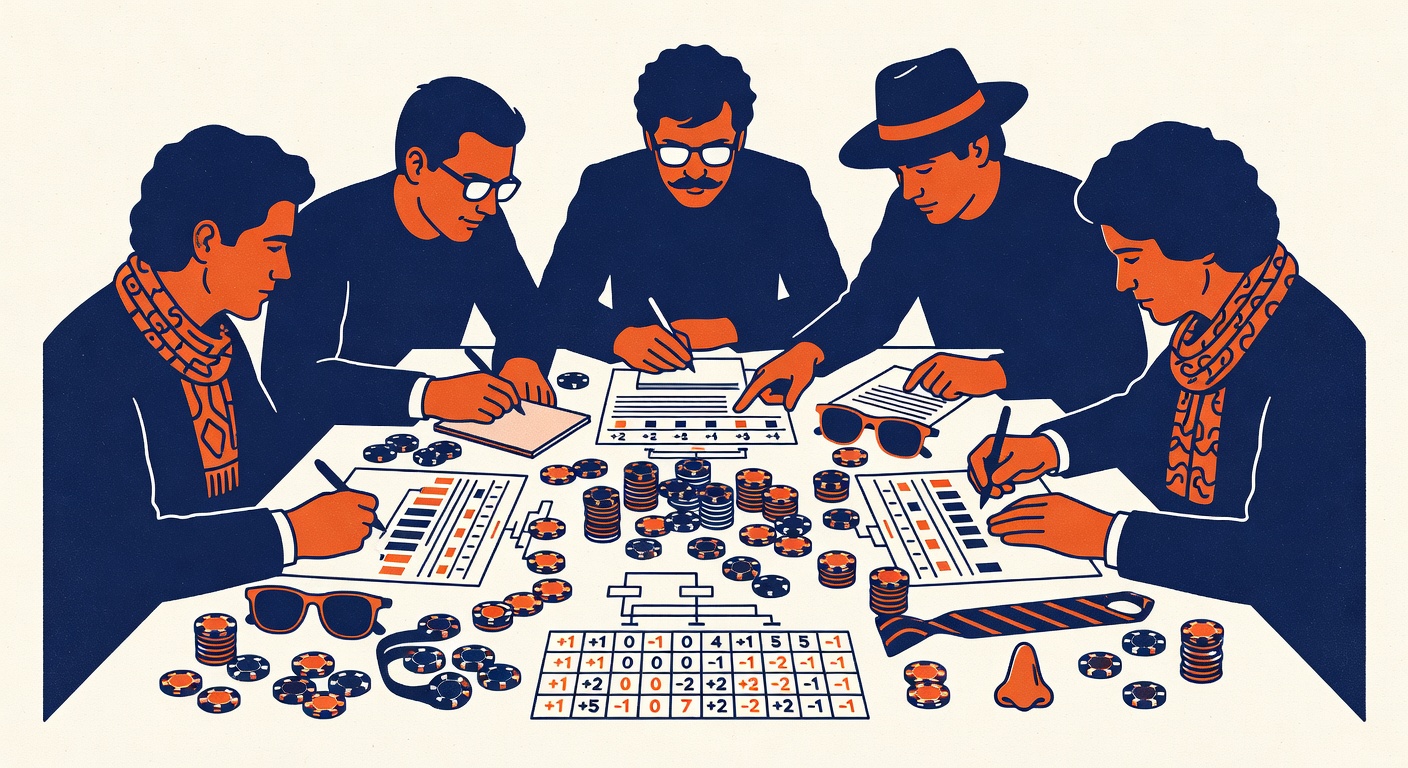
Blackjack teams forced the casino industry to admit it could be beaten and then spent fifty years building countermeasures.
Three groups are worth comparing, because they each solved a different structural problem and each drew a different response from the house. The MIT team, the Ken Uston crews, and the Tommy Hyland team. Let's walk through what each one actually did differently.
MIT Blackjack Team
Founded around 1979 at MIT, the team ran from then through the early 2000s with rotating rosters. At its peak it had 70+ players spread across multiple sub-teams, funded by investors who took a cut of profits.
Their contribution: team play as a capital structure. Individual counters couldn't raise enough bankroll to absorb variance on large bets. Team play solved this by pooling capital from outside investors and splitting the team into "spotters" (small-bet counters tracking a shoe) and "big players" (who came in with big bets when the count went positive).
The role separation also beat early casino countermeasures. A pit boss watching for the classic pattern of a single player ramping bets with the count couldn't easily detect a big player strolling up to a table and betting max on his first hand, because the spotter had already done the counting invisibly.
Estimated profit over the team's full history: the book Bringing Down the House dramatized their results, but the widely cited figure is tens of millions. Exact numbers are disputed.
Ken Uston teams
Uston, a Harvard MBA and former VP at the Pacific Stock Exchange, led several teams through the 1970s and 1980s. He was arguably the first to publish the team-play model in detail, which he did in his book Million Dollar Blackjack (1981). That publication earned him a permanent spot on every casino's unwelcome-guest list.
Uston's contribution: public counter training. He ran seminars, published techniques, and made counting a democratized skill rather than an insider secret. He also won a landmark New Jersey Supreme Court decision in 1982 (Uston v. Resorts International) that held casinos in Atlantic City could not bar skilled players simply for being skilled.
That ruling is why New Jersey operators adopted shuffling countermeasures instead of bans. Nevada had no such protection; Nevada casinos could and did refuse service to anyone.
Tommy Hyland team
Hyland's team ran from 1979 through the 2000s and is, by reputation, the longest-running and most consistent blackjack team in history. They were quieter than MIT, more disciplined, and survived by staying adaptable.
Their contribution: advanced play beyond counting. The Hyland team developed and refined techniques like:
- shuffle tracking (following specific clumps of cards through a dealer's shuffle)
- ace sequencing (predicting when an ace is likely to come out based on the shuffle pattern)
- hole-carding (exploiting dealer weaknesses that accidentally reveal hole cards)
These are not card counting. They're structural exploits that work because dealers and shuffling procedures have flaws. The Hyland team's demonstration that these techniques were real forced casinos to upgrade shuffling machines industry-wide.
The comparison
| Team | Active era | Core innovation | Industry response | Cultural footprint |
|---|---|---|---|---|
| MIT Blackjack Team | 1979-2000s | Spotter/big-player roles, outside investors | Facial recognition databases (Griffin Investigations) | Bringing Down the House, 21 (2008 film) |
| Ken Uston teams | 1970s-1980s | Published techniques, legal precedent | NJ adopted shuffling over banning; NV refined bans | Uston's books still canonical |
| Tommy Hyland team | 1979-2000s+ | Shuffle tracking, ace sequencing, hole-carding | Continuous shuffling machines (CSMs) became common | Lower profile, higher profitability |
What the casinos actually learned
Industry countermeasures track directly back to specific team techniques:
- Continuous shuffling machines (a shuffler that re-inserts cards after each hand) exist because of shuffle tracking.
- 6-to-5 blackjack exists because card-counting profitability drops dramatically when the blackjack payout is cut.
- 8-deck shoes exist because deeper decks flatten the count fluctuations that give counters their biggest edge.
- Facial recognition systems (originally developed by Griffin Investigations, later absorbed by Biometrica and similar vendors) exist because MIT-era teams could rotate players to avoid individual detection.
- Early shuffle penetration (cutting the deck before reaching the end) exists specifically to reduce true count values at the end of a shoe.
Each of these is a cost to the casual recreational player. That's the indirect consequence of team-era play: the game got harder for everyone to reduce the edge of specialists.
Who "won"
It's tempting to pick a winner among the three teams. The cleanest answer: Hyland's team won on longevity and low public profile. MIT won on cultural impact. Uston won on legal precedent. Each team's success forced the industry to do a different thing, and the blackjack you play today is shaped by all three.
The most successful blackjack teams were the ones nobody wrote books about. Fame is a tax in advantage play.
The recommendation nobody wants
If you're looking to beat blackjack today, the old moves are mostly dead. CSMs, 6-to-5 payouts, 8-deck shoes, and facial recognition have largely closed the window. The remaining opportunities are edge-case (hole-carding on a sloppy dealer, shuffle tracking on a specific machine with a known pattern) and require a rare combination of access and discipline.
The honest comparison doesn't produce a playbook for the reader. It produces an explanation for why the game you play feels stacked. It is. The teams made it that way.