
Why Some Slots Have 96% RTP and Others Only 92%
A four-percent gap in slot RTP looks small. Over a realistic session it is the difference between dinner and a taxi home. Here is why operators and studios offer multiple RTP versions of the same game, and how to tell which one you're playing.
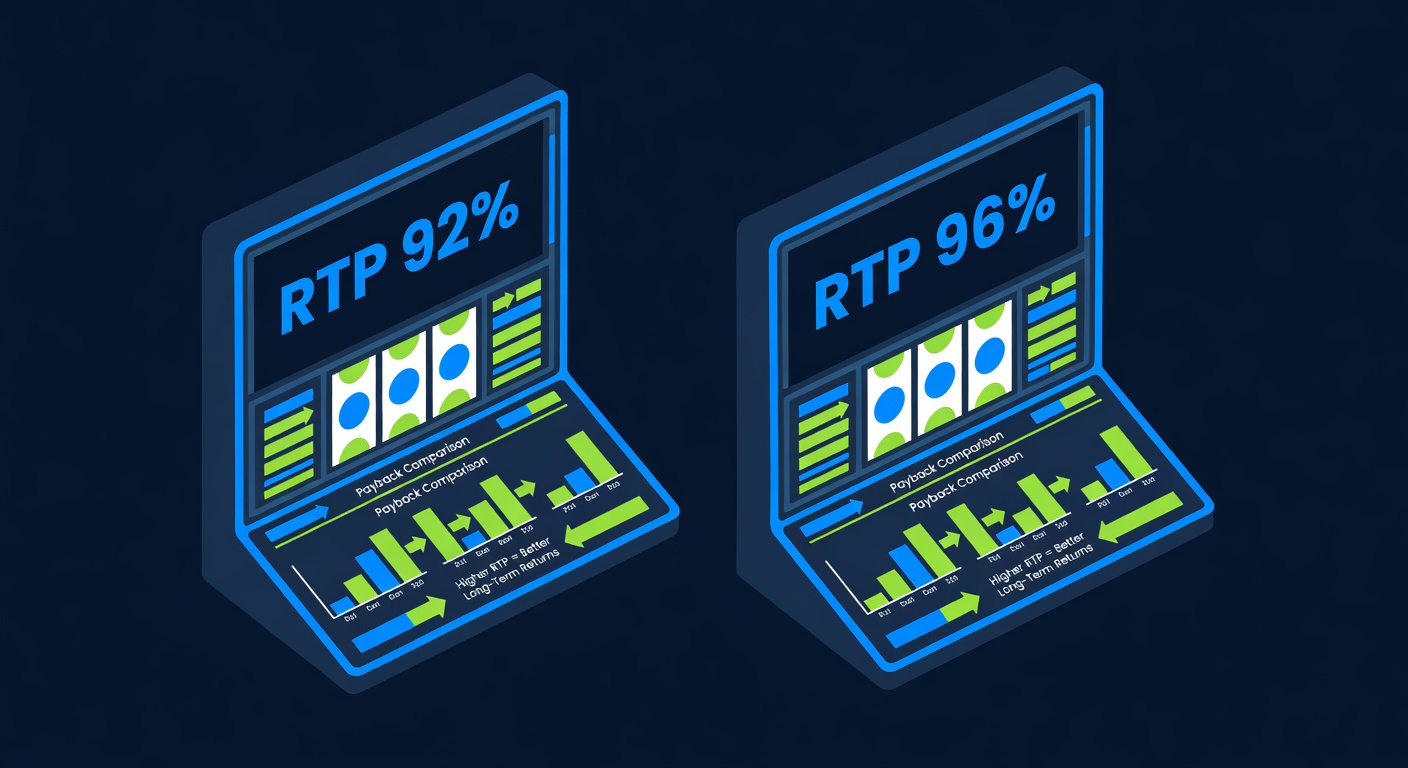
Two slots can look identical, feel identical, and return 4 percent less of your money over a session. That isn't a bug. It's usually a setting on the backend that the operator picks at deployment time.
Let's set up the comparison properly, because this is one of the most abused concepts in the casino industry.
What RTP actually is
RTP (return to player) is the long-run theoretical payback of a slot, expressed as a percentage of wagered money. A 96 percent RTP slot returns 96 cents per dollar wagered over an enormous sample (typically measured over billions of simulated spins during certification).
RTP is not "what you'll win today." Over a 500-spin session your actual return can easily be 0 percent or 300 percent. RTP is the expected value of a spin, averaged out over an impossible-to-reach horizon.
The key fact operators don't advertise
Many modern slot games ship with multiple RTP "versions." The studio (e.g., NetEnt, Pragmatic Play, Play'n GO) builds the same game with 96%, 94%, 92%, sometimes 88% RTP variants. Visually, mechanically, and audio-wise, they are identical. The only difference is the math on the symbol weights or the bonus trigger frequency.
The operator chooses which version to deploy. That's the deal.
Comparison: the same slot, three versions
Let's compare what happens in a typical 2-hour slot session, $1 spins, 600 spins per hour (slots run fast), so $1,200 wagered.
| Dimension | 96% RTP version | 94% RTP version | 92% RTP version |
|---|---|---|---|
| Expected loss | $48 | $72 | $96 |
| Expected loss over 10 sessions | $480 | $720 | $960 |
| Bonus frequency (approx) | Same trigger rate | Same | Same |
| Max win distribution | Same | Same | Same |
| How the math changes | Slightly lower symbol weights | More adjusted weights | More adjusted weights |
The experience is identical. The expected loss is not. At $1,200 wagered per session, the gap between the best and worst version is $48. Over a year of monthly sessions, that's a second screen.
Why studios build multiple versions
Reasonable question. The answer is regulatory and commercial.
- Some jurisdictions require minimum RTP. The UK mandates no sub-92% RTP on regulated slots. Malta has different rules. Ontario has different rules.
- Some operators want to run lower-RTP versions to fund larger marketing budgets or bonus programs.
- Crypto-native operators often run the highest RTP versions because their customer acquisition cost is different and the player base is more savvy.
The studio isn't hiding anything. The RTP of each version is certified by a testing lab (GLI, eCOGRA, iTech Labs). The problem is that the operator sometimes deploys the lower-RTP version without calling it out.
How to actually tell which version you're playing
This is the practical part.
- open the slot's info screen (usually a small "i" icon on the UI)
- find the "theoretical return to player" or "RTP" line
- compare that number to the number on the studio's official game page (which usually lists all RTP variants)
- if the operator's shown RTP is the lowest of the studio's options, you're on the worst version
This only works if the operator is required to display RTP in the info screen. Most regulated jurisdictions mandate it. Some unregulated jurisdictions don't. If you can't find the RTP anywhere on the info screen, treat the game as if it's on the lowest version.
The provably fair question
Crypto casinos sometimes advertise "provably fair" slots, which means the spin outcomes are generated via a verifiable seed + nonce system that you can audit on-chain. Provably fair is not the same thing as high RTP. It's a guarantee that the randomness isn't manipulated post-bet. A provably fair slot can still be a 92% RTP variant. Don't conflate.
The combination you want: high RTP version, provably fair, licensed operator. That's the best case. It exists, you just have to look.
Edge cases worth flagging
- Progressive jackpot slots. These often have lower headline RTP (e.g., 88-92%) because the jackpot contribution eats some of the return. Theoretical RTP is still the right metric, but realized RTP over a non-jackpot-hitting session will feel much worse.
- Bonus-buy slots. Buying into the bonus round directly often has a different RTP than playing normally. Sometimes higher, sometimes lower. Check the info screen; it's listed separately.
- Tournaments and free spins. These don't change the underlying RTP. They just change the expected value of the session by adding free wagers.
The recommendation
Play high-RTP versions of slots when given a choice. The 4 percent gap is a real loss compounded over every spin. Operators who consistently deploy the high version are signalling they're fine with lower margin per player. That's worth rewarding with your business.
If the info screen says 92% and you know the game also ships at 96%, close the game. There's a better version of the same slot one tab away.
The differences are small per spin and enormous per session. That's how casino math works. Always has.