
Touch ID and Face ID Login for Casino Apps
Casino apps love to boast about biometric login. The marketing writes checks the tech does not always cash. Here are the claims and what they actually mean for your account.
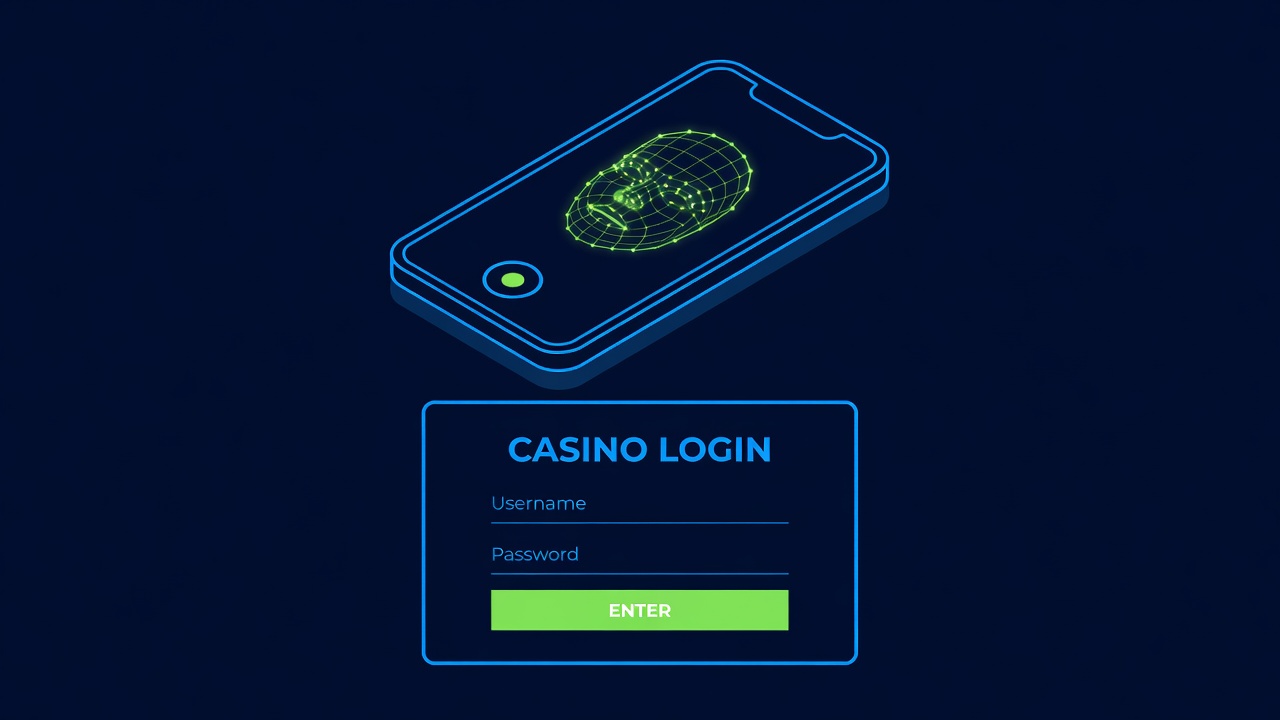
Biometric login is sold as the modern answer to password pain. The pitch is simple. Tap the sensor, look at the screen, you are in. The reality has more footnotes than the landing page suggests.
What follows are the common claims, each translated into what is actually true once you read the operator's help pages and the Apple and Google documentation behind them.
Claim: Biometric login is more secure than a password
Phrased this way, it sounds like a straightforward upgrade. The truth is narrower.
A fingerprint or face scan does not authenticate you to the casino's servers. It authenticates you to the device. The device then uses a stored credential, usually an OAuth token or a saved password, to log you into the operator. If someone has your phone and your face or fingerprint works on it, they have your casino.
What biometric login actually buys you: protection against shoulder-surfed passwords, fewer keyboard-typed logins, and a friction boost when a phone is casually grabbed. What it does not buy you: any improvement in how the operator stores credentials, any additional factor against a remote attacker, or any defense against someone who knows your phone passcode.
Claim: Touch ID cannot be spoofed
Apple repeats this in marketing with careful hedges. The honest version is that Touch ID is hard to spoof and expensive to spoof, but not impossible. The Chaos Computer Club demonstrated a fingerprint lift attack within days of Touch ID's 2013 launch. The attack requires a clean print from the phone's owner and a few hours of work. For a casino account, the attack is not practical. For an account with seven-figure balances, it is within reach for a determined attacker.
Face ID uses a structured light pattern and depth sensor. The published Apple security document places the false accept rate at one in a million, compared to Touch ID's one in fifty thousand. Twins and close family members have occasionally fooled Face ID. Masks designed specifically for the attack have too. The cases are rare. The marketing phrasing erases the rarity and claims perfection.
Claim: Biometric data never leaves the device
This one is mostly true, and the exceptions matter less than they sound.
Apple's Secure Enclave and Google's Titan M chip store biometric templates in hardware that the operating system cannot read. The casino app cannot access the raw fingerprint or face data. What the app sees is a yes or no from the device when it asks whether the biometric check passed.
What does leave the device: a confirmation that authentication succeeded, any OAuth refresh token associated with the login, and standard telemetry about the authentication event. None of this is the biometric itself.
The claim is therefore technically accurate for the raw biometric. Players who read it as a broader privacy guarantee about their login activity are reading too much into it.
Claim: Your account is safer with biometrics enabled than without
This is more careful than the marketing allows. Enabling biometrics typically removes the password prompt for future logins. If your phone is unlocked, the casino is open. If your phone is locked, the biometric check stands in for the password.
For most users, the net effect is positive. Typing a password into a casino app in public, particularly on a phone with autofill disabled, is a security risk. Using biometrics bypasses that exposure.
For a specific set of users, the effect is negative. Anyone who regularly hands their phone to a child, a partner, or a housemate to use for a legitimate purpose may lose control of a casino session. Some apps allow biometric-only access to logged-in sessions, which means a tap of Face ID reopens the session without any second check.
Claim: Biometric login replaces the need for a strong password
This one is false, and the operators' own terms usually say so. Biometric login is a convenience layer over the stored credential. If your account password is weak and leaked in a breach elsewhere, an attacker who obtains it can log in from a different device without ever encountering your fingerprint.
Biometrics defend the device. The password defends the account. Both are needed, and the account password is the one that matters against remote attacks.
Claim: Face ID protects you if your phone is stolen
Partially true. A stolen phone that is locked, with Face ID required, is a phone that cannot be casually opened. A determined attacker who knows the passcode, which is often shoulder-surfed before the phone is taken, can bypass Face ID by entering the passcode and disabling the biometric requirement for account authentication.
A better frame: Face ID protects against an opportunistic grab. It does not protect against an attacker who has been watching you enter your passcode on the bus.
Claim: Biometrics cover all casino features
Operators sometimes advertise biometric login and mean login only. Withdrawals, limit changes, deposit increases, and account recovery flows often require password or email confirmation in addition to any biometric check. The marketing does not always clarify.
Before relying on biometrics for protection, test the app on the actions you care about. A player who assumes Face ID stands between their bankroll and a casual thief may find that the thief can initiate a withdrawal with just the passcode because the app treats biometrics as a convenience layer and password as the real authenticator.
What the honest pitch looks like
If you are a copywriter writing this section of the help page, the honest phrasing is something like this.
Biometric login is a convenience. It reduces password entry on trusted devices. It does not replace a strong password, does not provide defense against remote attackers, and does not cover every sensitive action in your account. Enable it on your own device. Do not rely on it if your device is shared.
That version will not feature on the front page. It is the version that survives contact with how biometric authentication actually works.
The operational checklist
- Enable biometric login only on phones you personally control.
- Keep a strong, unique password on the account regardless of whether biometrics are enabled.
- Check whether withdrawals require password re-entry or only biometric confirmation.
- Know your phone's passcode and do not share it with anyone who does not need casino access.
- Disable biometric login before handing a phone to another person.
Biometrics are a real tool. Used with realistic expectations, they make casino logins faster and a little safer. Used on the assumption that the marketing claims are the whole story, they can lull a player into skipping the boring password discipline that does most of the actual protecting.