
Tony G: From Lithuania to Poker Table Trash-Talk Legend
Antanas Guoga's path from Kaunas to the European Parliament passes through some of the more theatrical moments in televised poker of the 2000s. The arc rewards being told chronologically.
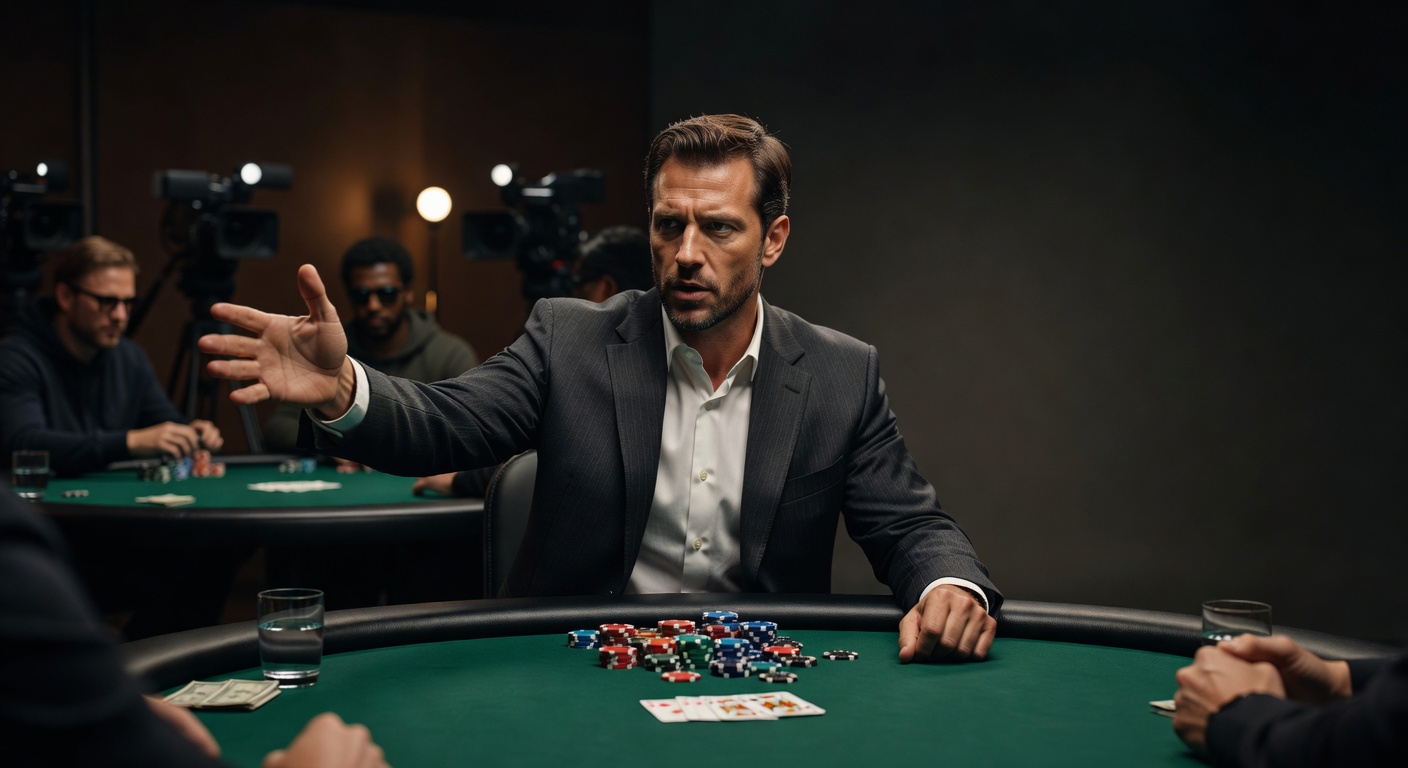
Antanas Guoga did not begin as Tony G. He became him over three decades.
1973 to 1980: Kaunas
Antanas Guoga was born on September 30, 1973, in Kaunas, then the second-largest city of the Lithuanian Soviet Socialist Republic. His early childhood was in a late-Soviet urban environment that would not be recognizable to those who have only met him in the poker world. The family emigrated to Australia in 1980, settling in Melbourne, when Guoga was six.
1980s and 1990s: Melbourne
Guoga grew up in Melbourne and displayed an early aptitude for competitive games. He played chess at a serious level as a teenager, representing Australia in junior competitions. Chess is relevant to the later arc because it trained the style of play that his poker career would extend: patient, calculating, willing to provoke. He finished school in Melbourne in the early 1990s.
He moved to poker in the mid-1990s, playing in Australian cardrooms and then in online games as the first generation of online poker sites appeared. Planet Poker, the first real-money online poker site, launched on January 1, 1998, and Paradise Poker followed in 1999. Guoga was an early participant in the online game.
2000 to 2004: the live circuit
Guoga's live tournament career began in earnest in the early 2000s. He played at Crown Casino in Melbourne and at casinos in Los Angeles and Las Vegas. His first significant result came at the Aussie Millions in January 2004, where he finished runner-up in the main event, earning approximately 375,000 Australian dollars. The result established him as a credible tournament player.
The persona of Tony G, distinct from Antanas Guoga, was emerging in the same period. Guoga had begun using a more aggressive style at the table, combining genuinely strong play with verbal provocation of opponents. The combination proved effective: opponents who responded emotionally played worse, and opponents who ignored the needling still had to deal with aggressive betting patterns.
2004 to 2006: the WPT and the trash talk
Tony G's breakthrough on television came at the World Poker Tour Bad Boys of Poker event in November 2005, broadcast in 2006, where he won 300,000 US dollars. The event was a made-for-television cash game between recognizable confrontational personalities, and Tony G's performance, including the repeated use of the needling phrase that became his signature, made him a fixture of poker television thereafter.
A more famous moment came at the EPT Monte Carlo final table in April 2006. The confrontation with Ralph Perry, in which Tony G intensively needled Perry after winning a large pot with pocket fours against Perry's pocket nines, became one of the most-replayed sequences in televised poker. The exchange was immortalized by Tony G's repeated declaration that he had been waiting a long time to produce it, and by the visibly frustrated Perry losing the subsequent pot shortly afterward.
2006 to 2009: PokerNews and business
Guoga's business interests expanded during the televised-poker peak. He co-founded PokerNews, a poker news and results site, in 2004, which grew into one of the larger poker media properties and was sold in later transactions. He invested in several online businesses and maintained a presence as a mid-to-high stakes cash game and tournament player. His live tournament cashes during this period reached several million US dollars, with significant results at the WSOP and on the European circuit.
2010 to 2013: Lithuanian politics
In the early 2010s Guoga began transitioning toward politics in Lithuania. He returned regularly to Kaunas and built connections in Lithuanian business and political circles. The transition is less discussed in poker coverage than his tournament career but is the central arc of the second half of his life. He was elected to the European Parliament in May 2014 as a member of the Liberal Movement of Lithuania, serving in the Alliance of Liberals and Democrats for Europe group.
His tournament play reduced substantially during his parliamentary tenure, though he continued to appear at selected high-stakes events. He was re-elected in May 2019, and continued to serve through the 2019 to 2024 parliamentary term, during which he sat with the Renew Europe group.
2014 to present: politics, investment, and occasional poker
Guoga's post-2014 life has been predominantly political and entrepreneurial. He has been involved in investments across technology, media, and sports, and has held positions in various Lithuanian bodies. The Tony G public persona remains, but its prominence in the poker world has diminished as televised cash game coverage has evolved and as a new generation of players has come up. The aggressive verbal style he helped popularize is now common in the high-stakes streaming world, though few practitioners apply it with the same theatrical precision.
Placing the arc
Three features of the Tony G story seem worth highlighting.
- The immigration arc from Kaunas to Melbourne is the structural foundation. The formative years in Melbourne, and specifically the chess training there, produced the competitive calibration that the poker career applied.
- The televised poker boom of 2003 through 2008 created a demand for distinctive on-camera personalities. Tony G was one of several who converted tournament play into media presence, and in his case, into a political career that drew on the public recognition the poker years produced.
- The transition back to Lithuania in the 2010s is perhaps the least-covered part of the story in poker media, but it is the arc that gives the Tony G character its shape. Antanas Guoga left Lithuania as a child in 1980 and returned, in a different role, in 2014. The fifty years between those dates contain the full story.
His tournament career, by current tracking, accumulated approximately 3.5 million US dollars in recorded cashes, modest by modern high-roller standards but substantial for the televised era in which he was most visible. The more durable legacy is perhaps the style he made recognizable, and the career transition that took him from European Poker Tour final tables to the European Parliament.