
Poker Freerolls: How Free Tournaments Work
A chronological walk through the freeroll's rise, from Planet Poker's first cash-prize free tournaments in 1999 to the satellite-fuelled World Series qualifiers of today. The history, the mechanics, the catch.
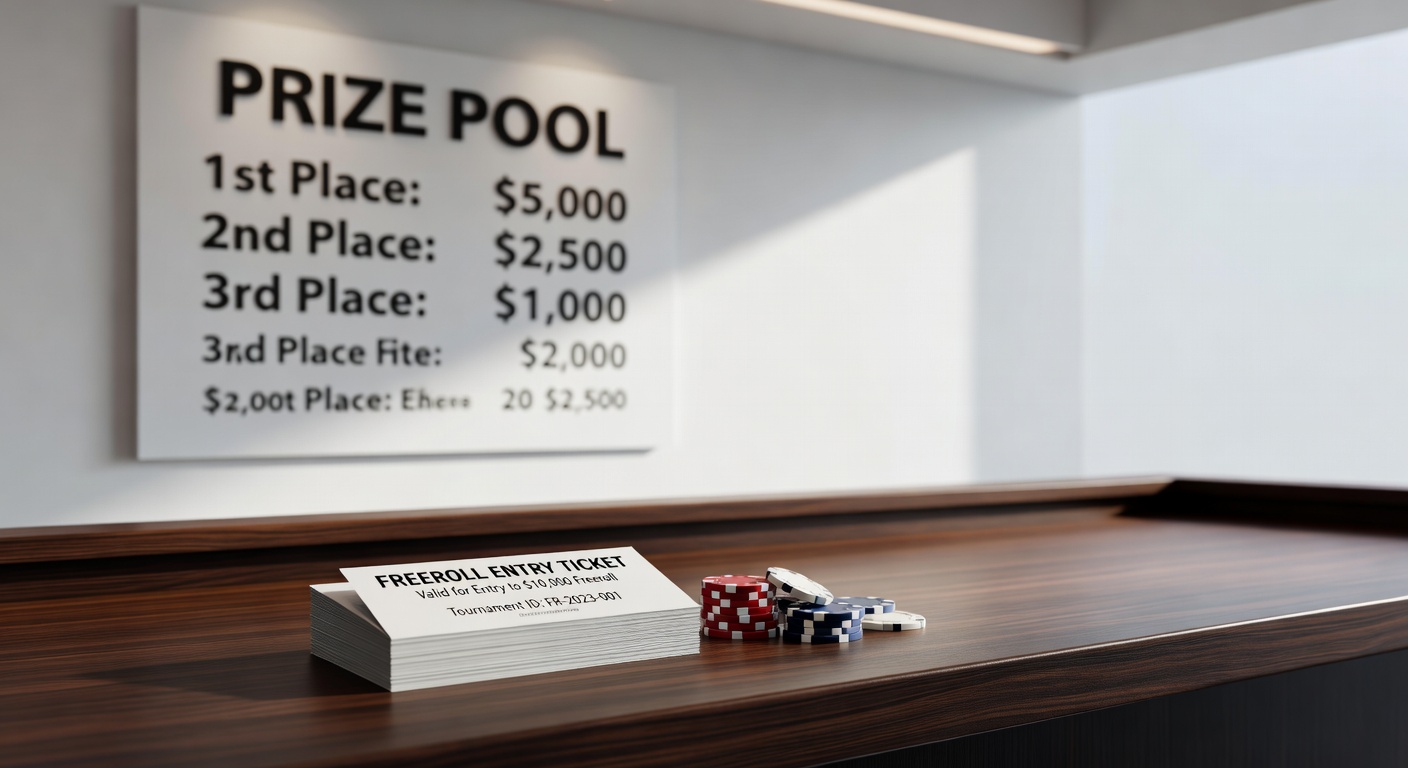
A freeroll is a tournament you do not pay to enter.
The catch is that someone else paid. The history of freerolls is the history of who that someone was, and why they thought the money was well spent.
1998: Planet Poker launches, the first online poker room
Mike Caro and Roy Cooke's Planet Poker went live in October 1998 as the first real-money internet poker site. It ran ring games only. The software was simple, the traffic was modest, and the operators quickly realised they needed a way to attract players who were curious but unwilling to deposit. Free tournaments with real-money prize pools emerged as the obvious hook.
1999: Paradise Poker introduces the structured freeroll
Paradise Poker launched in 1999 and ran what is generally considered the first structured freeroll schedule. Daily and weekly free tournaments with small real-money prize pools, funded entirely by the site. Entry was free. Finishing positions paid anywhere from $1 to $50. The marketing logic was straightforward. Attract depositors by letting them taste the software, build habits around scheduled events, and convert a fraction of freeroll regulars into paying customers.
2001-2003: PartyPoker scales the model
PartyPoker launched in August 2001 and built freerolls into its core acquisition strategy. The site partnered with affiliate networks that could offer exclusive freerolls with larger prize pools, sometimes $500 or $1,000, to anyone who signed up through a specific link. This was the first serious use of freerolls as an affiliate marketing tool rather than a site-wide promotion.
The economics were defensible. A freeroll with a $1,000 prize pool and 500 entrants cost the operator $2 per player acquired. Industry data at the time suggested that the average new depositor was worth between $50 and $150 in lifetime revenue. The math closed even if only one in twenty entrants deposited.
2003: Chris Moneymaker wins the WSOP through a satellite
The Moneymaker effect is the most consequential moment in freeroll history, even though his original $86 satellite on PokerStars was not technically a freeroll. It was a low-cost satellite. The distinction matters, but the cultural impact is the same. A recreational player converted a tiny buy-in into $2.5 million. The message to every amateur who read the story was that free or near-free tournaments could be an entry path to life-changing money.
PokerStars immediately expanded its satellite and freeroll offering. Free tournaments leading into paid satellites leading into the WSOP Main Event became a structured funnel that the site marketed heavily.
2004-2006: The depositor freeroll
By 2004, most major sites had introduced depositor-only freerolls. These required a first deposit but no entry fee. Prize pools ranged from $1,000 to $50,000. The logic was to give depositors a free reason to play regularly on the site and to build loyalty through scheduled tournament play. The term "beer money" entered the poker slang of that era, describing the modest but real cash a careful grinder could squeeze out of freerolls alone.
15 April 2011: Black Friday changes the map
The US Department of Justice indictments of PokerStars, Full Tilt, and Absolute Poker on 15 April 2011 cut American players off from the major online rooms overnight. The freeroll infrastructure survived in Europe and beyond but contracted in raw player count. Smaller sites targeting US-friendly or offshore markets kept freerolls going, often with lower prize pools and higher concentrations of grinders.
2012-2018: The affiliate freeroll becomes a specialty product
In the post-Black Friday European market, freerolls became increasingly sophisticated. Affiliate websites like PokerNews, CardsChat, and various country-specific portals ran branded freerolls with prize pools funded jointly by the affiliate and the operator. Entry typically required signing up through the affiliate's link. These are still the most common freerolls you find today.
Prize pool sizes settled into a pattern. A typical affiliate-linked freeroll in this era carries a prize pool between $50 and $500. Larger exclusives run to $2,500. Rare VIP freerolls for established players can reach $10,000. The field sizes vary from 200 to several thousand.
2019-2023: Live qualifiers and hybrid freerolls
Live poker tours introduced hybrid freeroll mechanics in the late 2010s. WPT, EPT, and WSOP Circuit events began running freeroll satellites at partner venues or online, giving away seats to tournament buy-ins. These are technically freerolls, but the winnings are tournament entries rather than cash.
Between 2019 and 2023, the GGPoker Natural8 network ran a series of highly publicised "Million Dollar Freerolls" funded as part of its WSOP partnership, giving away WSOP Main Event packages to players who accumulated loyalty points through paid play. The prize pools were real, the entries were technically free, and the acquisition effect was measurable.
The present: what you actually get
A modern freeroll falls into one of four buckets:
- Site-wide freeroll: small cash prize pool, open to any registered player, typically $50 to $500. Field sizes over a thousand. Payout structures top-heavy.
- Depositor freeroll: required minimum deposit in the past week or month. Prize pool $500 to $5,000.
- Affiliate freeroll: password-protected, requires registration through a specific affiliate. Prize pool $100 to $2,500. Smaller fields.
- Loyalty freeroll: requires rake or points earned through paid play. Prize pools vary widely. Often the best value relative to field size.
The mechanics are standard tournament mechanics. Blind levels of three to five minutes at the lowest level, faster structures than a paid event, and prize pools paid to the top ten or fifteen percent of the field.
What to expect in play
A freeroll with a $100 prize pool and 2,000 entrants pays the winner maybe $25. Second place might get $15. Tenth place might get $3. That is the realistic money. A grinder cannot make rent from freerolls. The economics do not support it.
The field is loose early. Most players are there for free and will gamble with any two cards. The winning strategy, statistically, is tight early, looser late, and aggressive at the bubble. Nothing sophisticated. Just survive the early carnage and apply standard tournament mechanics once the field is thin.
Freerolls are an acquisition tool for operators and a training ground for players. They are not a career.
That is the honest version. Play them to learn the software, to sharpen short-stack play, and to earn the occasional small windfall. Do not expect more. The money in poker still sits in the tournaments with buy-ins, because that is where the money comes from.