
How to Set Up a Crypto Wallet for Online Casino Play
If you are going to do this, the technical steps are straightforward. The harder questions are the ones about why the friction of crypto ever felt like an asset. Here are both.
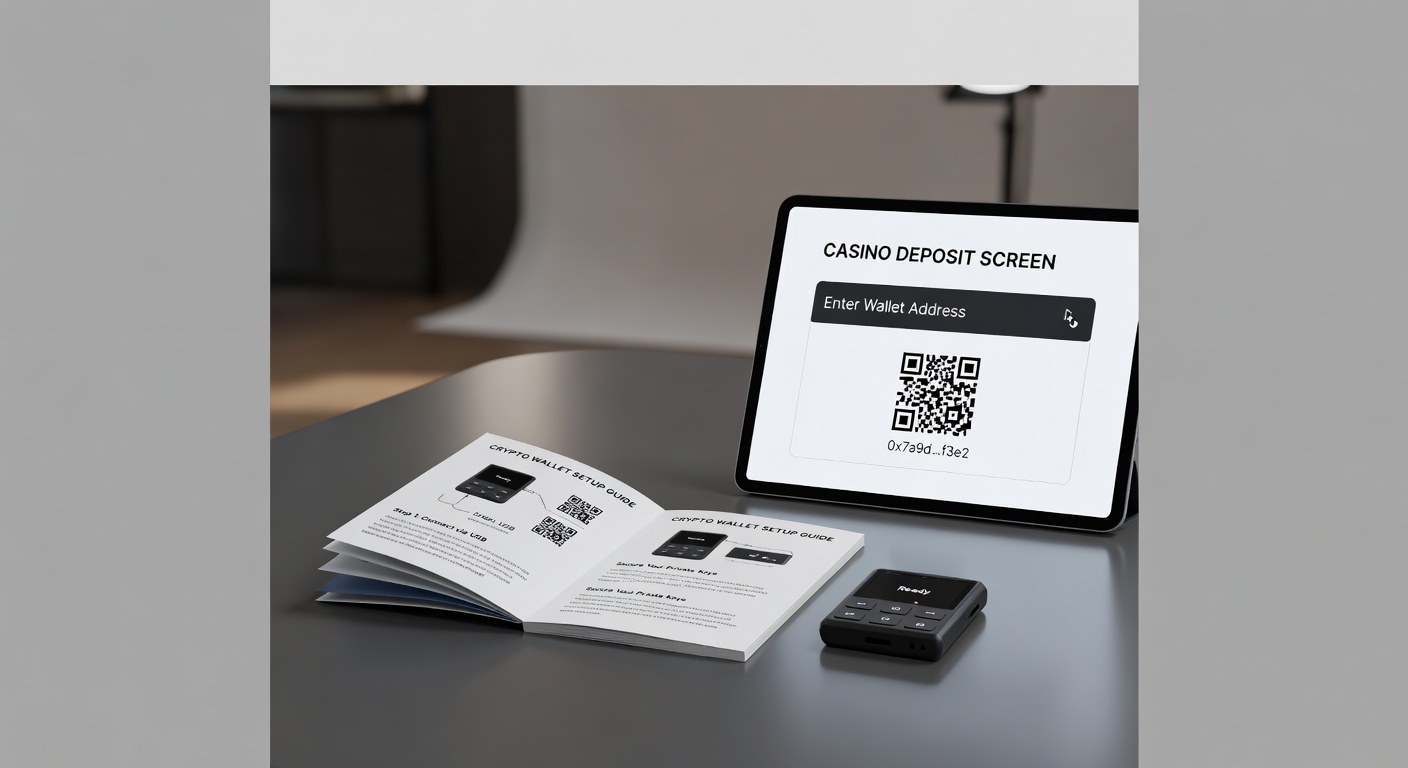
I used crypto to deposit into offshore sites for about 18 months in 2017 and 2018. I am not going to pretend the friction protected me. It did not. Below are the questions a reader is likely to ask about setting up a wallet for casino use, answered straight.
What is a crypto wallet, in plain terms?
A piece of software or hardware that stores the private key needed to sign transactions on a blockchain. The 'wallet' does not hold coins the way a physical wallet holds cash. It holds the key that proves you own coins recorded on the blockchain itself.
Do I need a wallet, or can I just use my exchange account?
You can use an exchange account for small, infrequent deposits, but it is not good practice. Exchanges can freeze accounts, block gambling-related outbound transfers, and ask for source-of-funds documentation that many gamblers do not want to produce. A personal wallet you control is cleaner for the actual send-receive step.
Custodial or non-custodial?
A custodial wallet is one where a company holds the private key for you. An exchange account is effectively a custodial wallet. A non-custodial wallet is one where you hold the key yourself. Casino deposits work with either, but non-custodial gives you control at the cost of responsibility. Lose the seed phrase for a non-custodial wallet, lose the coins. No customer service recovery.
Which non-custodial wallet should I use?
For Bitcoin specifically: BlueWallet on mobile, Sparrow on desktop. For multi-chain support (Bitcoin, Ethereum, stablecoins, Tron): Trust Wallet on mobile, MetaMask for Ethereum-side chains. For larger amounts or long-term storage: a hardware wallet like a Ledger or Trezor. I will not say which one I used, because the specific product matters less than the habits you build around it.
How do I actually set up a wallet?
Install the app. Open it. Choose 'create new wallet'. The app will generate a seed phrase of 12 or 24 words. Write the seed phrase down on paper. Not on your phone, not in a note-taking app, on paper. Put the paper somewhere safe. Confirm the seed phrase back to the app when prompted. The wallet is now usable.
That is the whole technical process. Everything else is secondary.
How do I get crypto into the wallet?
Two paths. First, buy on an exchange (Coinbase, Kraken, Binance) and withdraw to your wallet's address. The exchange will require KYC for the purchase. Second, use an on-ramp service like MoonPay or Ramp that integrates directly into some wallets. The on-ramps are faster but more expensive.
For either path, the wallet will show you a receive address (a long string of letters and numbers). You send crypto to that address from your exchange account or on-ramp. Confirmation takes anywhere from 10 minutes to an hour for Bitcoin, 1 to 5 minutes for most stablecoins on Tron or Layer 2 chains.
Which coin should I use for casino deposits?
Stablecoins are the practical answer. USDT on Tron network has the lowest fees and fastest confirmations for most casino operators. USDC on Ethereum or Polygon is alternative. Bitcoin works but confirmations are slow and fees are high during busy periods.
Avoid lesser-known coins or meme coins for casino deposits. They are not consistently supported, and if the operator does not accept what you send, recovery is messy.
How do I deposit at a casino?
The casino's cashier will show a deposit address for the coin you want to send. Copy that address carefully. Open your wallet, paste the address into the send field, enter the amount, confirm. Wait for the network confirmations. The casino credits your account once the transaction has enough confirmations, usually 1 to 3.
One mistake that costs people money: pasting an address from an email or chat that was manipulated by malware. Always copy-paste from the casino's own cashier page while it is open in front of you. Double-check the first and last four characters of the pasted address against the casino's displayed address.
What are the fees?
Network fees depend on the chain. Bitcoin on-chain: 1 to 10 dollars depending on traffic. Ethereum mainnet: 2 to 20 dollars depending on gas prices. Tron: pennies. Polygon: pennies. Layer 2 chains like Arbitrum or Optimism: cents. Operators may also charge a small deposit or withdrawal fee on top, though most do not.
Is this all anonymous?
No. Crypto transactions are pseudonymous, not anonymous. The blockchain records every transfer permanently. Analytics firms like Chainalysis can trace funds from a KYC'd exchange through multiple wallets to an end destination. Most regulated casinos now use blockchain analytics to verify the source of deposits. The anonymity narrative is outdated.
Is it legal?
Depends on your jurisdiction. In some places, crypto-gambling at offshore operators is a grey zone that regulators neither endorse nor prosecute. In others it is explicitly illegal. In a third set it is legal with conditions. I am not your lawyer. The fact that crypto makes the payment step easier does not change the legal status of the underlying gambling activity.
Why did I use it?
This is the question I want to end on, because the technical setup is 15 minutes and the self-reflection is what matters.
I used crypto for casino deposits because my bank had started declining card transactions to offshore operators, and because I had read a thread somewhere claiming it was 'private'. The privacy claim was partly true, and it was also partly about making myself harder to track by the people I lived with. My partner could see the bank statements. She could not see the blockchain.
The friction of setting up the wallet felt like competence. It was not competence. It was a new layer of insulation between my behavior and the people who might have helped me stop.
If you are going to do this, the technical steps will be easy. The harder work is asking why you are adding steps to the process instead of asking someone to sit with you about whether the process should be happening at all. That question was the one I did not answer until much later.