
How Auto-Spin Works and When to Use It
Auto-spin is a UX feature that plays N spins without input. It doesn't change a slot's RTP. It does change your wager-per-minute by roughly 15 percent, which changes your expected hourly loss. Here is when that trade-off is worth it.
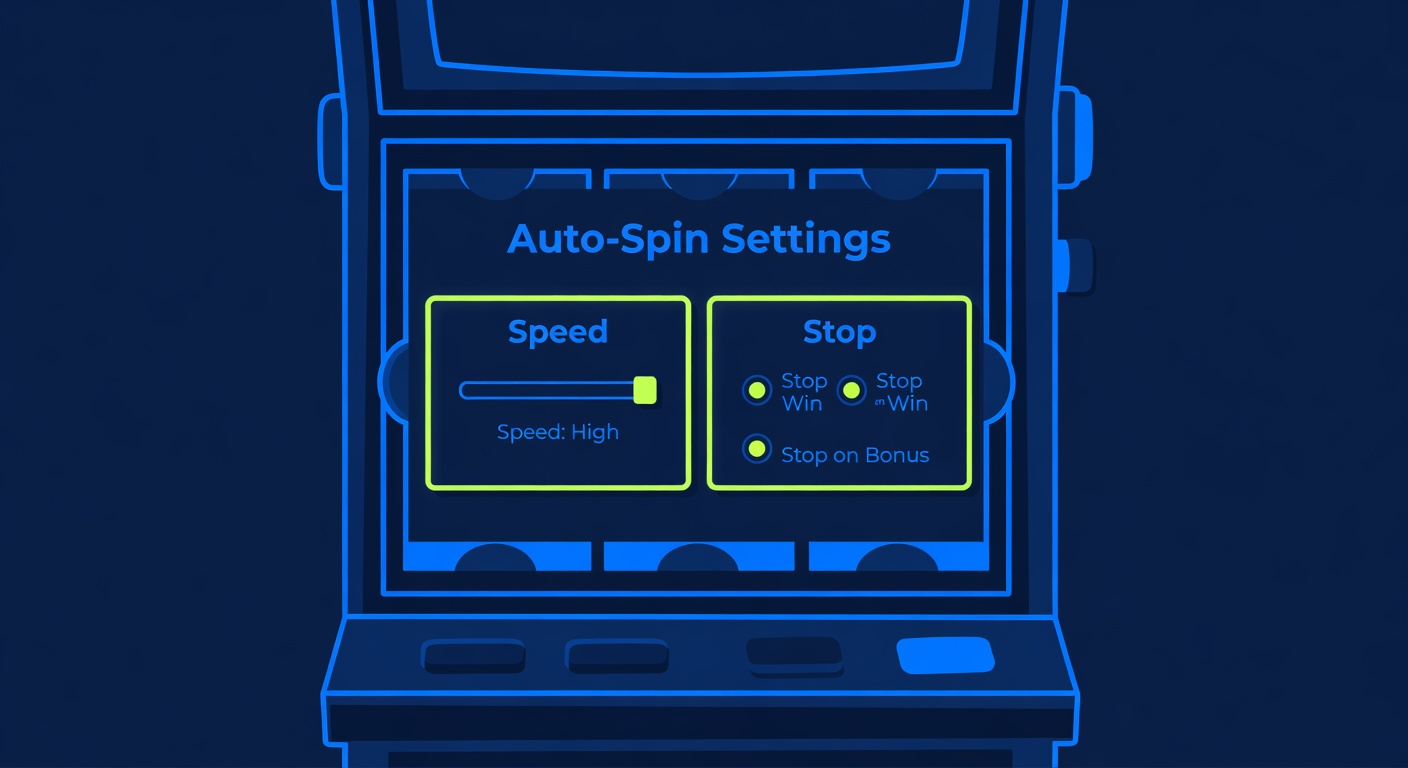
Auto-spin is a button that plays N consecutive spins of a slot without requiring you to click between them. That's the entirety of the mechanical change.
It does not alter RTP. It does not change volatility. It does not affect bonus trigger frequency. What it does affect is the rate at which your wager accumulates, and therefore the rate at which your expected loss accrues. That's a real but often-misunderstood effect, so let's walk through it with numbers.
The mechanics
When you enable auto-spin, the slot runs through a preset number of spins (usually selectable as 10, 25, 50, 100, or "continuous until stopped"). Between spins, the delay is shorter than manual play because there's no user input required. A typical manual slot runs at 10 to 12 spins per minute. Auto-spin runs at roughly 12 to 14 spins per minute.
So auto-spin speeds up play by about 15 to 25 percent, depending on the specific game and operator.
What the spec sheets say
Most regulators require auto-spin implementations to include safeguards:
- mandatory loss limit setting before enabling auto-spin
- mandatory single-win limit (auto-spin stops if a win exceeds X)
- maximum auto-spin count (UK requires max 100 spins per auto-spin session)
- visible pause/stop button at all times
Some jurisdictions (UK Gambling Commission, 2021 rule changes) also require that auto-spin cannot suppress the result display. Each spin's outcome must be shown, not just the final balance. This is explicitly to prevent auto-spin from functioning as a "set it and forget it" loss machine.
The math of the time speedup
Let's compare a 30-minute session, same bankroll, same slot, same bet size.
| Dimension | Manual play | Auto-spin |
|---|---|---|
| Spins per minute | 11 | 13 |
| Total spins in 30 min | 330 | 390 |
| Total wagered at $1/spin | $330 | $390 |
| Expected loss (96% RTP) | $13.20 | $15.60 |
| Increase in expected loss | baseline | +18% |
A straight 18 percent increase in expected loss for the same session duration. Not huge per session, but over dozens of sessions it compounds meaningfully. At $200 of expected loss per year on manual play, the auto-spin version comes in around $236.
When auto-spin is reasonable
Some legitimate use cases:
- completing bonus wagering requirements on a deposit match, where you've already committed to the playthrough volume and just want to burn through it efficiently
- low-stakes grinds where the cognitive load of clicking is higher than the EV loss from faster play
- disability accommodations where repeated clicking is physically problematic
In those cases, the faster pace is a feature. You've pre-decided the session parameters, and auto-spin is the UX that respects that decision.
When auto-spin is a trap
The problematic case is when auto-spin is enabled on a longer session without pre-set limits, and the player drifts into a mental state where they don't register individual spins. At 13 spins per minute, 30 minutes of zoning out costs you 390 wagers. If your bet is $2 per spin, that's $780 wagered, for $31.20 expected loss at 96% RTP.
You might not remember half of those spins. That's the design risk.
The regulatory data point
In the UK, auto-play was temporarily banned on online slots during the 2020 pandemic as a responsible-gambling measure. Studies at the time suggested that auto-play sessions produced slightly higher losses per unit time, but the effect was smaller than some activists claimed (roughly 10 to 20 percent more loss per session).
When the UK re-allowed auto-play with restrictions in 2021, the rule set included the loss limit and win-ceiling requirements mentioned earlier. Operators reported that auto-play usage dropped meaningfully after the restrictions, suggesting many users had been using it without setting sensible limits.
How operators implement the safeguards
In a well-designed client:
- clicking auto-spin presents a modal requiring a session loss limit entry
- a progress bar shows spins remaining
- any single win above a set threshold pauses auto-spin
- any balance drop hitting the loss limit pauses auto-spin
- a visible stop button remains functional
In a poorly designed client:
- auto-spin button toggles without additional confirmation
- limits are optional and default to off
- win threshold is hidden in settings
The difference between these two designs is one of the cleanest indicators of how seriously an operator takes responsible gambling.
The data-minded recommendation
If you're going to use auto-spin:
- Set a session loss limit equal to 25 percent of your bankroll before enabling
- Set a single-win pause threshold, so big hits actually get acknowledged
- Use smaller bet sizes than you would in manual play, because the faster pace compounds wager volume
- Cap the auto-spin count at 50 or less, so you're forced to re-engage periodically
Those four settings neutralize most of the downside. Auto-spin isn't inherently worse than manual play. It's just faster, and faster means more wager, and more wager means more expected loss. The math is that simple.
The slot's odds don't change when you click auto-spin. Your attention does.
Use it deliberately, not as a default.