
Cynthia Jay-Brennan: The Tragic Story Behind a $35M Slot Win
In January 2000, Cynthia Jay-Brennan won $34.9 million on Megabucks. Six weeks later, a drunk driver hit her car. The money didn't save her. It wasn't supposed to.
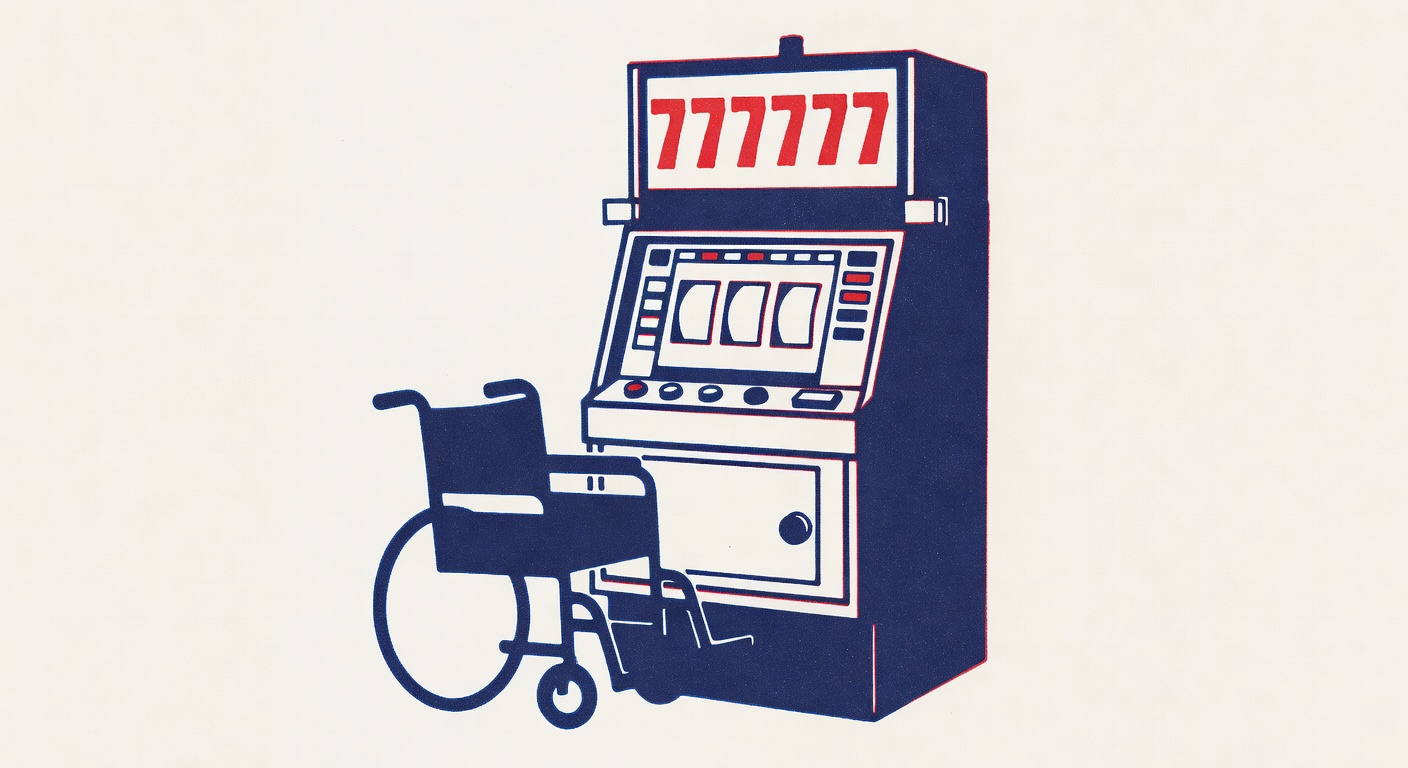
Cynthia Jay-Brennan won $34.9 million on a Megabucks slot machine at the Desert Inn in Las Vegas on January 26, 2000.
Six weeks later, a drunk driver hit the car she was riding in. Her sister Lela was killed. Cynthia was paralyzed from the chest down. The money didn't change that, and the idea that it might have is the reason people retell this story wrong.
The thesis here is simple. A slot jackpot is not a life. A jackpot doesn't prevent the thing you weren't betting on.
The facts
Cynthia was a 37-year-old cocktail waitress. She had been playing Megabucks for fun after a family dinner with her mother and sister. Her mother had put $20 in the machine and then went to the restroom. Cynthia continued with a $3 spin. The machine hit the jackpot at $34,959,458.
Nevada law paid Megabucks as a 25-year annuity. Cynthia began receiving roughly $1.4 million per year, pre-tax. That was going to continue through 2025.
On March 11, 2000, six weeks after the win, Cynthia and her sister were stopped at a red light on North Rancho Drive when a pickup truck hit their car at roughly 60 miles per hour. The driver had a blood alcohol level of 0.25, roughly three times the legal limit. Lela was killed. Cynthia survived with a spinal cord injury at the C5 vertebra.
The thesis
It is common for the Jay-Brennan story to be framed as "the lottery curse" or a cautionary tale about sudden wealth. This framing is wrong and it does harm. Here is why.
The drunk driver was not a consequence of the win. The crash was a crash. The timing was cruel. The causal chain of "she won money, therefore she got hit" is a story we tell ourselves because we want winning the lottery to have a dark price. Reality is not obligated to make its tragedies symbolic.
Cynthia said in subsequent interviews that she would give every dollar back to have her sister alive and her own mobility restored. Of course she would. The money was not a bargain with a devil. It was a number in a bank account that did not prevent the accident because money does not prevent drunk drivers.
Concession to the counter-argument
I can see the counter. You could argue the money gave her better medical care. It paid for accessible housing, adapted vehicles, and the ongoing support she needs. The annuity continued paying throughout her recovery. In that sense, the win did make her life post-crash materially easier.
That's true, and it's important. The money didn't save her. It did meaningfully reduce the financial component of what followed. Her sister was still gone. Her spine was still injured. But the care she received for the rest of her life was not capped by insurance limits in the way it would have been for most people.
So the win wasn't a curse. It wasn't a cure either. It was a financial cushion that happened to arrive six weeks before she needed one. That's a stranger story than either extreme narrative wants to tell.
Why the "jackpot curse" framing persists
The culture likes a symmetrical story. Big win followed by tragedy is symmetrical. It lets us feel that the universe has some form of justice, that nothing worth wanting can be had without cost, that the lottery is a moral product rather than a probabilistic one.
The lottery is not moral. Neither is the slot machine. Slot jackpots do not come with attached consequences. The universe is not grading your behavior. You pulled a lever and a specific sequence of events occurred inside a computer and six weeks later a completely unrelated person made a choice about drinking and driving that intersected with your car on a specific Saturday evening.
Those two events are independent. Claiming otherwise is pattern-matching. It's how our brains handle tragedy, not how the tragedy actually happened.
What the story is actually about
If Cynthia Jay-Brennan's story has a moral, it's not about slot machines. It's about a drunk driver named Clark Morse who was sentenced to 28 years in prison for the crash and who had prior DUI convictions. The legal system had processed him multiple times before that night. The preventable tragedy was the drunk driver, not the lottery.
Every retelling that makes this story about the jackpot does a small disservice to Lela and to Cynthia. The headline "Big Slot Winner's Life Ruined" is more clickable than "Drunk Driver with Multiple Priors Finally Kills Someone." The first is folklore. The second is what happened.
The distinction that matters
A big slot win does not protect you from anything the world throws at you. It does not make you target for bad outcomes either. The probability of being in a fatal car accident is not correlated with your bank balance. The idea that it is, is a form of magical thinking that survives because it is comforting.
The lottery is not a covenant with the universe. It is a random number generator attached to a contract for future payments.
Cynthia Jay-Brennan continued to receive her annuity payments. She became an advocate for accessibility and drunk driving prevention. She is still alive and still recovering from an injury she did not cause.
The money didn't cause the accident. The money didn't prevent it. The money is not the story.
That's the hot take. The story gets told wrong constantly and the correct version is less satisfying and more honest. A random event, a jackpot, preceded a deliberate event, a drunk driver. Their temporal proximity is a coincidence. Humans do not like coincidences.
That part is fine. We can not like them and still admit they exist.