
What Is KYC and Why Do Casinos Require It?
A Tuesday morning at a shared workspace in Tallinn, a compliance officer at a mid-tier casino, a file marked "Enhanced Due Diligence," and the slow realization that the photo of my driver's license was sitting somewhere inside this building.
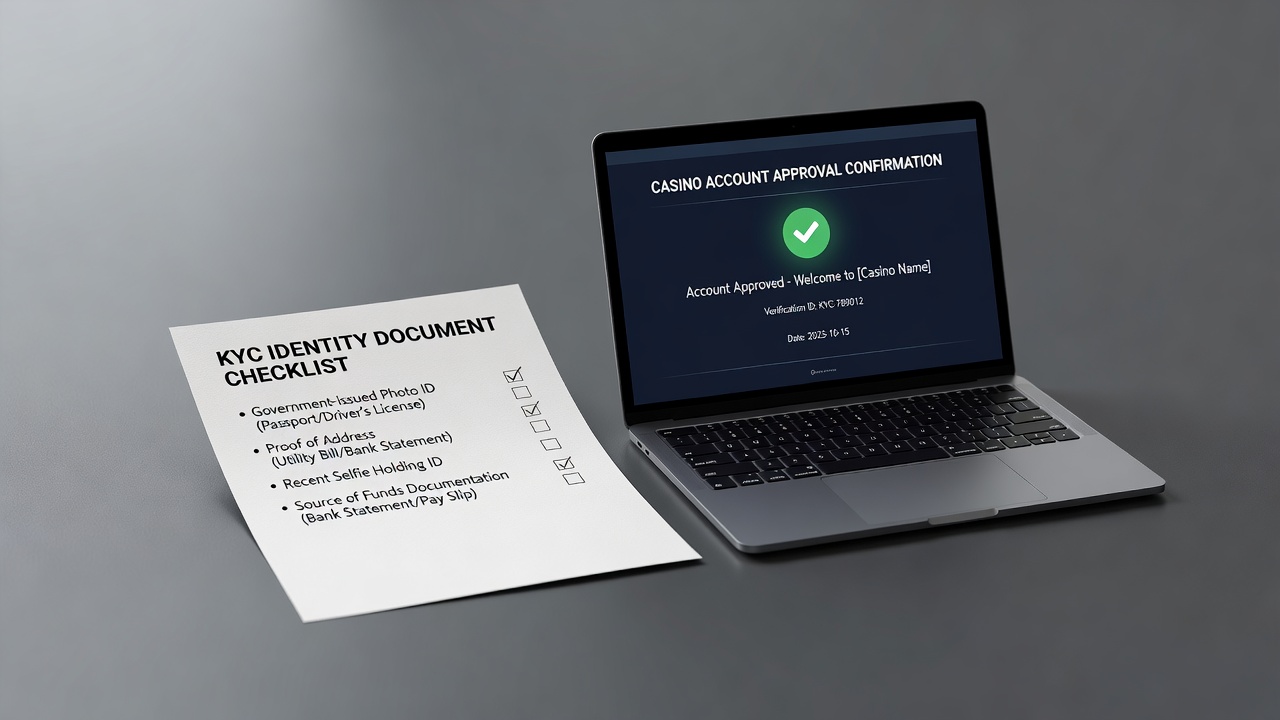
The compliance officer drank her filter coffee from a ceramic mug with a cartoon cat on it. Her name was Liisa. Her office was on the third floor of a shared workspace in Tallinn that had once been a sewing machine factory and now smelled like heated pine and fresh-ground espresso. She was showing me, with the detached patience of someone doing a third-grade science demo, exactly how my driver's license photo, uploaded two years earlier to a casino I barely remembered signing up to, had ended up in a folder on the shared server two doors down.
"This file," she said, tapping her screen with a pen, "is the record of your identity. This other file is the record of your source of funds. This third file is the monitoring log of every deposit, withdrawal, and game session you have had on our platform. If a Financial Intelligence Unit investigator walks in tomorrow and asks about your account, I can produce all three within about ninety seconds. If I cannot, our license is at risk."
She was not, I want to stress, doing anything wrong. She was describing the architecture of KYC, or Know Your Customer, which is the backbone of the licensed gambling industry and the reason why the casino you play at asks for things that feel, at first glance, none of its business.
What KYC actually is
Know Your Customer is a regulatory framework requiring financial institutions (and, increasingly, online casinos, which for regulatory purposes are treated as adjacent to financial institutions) to identify their customers and verify that the identity is real. In practice, it means three layers of checks.
The first layer is basic identification. You provide a name, date of birth, residential address, and nationality. The operator runs your details against a set of databases: government ID registries where available, electoral rolls in the UK, credit-bureau address-verification services, and commercial identity-verification providers like Onfido, Jumio, Veriff. The goal is to confirm that the identity you are claiming is a real, unique person and not fabricated.
The second layer is document verification. You upload a photo of your passport or driver's license and often a selfie with the document held up to the camera. The verification service uses machine learning to detect tampering, forgery, and face-matching inconsistency. The photo gets compared to the document photo. If the faces do not match within a confidence threshold, the application is flagged.
The third layer is address verification. Usually a utility bill dated within the last three months, or a bank statement, or a government letter. Some jurisdictions accept a tenancy agreement. The operator is trying to confirm that you live where you say you live, primarily so they can rule out that you are signing up from a jurisdiction where they are not licensed to operate.
Why casinos are legally required to do this
The short answer: anti-money laundering law. The longer answer involves a cascade of international agreements (FATF recommendations, the EU's AML directives, the US Bank Secrecy Act, the UK Proceeds of Crime Act 2002) that together require financial and gambling operators to know, on pain of losing their license and facing enormous fines, who their customers actually are.
A casino that cannot identify its players is a casino that, in the eyes of a regulator, might be being used to launder money. It might be accepting deposits from terrorist financiers. It might be serving sanctioned individuals. It might be allowing minors to gamble. It might be failing in its duty of care to self-excluded problem gamblers. All of these are things a regulator will punish, brutally, if discovered after the fact. Entain paid 615 million pounds to settle a UK KYC case in 2023. 888 Holdings paid 9.4 million pounds in 2022. The examples are not rare.
Why it happens when it happens
The timing of KYC is, for most players, the confusing part. Most online casinos will let you deposit and play without completing KYC (or with only a superficial identity check), up to certain thresholds. The first withdrawal is usually where the full KYC kicks in. Depositing without KYC poses minimal money-laundering risk to the operator because the money is flowing in. Withdrawing without KYC is a red flag because the money is flowing out, and the regulator's concern is that the flow-out is the laundering step.
This is also why players often feel ambushed by KYC. They have been playing for weeks, running up a balance, and the moment they try to withdraw, a support message arrives asking for a passport scan, a utility bill, sometimes proof of source of funds for the original deposit. The casino is not being obstructive. They are operating under a rule that says they must complete KYC before paying out.
The data question, which nobody enjoys
Once Liisa had finished walking me through the server, I asked her the question that was starting to itch.
"Who else sees this data?"
She listed the categories, which I will summarize. First, the operator's own internal compliance and fraud teams. Second, third-party identity verification providers, under data-sharing agreements governed by GDPR or the relevant data-protection regime. Third, payment processors, who need to match the identity on file to the identity on the card or bank account. Fourth, if an enhanced-due-diligence case opens, the operator's MLRO (Money Laundering Reporting Officer), and potentially the national Financial Intelligence Unit if a Suspicious Activity Report is filed. Fifth, in regulated markets, the gambling commission itself, on audit. Sixth, law enforcement, if a court order arrives.
That is a lot of hands, even if each hand is acting under its own set of legal constraints.
She was not defensive about this. She described it as the price of legitimacy. "If a player does not want their data in these systems, they have two options: play at unlicensed offshore sites where nobody is watching and they have no recourse if the site keeps their money, or do not play online at all."
What to do about it
If you play at a licensed casino, assume KYC will happen, and prepare for it before you want to withdraw. Upload your passport or driver's license when you sign up, not when you are trying to pull out your winnings. Use the same bank account or card to deposit and withdraw; mismatches trigger secondary review. Keep a utility bill from the last three months in your downloads folder. Do not fight KYC requests with support staff, because they are not empowered to override them and you will just waste an afternoon.
I left the Tallinn workspace around four. The sun was low and the tram outside was already crowded with commuters. I walked two blocks thinking about the folder with my driver's license in it, and the folder with my source of funds, and the monitoring log of every session I had played, and the quiet fact that Liisa and her team knew more about my gambling patterns than anyone in my family. The knowledge was not being misused. It was being filed. That is the bargain, fully examined. If you do not like the bargain, the only honest move is to stop playing.