
What Is a High Roller Bonus?
The high roller bonus is a late arrival in the history of casino marketing, but its antecedents reach back to the nineteenth-century spa resorts of Germany and France. Tracing that history clarifies what the modern version actually offers.
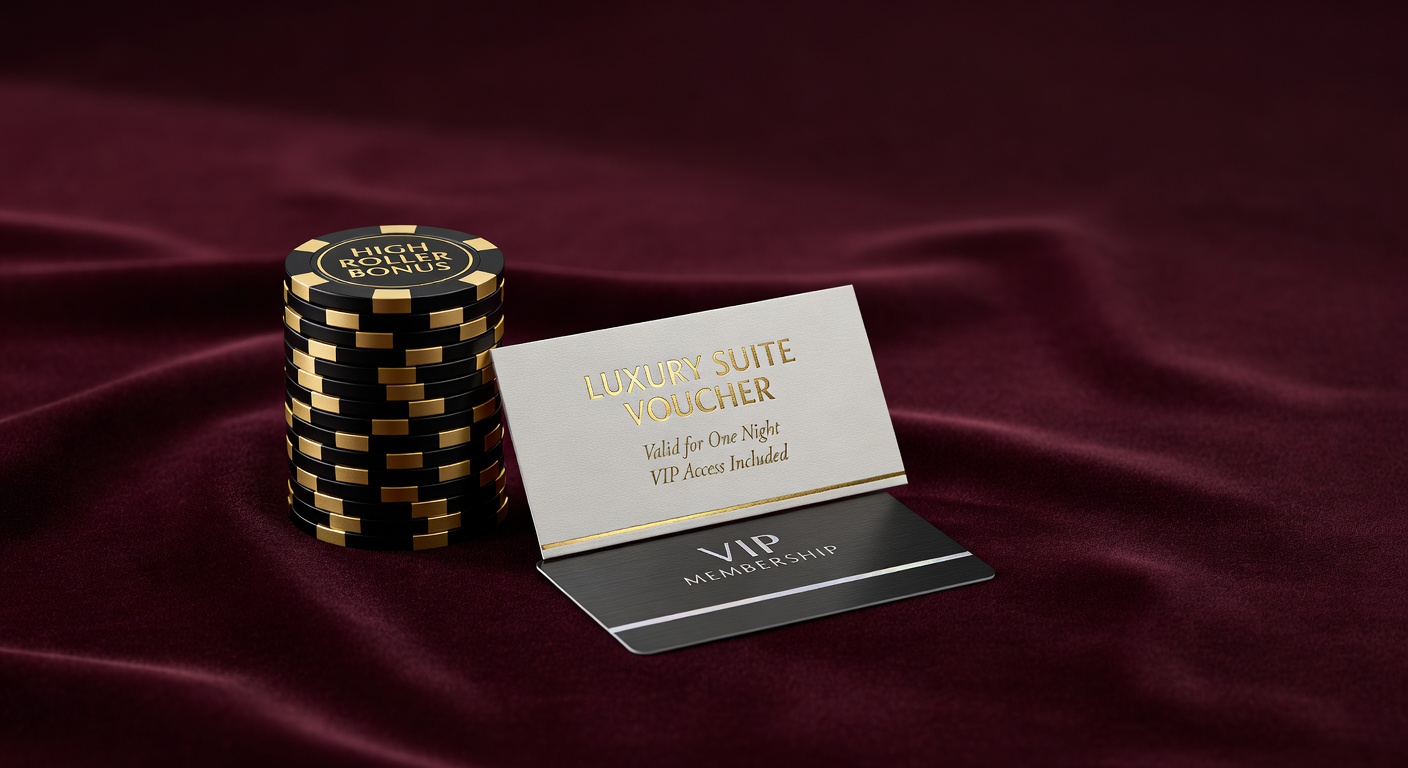
The high roller bonus is a specific promotional structure, but it belongs to a much older practice.
The spa-resort origins, 1850s to 1910s
The idea of giving something to a large bettor is older than the phrase high roller. In the mid-nineteenth century, the casinos of Bad Homburg, Baden-Baden, and Monte Carlo already understood that a small number of titled or merchant-class guests generated a disproportionate share of the house's revenue. The casinos responded by subsidizing the visit itself. Suites at the Hotel de Paris in Monaco, opened in 1864, were offered at discounted rates to gamblers with established records at the nearby Casino de Monte-Carlo. The practice was informal; no one spoke of a bonus.
Francois Blanc, who ran the Bad Homburg operation in the 1840s and 1850s and then took over Monte Carlo in 1863, is usually credited with formalizing this culture. Blanc kept careful records of which guests lost how much and used those records to decide who received what. The modern expression of the practice is more administrative but its logic is unchanged.
American adaptation, 1930s to 1970s
The American version emerged in Nevada after the state relegalized gambling in 1931. The Flamingo, opened in 1946, and the Sands, opened in 1952, began systematically offering free rooms and meals to guests who wagered above certain thresholds. The term comp, short for complimentary, entered casino vocabulary around this period. Jack Entratter, who ran the Sands from 1952 until his death in 1971, is sometimes cited as the operator who refined the comp hierarchy into the tiers still in use today.
In this era the high-end version of the comp was not called a bonus. It was called a junket. The junket operator, often an independent contractor, would identify a wealthy player in Los Angeles or Chicago, arrange a flight, a suite, and a line of credit, and deliver the player to the casino floor. The casino paid the junket operator a fee based on the player's action. The economics were opaque and the regulation minimal.
The corporate turn, 1970s to 1990s
The Corporate Gaming Act of 1969 in Nevada allowed publicly traded companies to own casinos, and the junket model began to give way to an in-house, more auditable system. Harrah's, which installed its Total Gold loyalty program in 1983 and then replaced it with Total Rewards in 1997, pioneered the idea of a points-based tier structure with explicit bonus tiers for the largest players. Players above certain thresholds of theoretical loss received both comps but promotional credits, cashback, and tailored reload offers.
It was in this period that the phrase high roller bonus began to appear in trade publications. The bonus was not a single product but a family of tailored offers: matched deposits on very large sums, enhanced rebates on table-game losses, access to private gaming salons, and preferential odds on certain bets.
The online transplant, 1996 to 2010
When online casinos appeared beginning in 1996, they inherited the welcome bonus from the direct-mail marketing tradition of the bricks-and-mortar industry. A typical welcome bonus of the late 1990s matched a deposit up to a few hundred dollars at one hundred percent. These offers were not, in the older sense, high roller bonuses; they were aimed at the mass market.
The specifically high-end variant developed in the mid-2000s. By 2006 and 2007, operators such as Betfair and 888 were publishing separate bonus tiers for players willing to deposit several thousand pounds or euros at once. The match percentage was often lower, but the absolute cash value was much higher, and the wagering requirements were sometimes relaxed. The structural logic of the spa-resort era had reappeared in a digital form: the larger the player, the more tailored the offer.
The modern high roller bonus
A high roller bonus in the current online casino market is a promotional offer tied to a substantial deposit, usually at least one thousand US dollars or the equivalent, and sometimes several times that. The typical form includes three elements.
- A match percentage on the deposit, often between twenty-five and one hundred percent. The match percentage tends to fall as the deposit size rises, because the operator is offsetting its marketing spend against an already-profitable player.
- A wagering requirement, expressed as a multiple of the bonus or the bonus plus deposit. High roller wagering requirements have historically been lower than standard welcome bonus requirements, reflecting the fact that the player's expected volume is already large.
- Game eligibility restrictions, which often exclude or reduce contributions from low-variance table games such as blackjack and baccarat. This restriction is important. A player who intends to use the bonus on blackjack will often find that only ten or twenty percent of wagers count toward the requirement.
Some operators also add a personal account manager at this tier, along with faster withdrawal limits and invitations to private events or tournaments. The account manager is, in many respects, the linear descendant of the nineteenth-century casino director who kept personal notes on individual guests.
A single structural feature, carried forward
The entire arc, from Blanc's notebooks at Bad Homburg to the modern loyalty program's automated tiering, carries forward a single structural feature: large bettors are cultivated individually, because their individual value to the house justifies the attention. The high roller bonus is a codification of that attention.
Today the player who qualifies for such a bonus should read the terms with the same care that a nineteenth-century merchant would have read a casino director's handwritten letter of welcome. The wagering requirement, the game restrictions, the maximum bet while the bonus is active, and the expiration window: all of these determine whether the bonus is genuinely valuable or a marketing line that the player will struggle to realize. The offer is real, and it is an older offer than it looks, but its value depends on how the terms interact with the player's own game and stake.