
The Evolution of Slot Bonus Rounds Over the Last Decade
Slot bonus rounds have evolved dramatically from 2015 to 2025. Here is a ten-point tour of what changed, what got better, and what got worse.
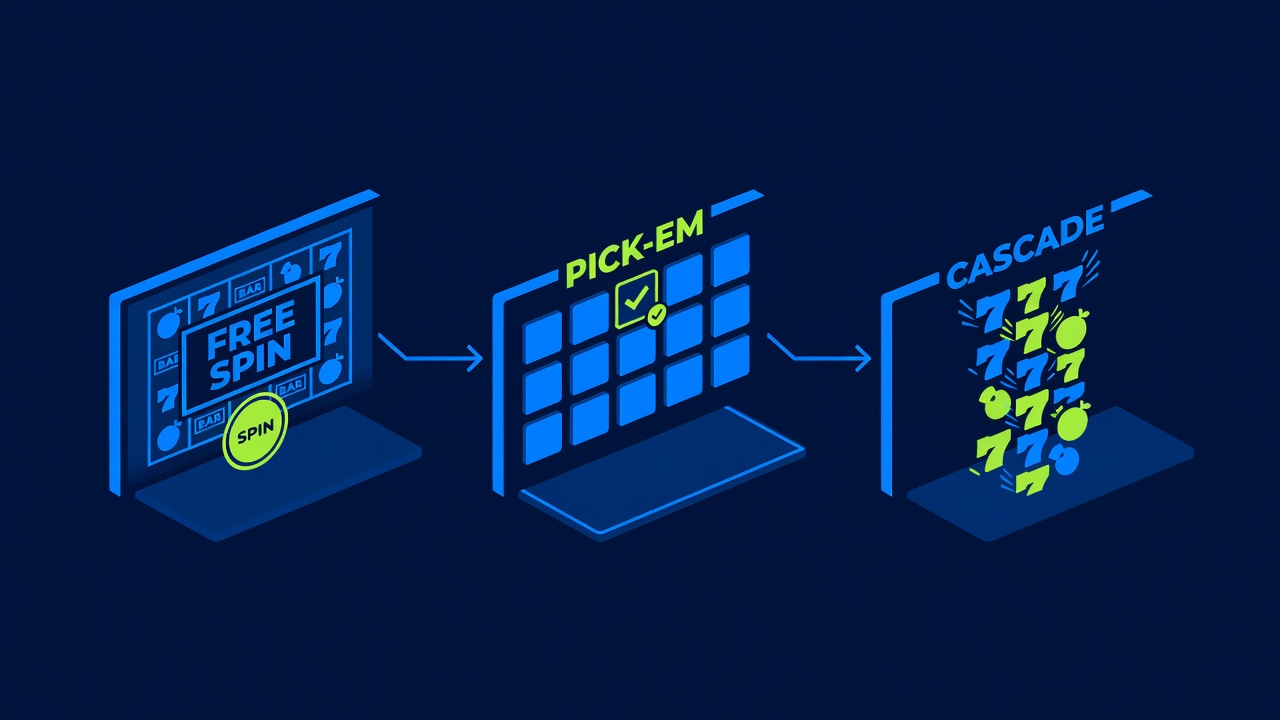
Slot bonus rounds. They are the fun part of slots, right? The part where the reels stop spinning and something more interesting happens. Ten takes on how they have evolved over the last decade, from free spins to whatever we are calling it now.
1. Free spins are still the workhorse
Going back to 2015, the dominant bonus round was free spins with some kind of enhancement: multiplier, sticky wilds, expanding symbols. That has not really changed in 2025. Most slots still trigger a free spins round as the primary bonus feature.
What has changed is the sophistication of the free spins. Modern free spin rounds often include dynamic multipliers that climb with each win, sticky wilds that stack, or unlock mechanics where you trigger bigger features inside the free spins. The free spin round of 2025 is structurally similar to 2015 but pays differently due to the layered features.
2. Buy features changed everything
Around 2017, providers started rolling out "buy the bonus" options that let players skip the base game and pay directly (typically 50 to 100 times the bet) for the bonus round. Big Time Gaming's Bonanza Megaways was a turning point, and Pragmatic Play pushed it further with their whole catalog.
Buy features are controversial. They shorten the session. They concentrate variance. They turn the slot into a bonus-round simulator. The UK banned them on regulated UK slots in 2025 after the Gambling Commission found they contributed to problem gambling patterns. Other jurisdictions are considering similar bans.
3. Megaways mechanics reshaped the layout
Big Time Gaming's Megaways (launched 2015, went mainstream around 2018) broke the fixed five-reel layout. Variable reel heights, up to 117,649 ways to win per spin, and bonus rounds that feature cascading reels and progressive multipliers. The feature became the template for dozens of other providers' copycats.
Megaways bonus rounds are usually free spins with a persistent multiplier that climbs with each cascade. The math volatility on Megaways titles is very high. Short sessions, big swings, dominant bonus round relevance.
4. Gamble features largely disappeared
In 2015, many slots included a gamble feature that let you double or quadruple your win by guessing a card color or suit. Those are mostly gone in 2025 in regulated markets. UK and EU regulators viewed them as problem gambling amplifiers and most operators have disabled them.
The gamble feature still exists on some crypto casino slots and on unregulated markets. If you see it, recognize it as a legacy feature that responsible operators have moved away from.
5. Hold and Win changed low-to-mid stakes gameplay
Hold and Win (or Hold and Spin) is the mechanic where symbols lock in place on the reels and each re-spin gives you additional chances to collect. Light and Wonder's Dancing Drums, then Pragmatic Play's Fire Blaze, then dozens of others made this the new core mechanic for a certain segment of players.
Hold and Win rounds pay out in a fundamentally different distribution from free spins. The tail is longer (big jackpots) and the median is smaller (most rounds end with moderate wins). Players who prefer Hold and Win rounds are different from players who prefer free spins rounds. Both are served by modern slot catalogs.
6. The "feature engine" is now the product
Top modern slot providers (Nolimit, Hacksaw, No Limit City, Push Gaming, others) are not just designing individual bonus rounds. They are designing feature engines, modular systems where the provider can reskin the same feature across multiple games with new themes. The feature math is the product. The theme is decoration.
This is efficient for the provider but means the games can feel repetitive. If you have played one Nolimit City feature engine, the next one feels familiar even with different art.
7. Maximum win caps became standardized at 5000x to 50000x
The old days of uncapped slots (where a jackpot could in theory exceed a million times the bet) are over. Most modern slots have an explicit maximum win cap, usually advertised as "max win 5000x" or "max win 50000x." This is part of the marketing and the math design.
The cap matters for volatility. A slot with a 10000x cap can be designed to have higher variance in the bonus round than a slot with a 2000x cap, because the math can push outcomes toward the cap more frequently. Players who chase high-volatility experiences specifically look for 10000x+ caps.
8. Streamer influence reshaped target volatility
From 2019 to 2024, casino streamers (Roshtein, Trainwrecks, and many smaller channels) reshaped player expectations. The highlight-reel culture favored big-win screenshots over long sessions. Providers responded by making slots with heavier tails and bigger maximum wins to produce streamer-worthy content.
This is not healthy for the average player. A slot designed to produce an occasional 10000x hit for streamer highlight reels is a slot with higher variance and a lower hit frequency for everyone else. The streamer economy shifted slot design away from entertainment toward content production.
9. Bonus buys got tiered
A 2022-onward trend is tiered bonus buys. Instead of one buy option at 100x the bet, modern slots offer multiple tiers: 50x for a small bonus, 100x for the regular bonus, 500x for a super bonus with enhanced features. This gives the operator more price points and gives the player the illusion of choice.
The math on tiered buys is almost always that higher tiers have slightly worse RTP than lower tiers, because the tail is more skewed. The apparent choice between tiers is actually a choice about how much variance you want to eat. Most players do not realize this.
10. The future is probably interactive
Looking ahead, the next five years of bonus round evolution are probably about interactivity. Pick features, skill-adjacent features (even if the skill is cosmetic), and narrative bonus rounds that play like micro-games. Some of these exist already. Providers like ELK Studios and Thunderkick have been pushing this direction.
Whether interactivity improves the player experience or just serves as marketing for otherwise-identical RNG math is an open question. My guess is that it is mostly marketing. The underlying RTP is still RTP. The bonus round experience is the cover on a book whose contents are determined at spin time. Dressing it up in interactive elements is fun but does not change what the slot actually is. That is the through-line for the whole decade, honestly. The mechanics evolved. The math is the math.