
The 25-Year-Old Software Engineer Who Hit $39.7M on Megabucks
A 25-year-old software engineer from Los Angeles hit the largest slot jackpot in history on March 21, 2003, at the Excalibur. Here are the common claims about the story and what the data supports.
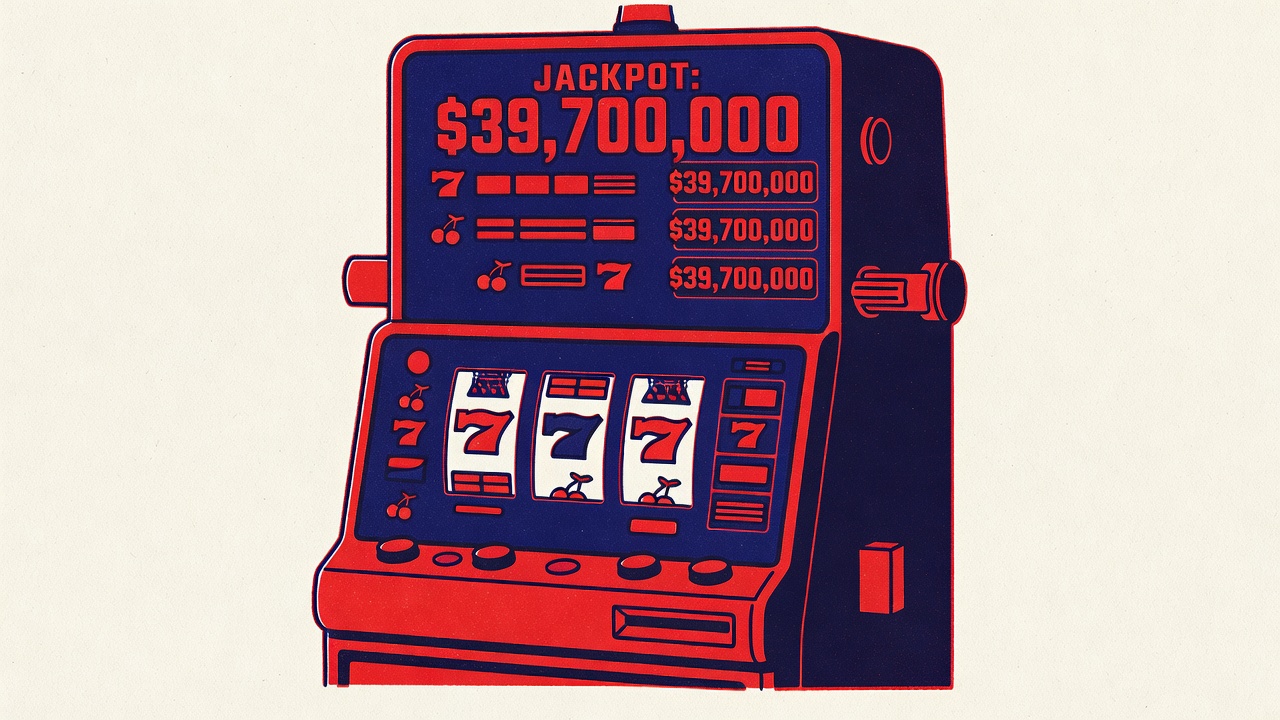
On March 21, 2003, an anonymous 25-year-old software engineer from Los Angeles won $39,713,982.25 on a Megabucks slot machine at the Excalibur Hotel and Casino in Las Vegas. The win remains the largest single slot jackpot ever recorded.
The story has accumulated a lot of folklore in the two decades since, some of it true and some of it invented. Let's sort through the claims.
Claim: The winner beat astronomically long odds
Reality. Yes, but the published odds number most people cite needs context. Nevada gaming regulators and IGT (the slot manufacturer) have disclosed that Megabucks jackpot odds at the time were roughly 1 in 49 million per max-bet spin.
That figure represents the probability on any single maximum-bet spin. Across an entire year of play on the Megabucks network, the jackpot typically hit once or twice because the number of spins played across all linked machines was large enough to make the event likely within months. So from a network perspective, hitting the jackpot was neither rare nor remarkable. From the individual player's perspective, it remains a once-in-a-lifetime event.
Claim: He walked in and won on his first pull
Reality. The winning player reportedly had been playing for some time before the hit, but the exact number of spins has never been officially disclosed. The Excalibur and IGT only released basic details about the win. Several news reports from 2003 describe him as having been "playing for minutes" rather than hours.
The "first-pull" narrative is a common elaboration that isn't supported by documented sources. He could have played 20 or 200 spins; the record is unclear.
Claim: The payout was $39.7 million in cash
Reality. The headline number is accurate, but the payout was structured as a 25-year annuity with annual payments of roughly $1.5 million. This was standard for Megabucks jackpots at the time.
The cash-value present alternative (a lump sum at time of win) would have been substantially less than the headline figure, in the range of $18 to $22 million after discounting. The winner reportedly took the annuity.
When people describe this as "the biggest slot win ever," they typically quote the nominal total annuity value. The present-value comparison to other jackpots (some of which were paid as lump sums) is not apples-to-apples.
Claim: He remained anonymous for the rest of his life
Reality. Nevada law allowed him to remain anonymous at the time, which he did. Some Nevada casinos and jurisdictions have changed disclosure rules since 2003, but for the 2003 Megabucks hit, neither his name nor subsequent identity was publicly disclosed.
There is no reliable follow-up on what happened to the winner financially. Unlike some high-profile lottery winners who faced bankruptcy, this player's anonymity means the standard "lottery curse" narrative that gets attached to him is pure speculation. He may have invested the annuity wisely; he may not have. We don't know.
Claim: The specific machine was special or rigged
Reality. The machine was a standard Megabucks unit from IGT's wide-area progressive network. Nevada Gaming Control Board audits of Megabucks machines are public record, and the 2003 hit was consistent with the machine operating as designed.
"Lucky machines" or "hot machines" are a folk concept not supported by the random number generator design of modern slots. Every spin is an independent trial with the same probability of hitting the jackpot. A machine that just paid out has the same probability on the next spin as a machine that hasn't paid in a year.
Claim: The jackpot resets to $10 million after a hit
Reality. Megabucks at the time reset to a seed of $10 million (roughly) after a hit. The jackpot then grows as spins on the network contribute to it. The 2003 jackpot had grown to $39.7 million over roughly 12 weeks of accumulating play, which implies a network-wide contribution rate of about $3 million per week.
The network consisted of hundreds of machines across multiple Nevada casinos, all pooling a small percentage of each max-bet spin into the progressive. That's why the jackpot could reach levels no single casino could support.
Claim: Megabucks jackpots are still growing as large today
Reality. The 2003 record has not been topped on Megabucks or any other wide-area progressive slot. Several factors contribute:
- slot machine RTP regulations have tightened in Nevada, reducing the contribution rate to progressive pools
- more jurisdictions have competing progressive products (like Dragon Link, Lightning Link), fragmenting the play across different networks
- general slot play per-spin value has shifted toward lower stakes and higher-RTP games, reducing the rate at which giant progressives grow
The largest Megabucks hit since 2003 was a $21.1 million win at the Aria in 2022, still well short of the original record.
Claim: Software engineers are statistically overrepresented among big slot winners
Reality. There's no data to support this claim. It's an artifact of the specific winner's occupation becoming part of the story. Slot play demographics are broadly distributed across professions. The 2003 winner being a software engineer is a biographical detail, not a statistical pattern.
Folklore about certain professions being "lucky" at slots has zero supporting evidence. Slots don't select for occupation. They select for people who played a spin at the right moment.
The single most reliable fact about the 2003 Excalibur Megabucks hit: a 25-year-old won $39.7 million. Almost every other detail in the retelling has been embellished somewhere along the way.
The honest summary
The record win is real, the player was genuinely a 25-year-old software engineer from LA, and the payout was a 25-year annuity. The rest of the folklore (first-pull hit, lucky machine, financial catastrophe, etc.) ranges from undocumented to fabricated.
The larger lesson is about media narrative drift. A well-documented event from 2003 has accumulated layers of story over twenty years. For gambling outcomes where the actual odds are printed and auditable, the story that travels furthest is usually not the story that was closest to the truth.