
Sound Design in Slots: How Audio Shapes the Player Experience
Slot machine audio is engineered. A look at what the research says about sound in gambling, drawing on studies from the University of Waterloo and disclosures from the major cabinet manufacturers.
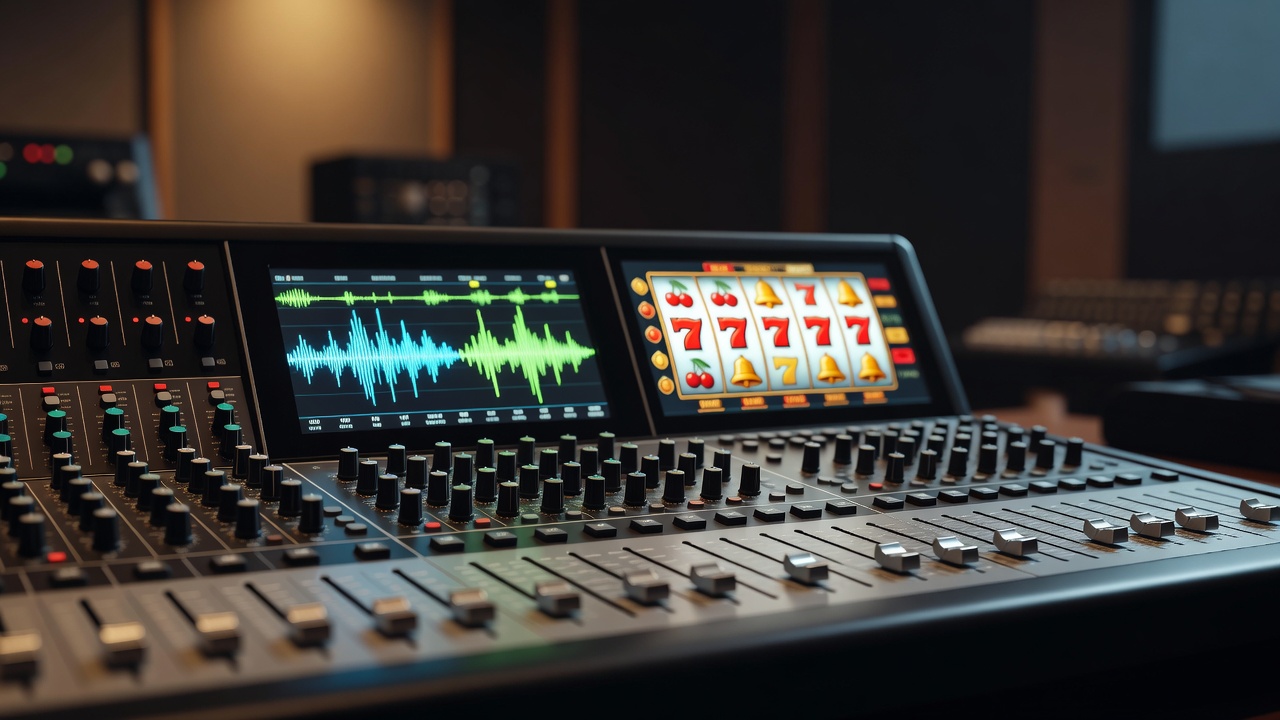
Kevin Harrigan, a professor of game design at the University of Waterloo, published a 2010 study titled Slot Machine Structural Characteristics that placed audio at the center of what the machine is doing to the player. The study, peer reviewed and cited widely in gambling research, treats sound as a deliberate tool rather than decoration.
That framing matters because slot operators and manufacturers have historically resisted calling their audio design a form of psychological influence. The research says otherwise.
What the B major key does
Mike Dixon, Harrigan's co-author at Waterloo, analyzed the audio output of 142 slot machines at an Ontario casino in 2014. The study, published in the Journal of Gambling Studies, found that 80 percent of the machines produced their win sounds in the key of C, sharpened to a major triad. The pitch was consistent across manufacturers: International Game Technology, Aristocrat, Konami, Bally.
The choice is not accidental. Major keys in Western music are perceived as resolution and reward. Minor keys suggest tension. A win cue that resolves in a major chord produces a small dopamine release in listeners familiar with the musical convention. Dixon's study measured player arousal through skin conductance and found higher responses to major-key wins than to the same credit amount announced silently.
The problem of losses disguised as wins
A loss disguised as a win, or LDW, is a spin that pays less than the amount wagered but triggers the full celebratory audio sequence. A player bets $1.50 across 30 lines, wins 40 cents on one line, and the machine plays the same fanfare as a $15 win. The player has lost $1.10. The audio says otherwise.
Harrigan's team, in a 2011 paper in the International Gambling Studies journal, tested players on LDW-heavy machines and on machines where LDWs were silent. Players on the audio-active machines reported higher enjoyment and played longer. They also lost more money. The effect was statistically significant at p less than 0.01.
The practice is disclosed in technical documents filed with the Alcohol and Gaming Commission of Ontario. Cabinet manufacturers, when asked directly in 2016 committee hearings in the British Columbia legislature, confirmed that LDW audio is programmed by default and can be disabled at the operator's request. Few operators disable it.
The near-miss sound
A near-miss in slot terminology is not a near-win. It is a design choice in which the reel stops just above or below a winning line, producing the visual impression that the player almost hit a jackpot. The stopping position is determined by the random number generator at the start of the spin; the visual proximity is a reel-mapping decision by the designer.
When a near-miss lands, most modern cabinets play a rising tension cue that cuts off at the moment the last reel stops out of alignment. R.I. Reid, writing in the Journal of Gambling Studies in 1986, showed that near-miss outcomes produced the same physiological response as actual wins. The audio cue amplifies that effect. Harrigan's 2014 fMRI study at the University of Waterloo showed ventral striatum activity, the brain's reward processing region, firing on near-miss outcomes at 60 percent of the intensity of actual wins.
Attract mode and the floor environment
Walk through a modern slot floor at a property like MGM Grand Las Vegas and the ambient sound level sits between 70 and 75 decibels, measured by the Nevada Gaming Control Board in a 2019 environmental study. Individual machines run attract loops at 65 to 70 decibels from three feet away. The cumulative effect is a wash of music and coin sounds that rarely drops below conversational volume.
The loops are short, typically 15 to 30 seconds, and loop seamlessly. Aristocrat's Lightning Link series, one of the most widely deployed slot titles of the 2010s, uses a 22-second loop with a rising chord at the 18-second mark. The rising chord is designed to draw the attention of passing players. Floor managers at the Cosmopolitan confirmed the effect in a Las Vegas Review-Journal interview in 2020: they move high-performing Lightning Link cabinets to aisle positions precisely because the attract loop reaches walkers at the end zones.
Mobile slots and the quiet problem
Mobile slot apps face a specific challenge: many players play with the volume off. A 2021 internal survey conducted by NetEnt, shared at ICE London that year, found that 68 percent of mobile slot sessions had system audio muted.
NetEnt, Pragmatic Play, and Play'n GO responded with haptic feedback on winning spins and with more aggressive visual celebration: screen shakes, particle effects, full-screen flashes. The goal is the same as the audio on a floor machine, which is to mark the win as a significant event. The tools differ because the delivery channel differs.
Regulatory responses
The UK Gambling Commission, in its 2021 consultation on slot design, proposed a ban on losses disguised as wins across all British-licensed machines. The consultation closed in November 2021 and the rules took effect in October 2023. Operators were required to disable LDW audio on any game where the payout was smaller than the total stake for that spin.
The Massachusetts Gaming Commission adopted a similar rule for land-based machines at Encore Boston Harbor and MGM Springfield in 2022. The rule requires that any spin returning less than the amount wagered produce no celebratory audio cue. Compliance reports from the commission indicate all three properties in the state are now in conformity.
Ontario, through the Alcohol and Gaming Commission, took a different path. Rather than ban LDW audio, the regulator required that player-choice settings allow players to disable it at the machine. Uptake is low. An AGCO audit in 2023 found that 3 percent of slot sessions on machines with the setting available had the audio disabled.
What a cautious player can do
For players who want to reduce the audio's grip, the useful levers are limited:
- Play with headphones at low volume, which flattens the dynamic range and reduces the impact of the celebratory cues.
- Play mobile titles with the sound off, which is what most mobile players already do.
- Sit at machines that have been configured with LDW audio disabled, which is possible in Ontario, the UK, and Massachusetts by regulation.
The audio does what it is designed to do. The research is clear, the regulatory record is clear, and the countermeasures are modest. A player who understands the mechanism is in a better position to decide when the sound is doing its work on them.