
NHL Goalie Research: The Key to Smarter Hockey Bets
The single least-researched piece of public information in NHL betting is who is actually in the net tonight. My position: if you bet hockey without checking the projected starter in the last 90 minutes, you are not betting, you are tipping the book.
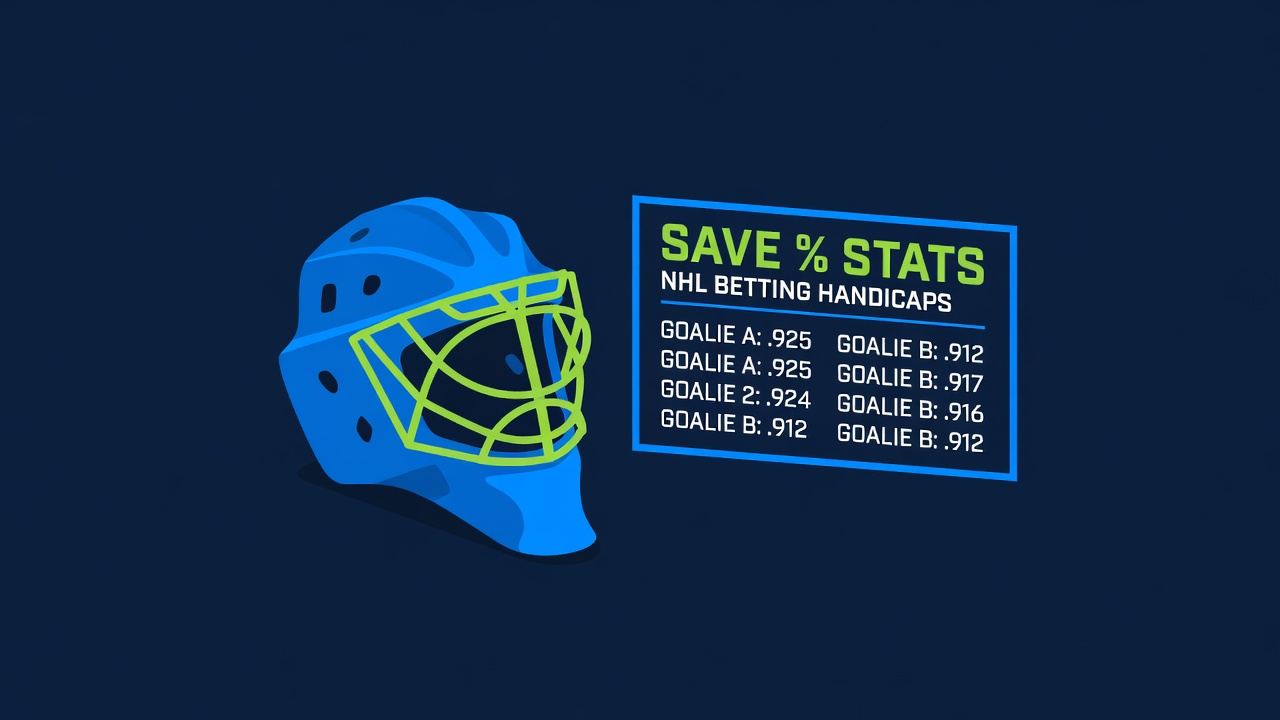
The thesis, sharp and unromantic: your NHL bet is downstream of exactly one piece of information that is routinely stale on every casual bettor's screen, and that piece of information is who is in the crease. If you do not have the confirmed starting goalie within 90 minutes of puck drop, your bet is worse than a coinflip against the sharp market. It is a donation.
Second paragraph, just so you know where I land: goalie research in hockey betting is not optional edge, it is the baseline prerequisite. Everything else, team form, home-away splits, back-to-back fatigue, betting value metrics, is a rounding error compared to whether Ilya Sorokin or a tired AHL callup is starting behind a defense that gave up 38 shots last night.
I came to this belief the expensive way. In the 2017-18 season I was betting NHL totals with the smug confidence of a man who had discovered pace differentials. I was tracking shot attempts per sixty, goals-above-expected from MoneyPuck, power-play efficiency, the whole analytics bookshelf. I was also losing. Not catastrophically, but consistently, in a way that felt inexplicable given the work I was putting in. One February night in Chicago, I was in a sports bar on North Damen Avenue watching the Blackhawks play the Stars, having taken the over on a line set at 5.5, and I noticed something weird about the Stars' net. A backup named Landon Bow was playing. I had not known this. I had not checked. The line had moved from 6 to 5.5 in the hour before puck drop for a reason and I had missed the reason. I had bet on a phantom version of the game.
The game ended 2 to 1. I lost. I lost because I had done everything right except the one thing that mattered.
Why goalie identity dominates everything else
The save percentage gap between elite NHL starters and replacement-level backups is, on average, about 15 to 20 expected goals over a full season, which translates to roughly 3 to 4 wins in the standings. In a single game, the difference between a hot Juuse Saros and a third-string emergency callup is often 1 to 1.5 goals of expected output. NHL totals are commonly priced at 5.5 or 6. A swing of 1.5 goals is a swing across the line. It is not a marginal variable. It is the variable.
The same principle applies to moneyline and puck line markets. Betting a puck line without knowing the goalie is like betting a total without knowing whether the game is outdoors at minus 20 Celsius in Saskatoon or indoors in Tampa.
What real goalie research looks like
Here is a short version of what a disciplined bettor checks before a single bet is placed:
- The confirmed starter for both teams, within 90 minutes of puck drop. Morning skate reports on team beat-writer Twitter accounts are the gold standard. Do not trust projected starters posted more than four hours before game time.
- The backup's recent workload. A starter who played the previous night is likely either on the bench or running on fumes. Both outcomes matter.
- Save percentage at 5-on-5 over the last 10 games, not season-long. Goalie variance is so large that trailing 10-game data is more predictive for short horizons than season numbers.
- Goals saved above expected (GSAx) from a source like MoneyPuck or EvolvingWild. This adjusts save percentage for shot quality, which is the right metric when you are trying to isolate goalie performance from defensive performance.
- Head-to-head history on specific goalie vs specific team, especially in the current season. This is a smaller effect but it exists and the sharps use it.
None of this is hidden. All of it is free. The reason most bettors do not do it is that it takes 20 minutes per game, and people who are betting for entertainment value would rather bet on vibes.
The counterargument: goalie randomness means goalie research is noise
The cleverer pushback is this: NHL goalies are famously high-variance. Save percentage is noisy. A hot backup can outperform a slumping starter for a dozen games running. If the signal is that weak, why bother researching?
This argument is half right and half wrong in a way that matters. Yes, goalie performance is noisy on a per-game basis. But the market already prices in the identity of the goalie, not the noise in their performance. What you are trying to capture is the identity mispricing, not the within-goalie variance. When Sorokin is announced as the starter, the line moves. When you are betting before that announcement, you are betting on the prior. If your prior is different from the market's prior, you have an edge. If you are betting after the announcement without checking it, you are betting at a stale line in a market that has already moved.
It is also true that sharp bettors absolutely bet goalie angles. The reason goalie news moves lines is that syndicates attack every piece of goalie information within seconds of release. That is the strongest indicator you have that the information is valuable. If it were not, the lines would not move on it.
The practical habit
Set a 90-minute alarm before every NHL game you have a position on. Check the beat writers. Confirm the starter. Reconcile with the line. If the line moved sharply away from your view in the last hour, re-evaluate whether you still have the bet you thought you had. Sometimes you do, sometimes you do not.
The goalie is not a detail. The goalie is the position. Bet accordingly.