
How to Spot a Fraudulent Live Dealer Platform
The stream looked real. The dealer looked real. The card in her hand, it turned out, was a video file. A short guide to the tells of a fake live dealer operation, before your deposit disappears.
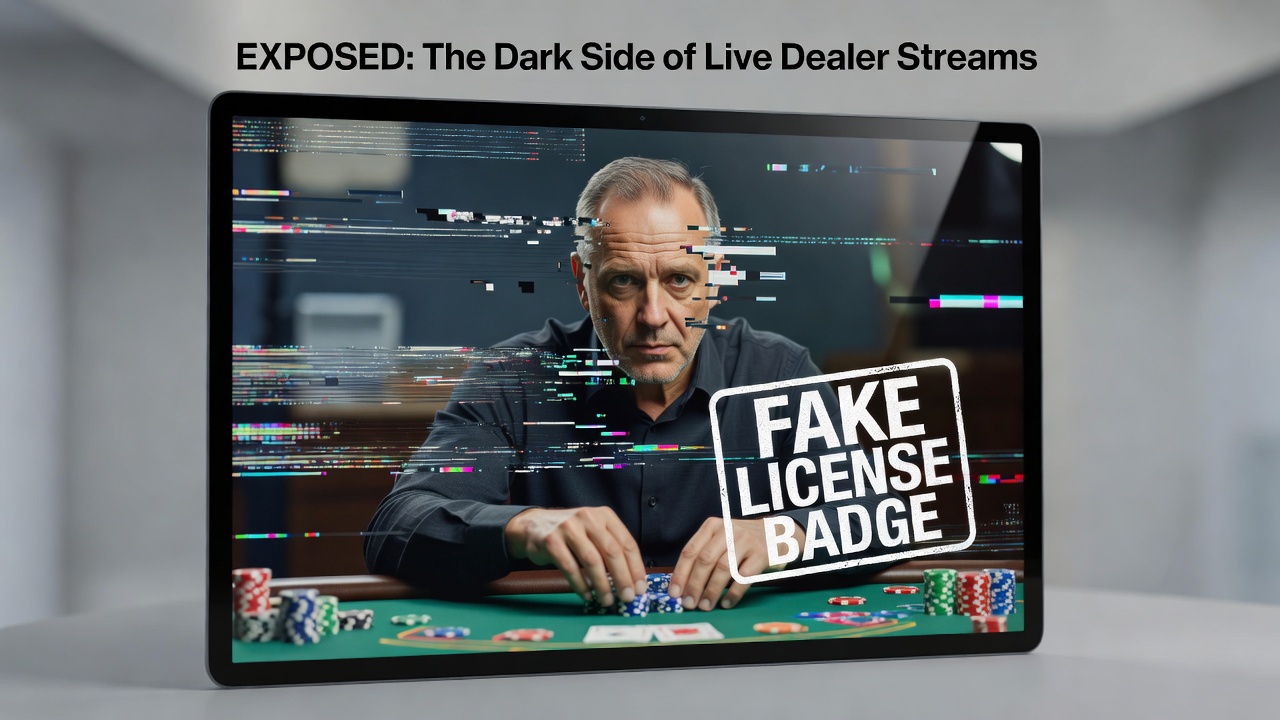
The first red flag for a player in Manchester, in the spring of 2021, was that the dealer never blinked. Not once, across four hands of blackjack. He watched her carefully. Her mouth moved. Her hand moved. Her eyes did not. Eventually, he realized why. He was not watching a dealer at all. He was watching a looped video clip, played back with a fake RNG result overlaid on top.
He lost four hundred pounds before the deposit address on the site stopped accepting funds and the chat support went dark.
Fraudulent live dealer platforms are not as common as the doom-scroll would suggest. Most real operators license their live content from one of a handful of studio providers: Evolution Gaming, Playtech Live, Pragmatic Play Live, Ezugi, or Authentic Gaming. These studios run physical rooms in Riga, Bucharest, Manila, and half a dozen other cities, with real dealers, real cards, real wheels, and heavy regulation. A fraudulent platform either spoofs a feed from one of these studios, or builds its own fake studio and hopes players do not look too closely.
The tells, once you know what to look for, are consistent.
What the evidence shows
The first tell is the studio identifier. A legitimate Evolution Gaming blackjack table shows a small logo in the corner of the feed, along with a table name and number. A Pragmatic Play table has its own logo, table ID, and dealer name card visible on-screen. If you open the game and see no studio branding, or a generic logo that does not match any established provider, stop. Real operators do not strip studio branding, because their licensing agreements require them to display it.
The second tell is the dealer's behavior. Dealers at Evolution and Pragmatic studios work in shifts. They greet the table by name. They reference the chat. They read out the usernames of big bettors. They handle interruptions, dropped connections, and angry players with the weary patience of someone on a nine-hour shift. A dealer who never acknowledges chat, never changes posture, and repeats the same phrases in the same intonation is probably not a dealer. She might be a video clip, or a looped recording from a real table, with fake outcomes dubbed over.
The third tell is the game result itself. Real live dealer games show every card, every wheel spin, every dice roll in full view. A roulette ball drops into a numbered pocket while the camera holds on the wheel for several seconds after the result. A blackjack shoe is visible, the cut card is visible, the cards are dealt face up on the felt. A fraudulent stream will often cut away at the critical moment. The dealer turns her back. The camera angle shifts. The outcome is announced over the feed rather than shown. If you cannot physically see the card, the ball, or the hand that determined your win or loss, you are not watching a real game.
The fourth tell is the licensing. Every real live casino operator publishes a license number in its footer. Most are licensed by the Malta Gaming Authority, the UK Gambling Commission, the Isle of Man, Gibraltar, Curacao, or one of the state regulators in the United States or Canada. You can verify these licenses on the regulator's website. Enter the license number. If the operator does not appear, or appears as suspended or revoked, the site is either fraudulent or operating illegally. Fraudulent platforms often display a real license number that belongs to a different, legitimate operator, hoping you will not check.
What it changed
The fifth tell is the deposit and withdrawal process. Legitimate operators process withdrawals through regulated payment processors. They ask for KYC documents before a first withdrawal. They have a publicly listed physical address. Fraudulent platforms frequently accept deposits only in cryptocurrency, with no KYC step, and then delay withdrawals indefinitely while inventing new reasons for the hold. The Manchester player learned this the hard way. His deposit went through in minutes. His withdrawal request was met with a request for a notarized passport copy, then a utility bill, then a video of himself holding the passport, then silence.
The sixth tell is social. Real live dealer platforms have an active chat window populated by dozens of real players. You can watch the usernames scroll. The dealer responds to them. Fraudulent platforms sometimes simulate chat with bots, which produces an eerie rhythm. The same phrases. The same question patterns. The same celebratory replies every time the house wins. If the chat feels like a Greek chorus rather than a room full of strangers, it probably is one.
Finally, the seventh tell is the offer. Real operators advertise welcome bonuses in the 100 percent to 200 percent range, with wagering requirements clearly stated and withdrawal conditions explicit. Fraudulent platforms advertise welcome bonuses in the 500 percent to 1000 percent range, with terms buried or absent. A 1000 percent welcome bonus is not a bonus. It is a hook.
The Manchester player filed a complaint with the UK Gambling Commission, which investigated and found that the site had been operating without a license, using a stolen logo from a well-known regulated brand. The operator was based, as best investigators could trace, in a flat in Limassol. The four hundred pounds was never recovered.
What the case tells us is small and obvious. If you cannot see the card, the dealer is not blinking, and the license number does not check out, you are not at a casino. You are at a film set. And the film has already been made.