
How to Handicap MMA Fights by Style Matchups
MMA style matchups are where betting markets routinely price things incorrectly because the public overweights recent form and underweights grappling vs striking distinctions. Here is what the data actually says.
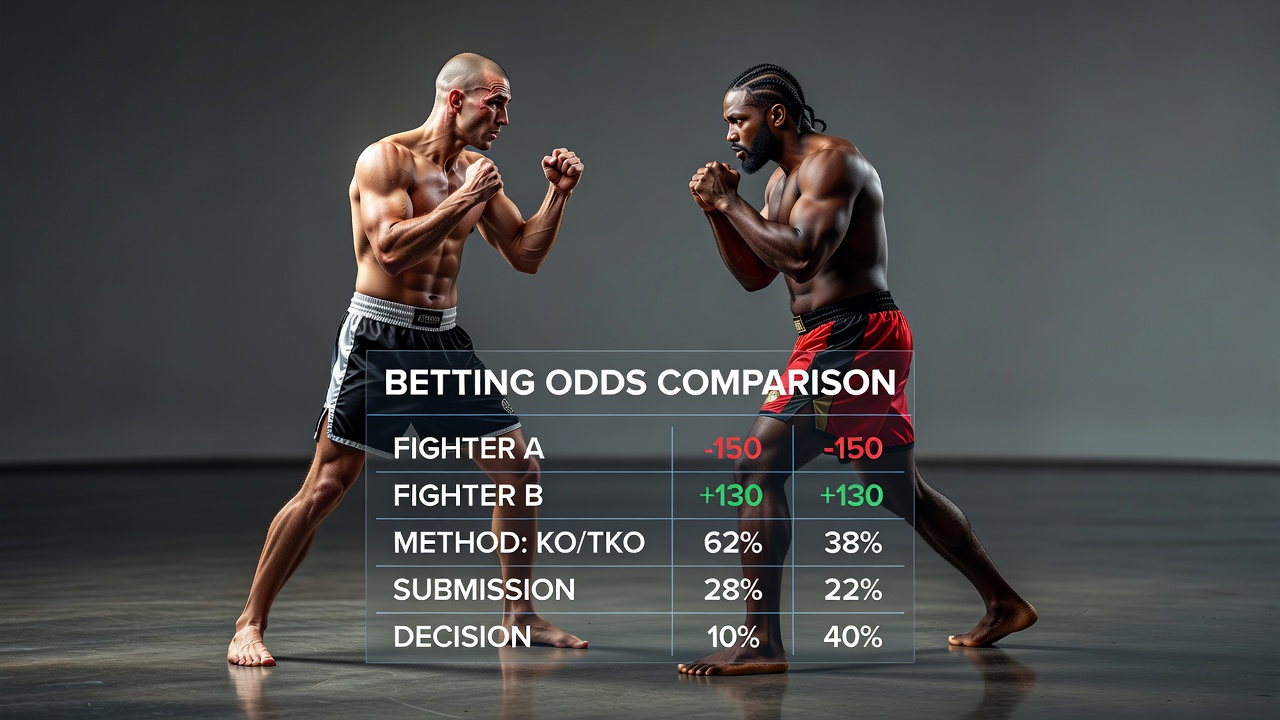
MMA is the sport where public bettors most consistently mispricing the market, and style matchups are the specific edge where a halfway-disciplined bettor can find actual value. The UFC media ecosystem is heavy on narrative and light on structural analysis, which leaves gaps in the lines.
Let me go through the usual claims.
Claim 1: Wrestlers Always Beat Strikers
The claim: In an MMA fight, a wrestler will always take down a striker and win on top control. The style matchup heavily favors grapplers.
Reality: Wrestlers beat strikers more often than strikers beat wrestlers, statistically. But "always" is wildly wrong. The FightMetric and UFCStats datasets show that takedown defense rates vary hugely among fighters. A striker with 80 percent takedown defense against a wrestler with a 35 percent takedown success rate is in decent shape. Israel Adesanya is the obvious counter-example at the high-profile end. The actual pattern is wrestlers beat undisciplined strikers. Disciplined strikers with good takedown defense beat wrestlers about as often as the reverse.
Claim 2: Southpaws Have a Structural Advantage
The claim: Left-handed fighters beat orthodox opponents more often because of the stance mismatch.
Reality: Study on UFC data going back years puts the southpaw win rate edge at approximately 2 to 5 percentage points over orthodox fighters, depending on how you control for the sample. The edge is real but small. More importantly, the edge shrinks significantly against experienced opponents who have fought southpaws before. Markets sometimes overprice the southpaw edge for novelty fighters and underprice it for specific veteran southpaws. The effect exists. It is not as big as the narrative makes it.
Claim 3: Jiu-Jitsu Specialists Struggle With Striking
The claim: Pure BJJ fighters lose to well-rounded MMA fighters because modern MMA requires striking.
Reality: This has been true since roughly 2005. The era of Royce Gracie-style pure grappler dominance is over. But the relevant question for betting is not whether the pure grappler wins. It is whether the market is correctly pricing the decline of pure grappler EV. In most cases, yes. But certain weight classes, particularly women's strawweight and flyweight, still have thin striker pools and the jiu-jitsu adjacent fighters perform better than their skill profile suggests. Claim is directionally correct, market-effect is variable.
Claim 4: Reach Advantage Matters Enormously
The claim: A fighter with a five-inch reach advantage has a significant structural edge.
Reality: Reach matters in striking exchanges but reach alone does not win fights. A fighter with reach who can use it (Jon Jones, early Khabib Nurmagomedov's clinches notwithstanding) has an advantage. A fighter with reach who cannot maintain distance (some heavyweights) does not. Markets often over-weight raw tale-of-the-tape reach numbers. The actual EV is in whether a fighter's fighting style uses reach effectively, which requires watching tape rather than reading stats.
Claim 5: Cardio Is the Deciding Factor in Three-Round Fights
The claim: Most MMA fights come down to cardio in the third round. Fighters who gas lose to fighters who do not.
Reality: Cardio matters in five-round fights more than three-round fights. In three-round bouts, the finish rate in round 1 is high enough that cardio often does not come into play. Market inefficiency here: bettors systematically overprice cardio edge in three-round fights and underprice striking output in rounds 1 and 2. Fighters who are explosive early and fade are undervalued as early finishers and overvalued as third-round losers.
Claim 6: Weight Cut Impact Is Underpriced
The claim: Fighters who miss weight or visibly struggle with their cut perform worse than the line suggests.
Reality: This is one of the reliable structural edges in MMA betting. Missed-weight fighters have a documented win rate decrement of roughly 5 to 8 percentage points relative to expectation. Weight cut struggles are often reported in the hours before the fight via MMA journalists on social media. Markets update but not fully. Bettors who track weight cut news can get 10 to 20 cents of moneyline value on the opponent in specific cases. This is the most consistently exploitable MMA betting edge in my experience.
Claim 7: Age Matters But Not How You Think
The claim: Older fighters decline predictably after age 35.
Reality: The MMA age curve is messy because fighters peak at different ages depending on their style. Wrestlers often peak earlier (late 20s) because of joint wear. Strikers can compete at a high level into their late 30s (Glover Teixeira won a title at 42). The generic age decline model is wrong often enough that market bets based on "he is old, fade him" are approximately break-even. Fighter-specific decline analysis requires watching tape, not consulting birthdate.
Claim 8: Camp Changes Are Mostly Noise
The claim: A fighter switching training camps to a famous gym is a reliable edge signal.
Reality: Camp changes correlate with short-term performance boosts in some cases and declines in others, depending on why the switch happened. A fighter leaving a bad camp for a better one: usually a boost. A fighter leaving a good camp mid-career under murky circumstances: usually a decline. The pattern is context-sensitive. Generic "he just joined American Top Team" reasoning is not a real edge. Specific analysis of why the change happened and what it means for the fighter's technical development might be.
The MMA market is inefficient because the sport is inefficient. The evidence base for style matchups is smaller than for most major sports, and bettors who look past narrative find edges that would be long gone in NFL or NBA markets.
The actionable version of this: track weight cuts obsessively, read camp-change context rather than headlines, and be skeptical of any claim about style matchups that does not include specific takedown defense and landed-strikes-per-minute numbers.