
How Racetrack Roulette Layouts Work
The racetrack layout on a roulette table looks wild if you have never seen it. Actually, it is one of the cleanest UI designs in all of casino gaming. Here is what every section does and why it is there.
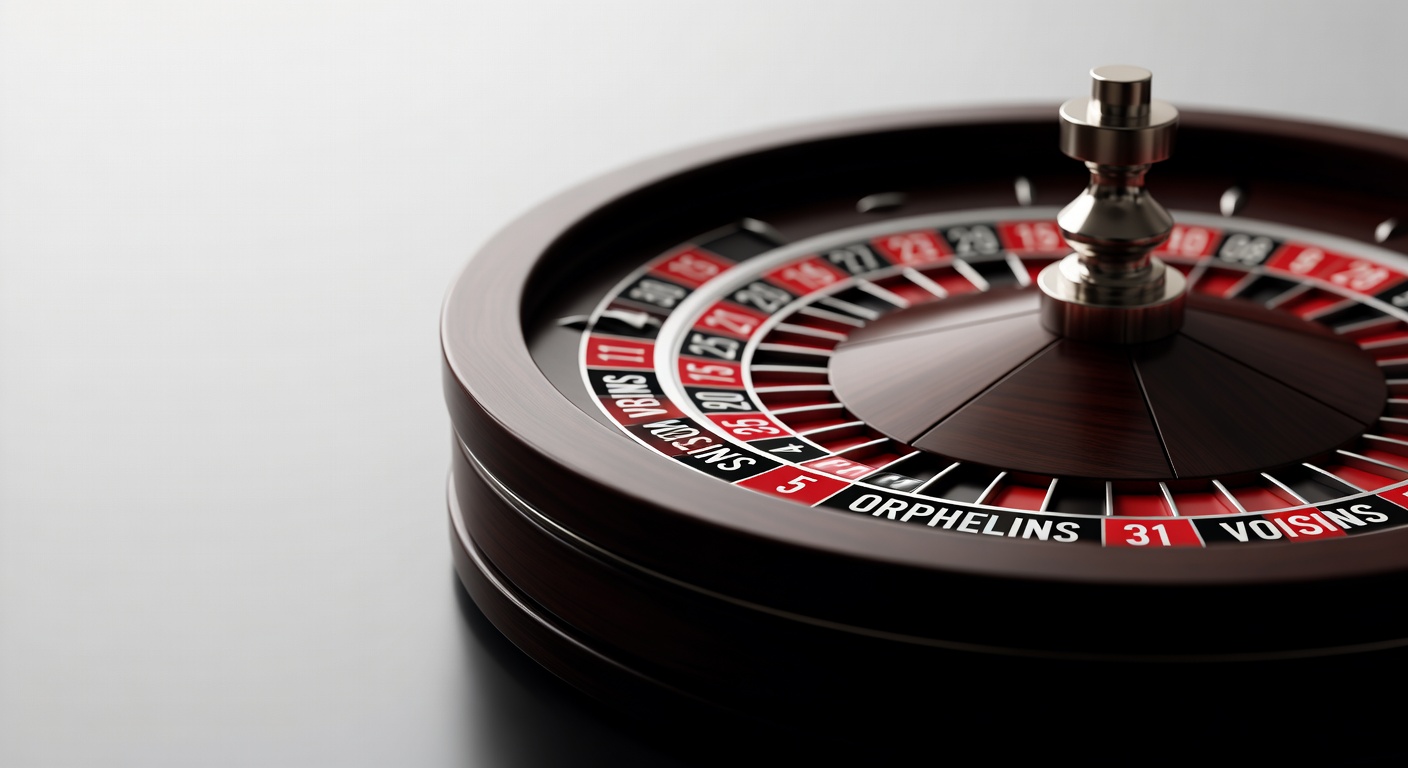
So you pull up a European roulette table online and you see that weird oval thing next to the number grid. That is the racetrack. And it is actually amazing.
It lets you place bets that would take twelve clicks on the regular layout. One click. Done.
Here is what every part of the racetrack is actually doing.
1. Voisins du Zero
This is the big one. Voisins du Zero means neighbours of zero in French. It covers 17 numbers on the wheel: 22, 18, 29, 7, 28, 12, 35, 3, 26, 0, 32, 15, 19, 4, 21, 2, and 25.
All of those are on the zero side of the wheel. Click that section of the racetrack once and you have nine chips placed. The standard version takes nine chips to cover it, and the payouts vary by where the ball actually lands.
Huge coverage, relatively high cost. Classic European roulette move.
2. Tiers du Cylindre
Third of the wheel. This covers 27, 13, 36, 11, 30, 8, 23, 10, 5, 24, 16, and 33. Twelve numbers, directly opposite the zero on the wheel layout.
Six chips places the full bet. Each chip covers a split, which pays 17 to 1 if it hits.
This is the one serious players love. Balanced coverage, clean math, no weird edge cases. You are basically betting that the ball lands in the quietest third of the wheel.
3. Orphelins
The orphans. These are the numbers left over after Voisins and Tiers take their slices: 17, 34, 6, 1, 20, 14, 9, 31, and also 17 and 34 again because those get a split.
Five chips covers it. One straight-up on 1, and four splits. Looks fiddly but actually works pretty clean at the table.
Orphelins is weirdly underrated. It covers the wheel sections nobody else is betting and the payouts stack up fast when it hits.
4. Jeu Zero
This is Voisins du Zero's smaller, meaner cousin. Covers just seven numbers: 12, 35, 3, 26, 0, 32, and 15.
Four chips places the bet. Three splits and a straight-up on the 26.
It is a tighter zero-area play. German casinos use this one a lot. You get better returns when it hits because you are covering less wheel real estate.
5. Neighbours Bets
This is the actually-crazy feature. On the racetrack, you can click any single number and the software automatically places a chip on that number plus the two numbers on either side of it on the wheel.
So clicking 17 places bets on 6, 34, 17, 25, and 2. Five chips total, five numbers covered, and they are literally the neighbours on the physical wheel.
You can usually adjust how many neighbours deep you want to go. Two on each side, three on each side. It scales.
6. Finale Bets
Not technically a racetrack feature on every client, but it lives near it. A finale bet covers every number ending in the same digit. Finale 5 is 5, 15, 25, 35. Four chips, four numbers, same last digit.
Some clients put this on the racetrack, some tuck it in the side menu. Either way, it is a shortcut for a pattern you would manually build otherwise.
7. Why the Racetrack Exists at All
Call bets. That is the short version.
In a physical casino, Voisins du Zero is literally called out to the dealer. "Voisins, ten each." The dealer then places the chips. The racetrack is the UI translation of that tradition into the digital product. Same bets, same payouts, same French names, no dealer required.
It is one of the few parts of casino software that feels actually designed for the player rather than designed against them. Clean, fast, and it teaches you the wheel geography whether you notice it or not.
8. What It Does Not Do
The racetrack does not change the house edge. At all.
2.7 percent on single-zero European, 5.26 percent on double-zero American, same as placing chips by hand. The racetrack is a convenience feature, not a strategy feature. Any site telling you a racetrack bet has better odds is selling you something.
Still an absolutely nuts piece of UI though.