
How HTML5 Transformed Mobile Slot Design
Flash died in 2020. HTML5 replaced it. For mobile slots, the transition was more consequential than the timing of Adobe's end-of-life announcement suggests. A look at the technical and commercial shift from Flash to HTML5 and what it meant for the slot market.
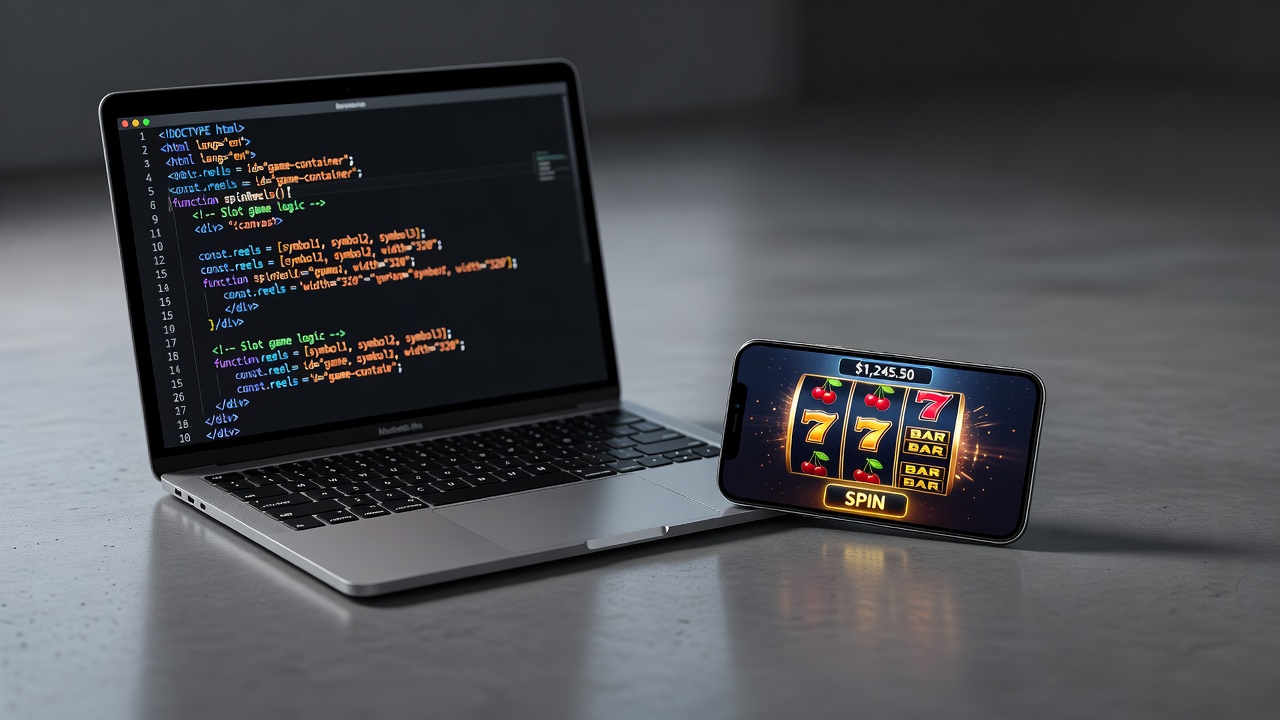
On December 31, 2020, Adobe formally ended support for Flash Player. Browsers blocked it. Millions of online slot games, written in Flash, stopped loading. Operators had known the deadline was coming since Adobe announced it in July 2017, giving the industry over three years to migrate. Most major operators made the deadline. A portion of the back catalog did not.
The shift from Flash to HTML5 was not simply a technology replacement. It produced specific, measurable changes in mobile slot design, operator economics, and player behavior. A close look at what changed produces a useful map of how the industry actually works in 2024.
What Flash slots were
Adobe Flash, originally a Macromedia product, was the dominant platform for online casino games from approximately 2002 through the late 2010s. A Flash slot was a compiled SWF file that ran in the Flash Player plugin inside a web browser. The file contained the graphics, the reel logic, the sound, and the animation.
Flash slots worked on desktops. They did not work on iPhones, ever. Apple, under Steve Jobs, rejected Flash support on iOS when the iPhone launched in 2007, citing performance and security concerns. Jobs's 2010 open letter Thoughts on Flash made the corporate position explicit.
This was a commercial problem for operators. By 2012, mobile browsing accounted for roughly 20 percent of online casino sessions; by 2018, over 60 percent. An operator whose games were Flash-only was serving a shrinking share of its potential traffic.
The NetEnt Touch catalog, an early HTML5 push
NetEnt, the Swedish slot maker, launched NetEnt Touch in 2011, a mobile-specific catalog built on HTML5. Starburst, released in November 2012, was the flagship title of the Touch catalog. The game became the single most widely deployed online slot in the UK and Scandinavian markets through the 2010s.
The significance of Starburst was partly design and partly timing. Its low volatility and simple mechanics matched what mobile play rewarded. Its HTML5 implementation meant it ran on iPhones from launch. For operators, integrating Starburst was both a mobile revenue play and a way to signal that the site was genuinely mobile-first.
Play'n GO, Pragmatic Play, and other studios followed. By 2015, virtually all new slot releases were HTML5-first. Flash releases continued for a few years alongside, but the priority had shifted.
The Microgaming Quickfire conversion program
Microgaming, one of the largest and oldest slot providers, had a deep Flash back catalog. The company ran a conversion program from 2015 through 2020 to migrate popular Flash titles to HTML5. Mega Moolah, Thunderstruck II, and Immortal Romance received dedicated conversions. Less popular titles did not.
The conversion was not a simple recompilation. Flash games relied on specific vector graphics rendering and timing behaviors that HTML5 implementations had to approximate rather than replicate. The conversions produced games that looked and played similarly but were not identical.
Some older titles were deemed uneconomic to convert and were dropped from the catalog. Operators that had featured those games on their sites had to remove them or accept that they would stop functioning on post-2020 browsers.
The technical differences that mattered
HTML5 slots differ from Flash slots in several ways that affect design.
Rendering uses Canvas or WebGL rather than Flash's vector engine. This produces sharper graphics at variable resolution but requires more careful optimization for lower-end mobile devices.
Physics and animation are handled through JavaScript rather than ActionScript. Most HTML5 slots use game engines such as PixiJS or Phaser. The code base is portable across browsers and platforms.
Audio is handled through the Web Audio API, which imposes specific constraints on when audio can play. iOS requires user interaction before any sound plays, which forced slot designers to include an explicit audio-on tap on first load.
Network delivery is through progressive loading. A well-built HTML5 slot loads the base game first and streams additional assets for bonus rounds in the background. Flash slots loaded the entire SWF before play started, which produced longer initial waits on slower connections.
What changed for the player
The player-facing changes were meaningful.
Mobile became the primary platform. By 2022, operator disclosures typically placed mobile sessions at 70 to 80 percent of total slot sessions. The design of games, including the size of buttons, the layout of the reels, and the pacing of bonus rounds, shifted to match portrait-orientation mobile play.
Landscape-only games largely disappeared. A 2014-era slot designed for desktop-only might have used a wide landscape layout that did not translate to portrait mobile. 2020-era HTML5 slots are designed for portrait as the default and landscape as a secondary orientation.
Feature buys, also called bonus buys, emerged as a mobile-first design pattern. The ability to pay a multiple of the stake to trigger the bonus round immediately became common in HTML5 slots released from 2018 onward. Big Bass Bonanza, released by Reel Kingdom through Pragmatic Play in 2020, popularized the mechanic.
Spin speed increased. Mobile HTML5 slots can spin faster than Flash slots could reliably support on older hardware. Many titles offered quick spin or turbo spin modes that compressed reel animation time to under a second. The UKGC ultimately restricted these modes in 2021 by setting a minimum spin time of 2.5 seconds for UK-licensed slots.
Commercial effects on studios and operators
HTML5 lowered the barrier to entry for new slot studios. Building a Flash slot required proprietary tooling and a Flash-experienced development team. Building an HTML5 slot requires JavaScript and a game engine, skills present in the broader mobile game development market.
The number of new studios releasing to the regulated market grew. In 2012 the largest operators integrated perhaps 10 to 15 content providers each. By 2023, operators like Stake and Roobet integrated content from over 100 providers. The slot catalog on a major site grew from a few hundred titles to several thousand.
For operators, the operational burden of managing that catalog shifted to content aggregators. Companies such as Relax Gaming, Games Global, and SoftSwiss operate as middleware, providing a single integration point through which operators can access dozens of content providers. The aggregator model depended on HTML5's portability; Flash integrations had been one-by-one.
Regulatory compliance and HTML5
The shift to HTML5 coincided with stricter regulatory requirements for slot design. The UK, under the 2021 slots design rules, required specific features that had to be built into the game client.
Among them: a minimum spin time of 2.5 seconds, a prohibition on auto-play, display of the running net session result at all times, and a prohibition on audio cues for losses disguised as wins. These requirements are code-level, implemented by the slot studio. HTML5 made them straightforward to implement and update; Flash would have required recompilation of every affected SWF file, which was already a deprecated path.
Germany's stricter rules under the 2021 State Treaty on Gambling imposed similar constraints: 1 euro maximum stake, 5-second minimum spin time, mandatory cooldown between game switches. Studios serving the German market built dedicated German variants of each game, configured through the HTML5 client.
The remaining Flash content
Not all Flash content was converted. Some back-catalog titles were simply retired. An operator that had featured a 2008 Flash slot on its site, with modest ongoing revenue, typically removed it rather than fund a conversion.
A small industry of emulation-based preservation emerged. Ruffle, an open-source Flash emulator written in Rust, allows Flash SWF files to run in modern browsers for museum and archival purposes. Ruffle has not been adopted for live casino operation because its compliance and integrity characteristics are not certified by the gaming testing labs such as GLI or eCOGRA.
The practical effect is that the Flash era of slot design is, for a regulated online casino player, mostly gone. A few titles survive in converted HTML5 form. The rest exist only in archives.
What the shift actually produced
For a player in 2024, the practical consequences of the HTML5 transition are visible in almost every slot session:
- Games load quickly and run on whatever device the player happens to be using.
- New releases are common because the cost of producing them is lower than it was.
- Design features like feature buys, cluster pays, and Megaways mechanics are widely available across providers.
- Regulatory compliance features are consistent across operators because the requirements are built into the game clients.
- Spin speeds and session pacing differ by jurisdiction, reflecting local regulatory choices.
The technology shift produced an industry that is larger, faster, and more mobile-first than the Flash era could support. The player experience has changed in specific, measurable ways. The 2020 deadline was the inflection point that finished a transition that had been underway since 2012.