
Common Mistakes New Crypto Gamblers Make
Crypto gambling has its own specific failure modes that don't exist at fiat casinos. Here are the most common claims new players believe and what the data actually says.
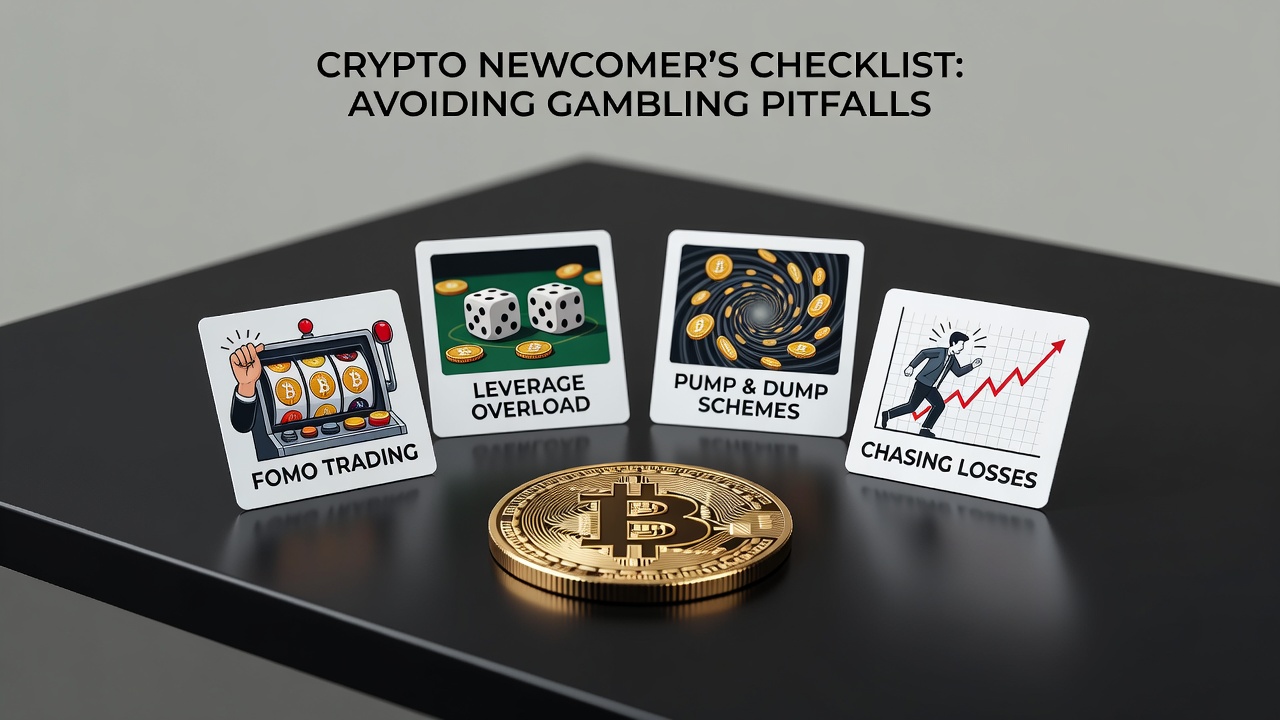
Crypto casinos attract a newer, more technical player base who often believe the product is materially different from fiat gambling in ways that aren't actually true. Let's go through the most common claims and what's actually supported.
Claim: Provably fair means the odds are better
Reality. Provably fair proves the RNG wasn't tampered with after you placed the bet. It does not change the house edge. A provably fair 96% RTP slot is still a 96% RTP slot. You cannot verify your way into positive expected value.
The specific guarantee of provably fair: the casino commits to a server seed before the round, combines it with your client seed plus a nonce, and produces a verifiable output. You can confirm the operator didn't change the server seed after seeing your bet. That's the extent of it. The underlying math is the same.
Players sometimes confuse this with "transparent odds." The house edge of a given game is a separate disclosure that may or may not be published. Many crypto casinos publish it; many do not.
Claim: Crypto casinos don't do KYC
Reality. Most reputable crypto casinos do KYC at or before withdrawal, even if they allow anonymous deposits. The claim "no KYC" is usually marketing that holds until the moment you try to cash out a large sum.
Licensed crypto operators (Curacao, Isle of Man, Gibraltar) are subject to anti-money-laundering requirements that mandate identity verification at certain withdrawal thresholds. Unlicensed operators may have looser practices, but they also have less recourse when your funds are frozen for an unrelated reason.
Data from the Financial Action Task Force (FATF) travel rule, which came into force in 2019 and has been progressively implemented through 2023, specifically targets virtual asset service providers including gambling operators. Expecting a fully anonymous withdrawal of a meaningful sum in 2024 is not realistic on any licensed platform.
Claim: Your crypto is safer in the casino than on an exchange
Reality. Your crypto is safest in a wallet you control. Any custodial service, whether a casino or a centralized exchange, carries counterparty risk. Historical cases:
- CoinGaming (Bitcasino.io parent) had a legal dispute in 2018 that temporarily froze certain funds
- multiple smaller crypto casinos have shut down over the 2018 to 2023 period with outstanding player balances
- exchanges like FTX collapsed in 2022 with billions in customer deposits lost
The pattern is the same: custodial means trust. Don't keep more on a casino than you can afford to walk away from. Deposit, play, withdraw promptly to self-custody.
Claim: Blockchain transparency means the casino can't rug you
Reality. Smart contract casinos that handle bets on-chain do offer meaningful transparency. Most crypto casinos are not this. They accept crypto deposits into a custodial hot wallet, run games off-chain, and only touch the chain on withdrawals.
For these operators, the chain gives you no visibility into their internal ledger. You can see the deposit tx and (eventually) the withdrawal tx. Everything in between is the operator's database. This is functionally identical to a fiat casino with crypto rails, not a "decentralized" gambling product.
The actual decentralized gambling products (on-chain dice or coin-flip smart contracts) exist but are a small fraction of the market. Don't assume the logo of a crypto casino implies smart-contract settlement.
Claim: Bonuses are the same on crypto as fiat
Reality. Crypto casinos often offer structurally better bonus products because their player base tends to scrutinize wagering requirements more. Wager-free bonuses, flat cashback, and lower rollover multipliers are more common on crypto-native operators than fiat ones.
That said, the crypto casino marketing still includes misleading bonus claims. A 300% match up to 5 BTC with 40x wagering is no better than the same offer in dollars. The nominal BTC value doesn't change the math.
Track record from reviewing published T&Cs of the top 20 crypto operators (2023-2024 snapshot): roughly 40% offer some form of wager-free cashback as their primary promo, versus around 10% of fiat operators. That's a meaningful difference, but it doesn't mean every crypto bonus is favorable.
Claim: You can't be banned from a crypto casino
Reality. Operators can and do close accounts, freeze balances, and refuse payouts. The basis varies:
- alleged ToS violations (bonus abuse, collusion)
- AML flags at withdrawal
- geographic restriction (playing from a banned jurisdiction)
- suspected bot play or advantage play
Decentralized protocols that play without an operator are a different case, but those are rare and almost always have lower liquidity and worse pricing than the major custodial operators.
The recourse when a crypto casino freezes your funds is weaker than at a licensed fiat casino, because most crypto licensing regimes (especially Curacao) have historically been lax on dispute arbitration. The gap is narrowing but still real.
Claim: Volatility between bet and withdrawal is hedged somehow
Reality. If you deposit 1 BTC at $60,000 and withdraw it three days later at $55,000, you lost $5,000 to price movement, not to the casino. Most crypto casinos don't denominate bets in dollars internally; they denominate in the token. A 1 mBTC bet is a 1 mBTC bet regardless of what a bitcoin is worth in fiat at the time of settlement.
Stablecoin play (USDT, USDC) removes this variance. If volatility exposure is unwanted, choose stablecoin gameplay. It's not a trick, and most operators offer stablecoin deposits explicitly.
Crypto casinos are still casinos. The chain doesn't change the math. It changes the settlement rails and the KYC timing. Nothing else.
The honest summary
Crypto casinos are not a different class of product from fiat casinos in terms of odds, regulation risk, or bonus economics. They are a different settlement layer. The misconceptions that hurt new players most are confusing provably fair with positive EV, assuming the casino can't freeze funds, and forgetting about price volatility on non-stablecoin play.
The upside is real: faster withdrawals, less KYC friction during play, and on some operators, genuinely better bonus structures. Know what you're actually getting and what you aren't.