
Canadian Provincial Gambling Regulation: A General Overview
A road counter's chronology of how Canada's provinces took control of gambling, from the 1969 Criminal Code change to Ontario's 2022 open market. Dates, statutes, and the practical effect on players.
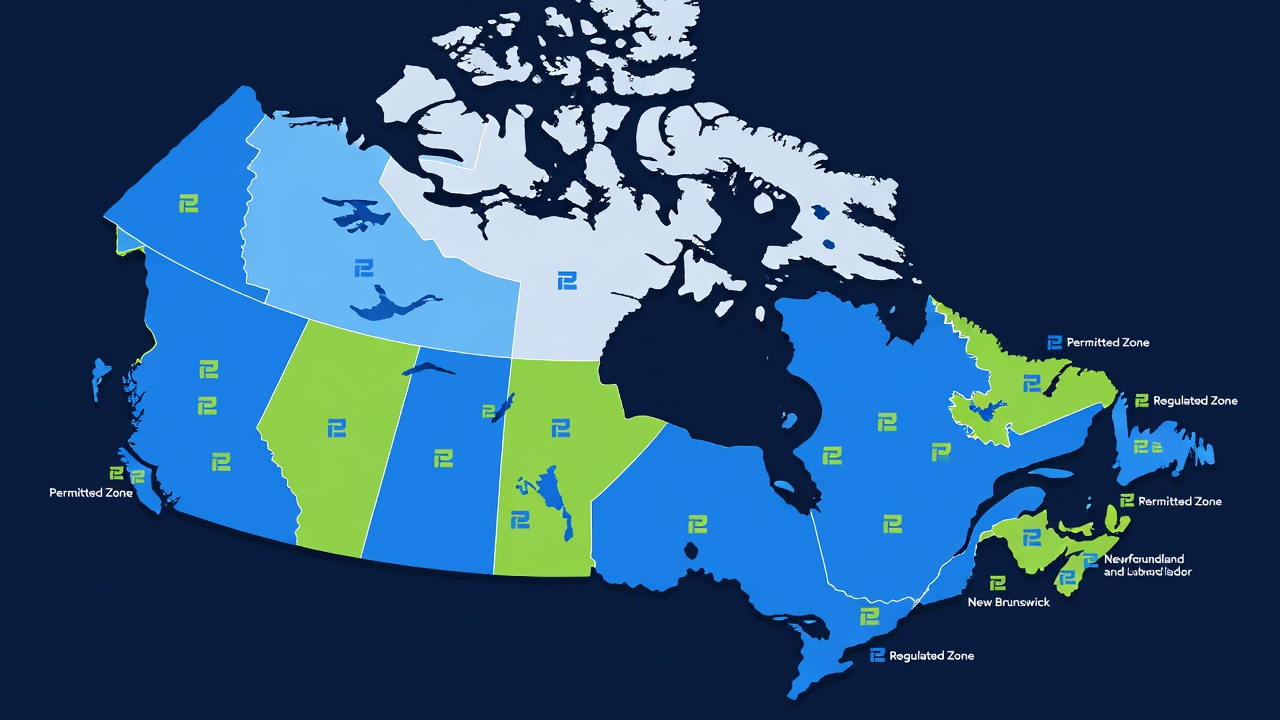
Canada does gambling by province. Always has, more or less.
For a counter working the circuit in the 1990s and 2000s, the Canadian provinces were the other country that mattered. Different rules on every side of every border. Here is how that patchwork actually got built.
1892: The Criminal Code bans almost everything
The first federal Criminal Code of Canada, drafted under Prime Minister John Thompson, prohibited nearly all forms of gambling. Charitable raffles were permitted. Pari-mutuel horse racing was carved out in 1910 under pressure from the racing industry. That was the whole licensed landscape for six decades.
1969: Ottawa hands the keys to the provinces
The big pivot came on 14 June 1969 when Parliament amended the Criminal Code to let provincial governments conduct and manage lotteries. Pierre Trudeau was in office. The federal government wanted to fund the 1976 Montreal Olympics. The provinces wanted revenue. The amendment passed, and gambling in Canada became a provincial file.
1970s: The first provincial lotteries
Quebec moved first. Loto-Quebec was created in 1969, with the first draw held on 14 March 1970. Other provinces followed: the Ontario Lottery Corporation in 1975, the Atlantic Lottery Corporation serving the four eastern provinces from 1976, and the Western Canada Lottery Corporation for the prairie provinces. Each was a Crown corporation answerable to its provincial government.
1985: The provinces take full jurisdiction
On 19 December 1985, a further Criminal Code amendment transferred exclusive authority over slot machines, table games, and lotteries to the provinces, in exchange for annual payments from the provinces to Ottawa. The transfer was negotiated between Finance Minister Michael Wilson and the provincial premiers. From that point, any casino on Canadian soil operated under provincial licence or provincial Crown corporation ownership.
1989-1993: Charity casinos and the first commercial floors
Winnipeg opened the Crystal Casino in 1989, the first permanent casino in Canada. Montreal's Casino de Montreal followed in 1993 on the former French Pavilion of Expo 67. Windsor, Ontario opened Casino Windsor in May 1994, aimed squarely at the Detroit market across the river. These were provincial Crown operations. Ontario Lottery and Gaming Corporation, or OLG, was formed in 2000 to consolidate the provincial role.
1990s: First Nations gaming enters the picture
On the prairies and in Ontario, First Nations bands negotiated their own casino arrangements with the provinces. Casino Rama opened on the Chippewas of Rama First Nation reserve north of Orillia in 1996 under a revenue-sharing agreement with Ontario. Saskatchewan Indian Gaming Authority opened its first casinos in 1996 as well, under a compact with the province. These operations were legal because a province still held the conduct-and-manage authority on paper.
2004: British Columbia goes online
BCLC, the British Columbia Lottery Corporation, launched PlayNow.com in 2004, becoming the first legal online gambling site in North America run by a government. Quebec followed with Espacejeux in 2010. These were monopoly offerings. Provincial residents could play legally only on the provincial site, although in practice many continued to use offshore operators.
2010s: The grey market problem
Throughout the 2010s, offshore sites licensed in Malta, Curacao, and the Kahnawake Mohawk Territory near Montreal served Canadian players without provincial approval. Kahnawake is worth noting. The Mohawk Council of Kahnawake has issued gaming licences since 1999 under its own authority, a position that Quebec has declined to formally recognise but has also declined to prosecute. The result was a large, functioning, semi-legal market.
2021: Bill C-218 legalises single-event sports betting
On 27 August 2021, Bill C-218 received royal assent, repealing the Criminal Code prohibition on single-event sports wagers. Parlays had been permitted since 1985. Single-game betting had not. The change was driven by competition from US states post-PASPA and lobbying from the provinces. Ontario, Alberta, and others rolled out single-event wagers through their provincial operators almost immediately.
4 April 2022: Ontario opens the first competitive market
Ontario became the first Canadian jurisdiction to license private online gambling operators. iGaming Ontario, a subsidiary of the Alcohol and Gaming Commission of Ontario, began registering operators in late 2021. The regulated market went live on 4 April 2022. Dozens of operators are now licensed, including international brands that previously served Ontarians from offshore. Other provinces have watched closely. Alberta has signalled a similar open model for 2025 or 2026.
The present: ten different regimes
- British Columbia: BCLC monopoly online, land-based casinos regulated by the Gaming Policy and Enforcement Branch
- Alberta: AGLC monopoly, private casino operations under licence, open iGaming market in development
- Saskatchewan: SIGA on First Nations land, SaskGaming for government casinos, online through PlayNow
- Manitoba: Manitoba Liquor and Lotteries, single online platform
- Ontario: open competitive iGaming market, OLG for land-based and lottery
- Quebec: Loto-Quebec monopoly, Kahnawake licensing First Nations operators separately
- Atlantic provinces: ALC for lotteries, individual provincial corporations for casinos
- Yukon, Northwest Territories, Nunavut: limited offerings through ALC or similar
A player crossing from Ontario into Quebec changes jurisdictions, operators, tax treatment, and rules. A counter driving from Windsor to Montreal in one day used to cross three regulatory lines before stopping for coffee.
What it means in practice
For the player, provincial regulation decides who you can legally bet with, how quickly withdrawals clear, what responsible gambling tools are offered, and whether winnings are taxable. In most provinces, gambling winnings by a casual player are not taxed, a carryover from common law. Professional gamblers can be taxed as self-employed. CRA guidance on this has shifted, and the line between casual and professional is argued case by case.
For the operator, it decides everything. Licensing fees, technical standards, advertising rules, self-exclusion integration, payment processing, game approvals. Every province runs its own regime, and compliance is a province-by-province job.
The 1969 amendment was supposed to give the provinces a modest revenue stream. Fifty-six years later, the Ontario market alone is projected to settle above seven billion Canadian dollars a year in gross gaming revenue.
The short version: federal Criminal Code still prohibits, provinces still conduct, First Nations still negotiate, and the internet still complicates everything. That is the Canadian system, for now.