
A Look Inside How Live Casino Studios Are Built
The rooms are smaller than you think. The cameras are more numerous than you think. Here is what a reader might want to know about the places the stream comes from, answered without marketing gloss.
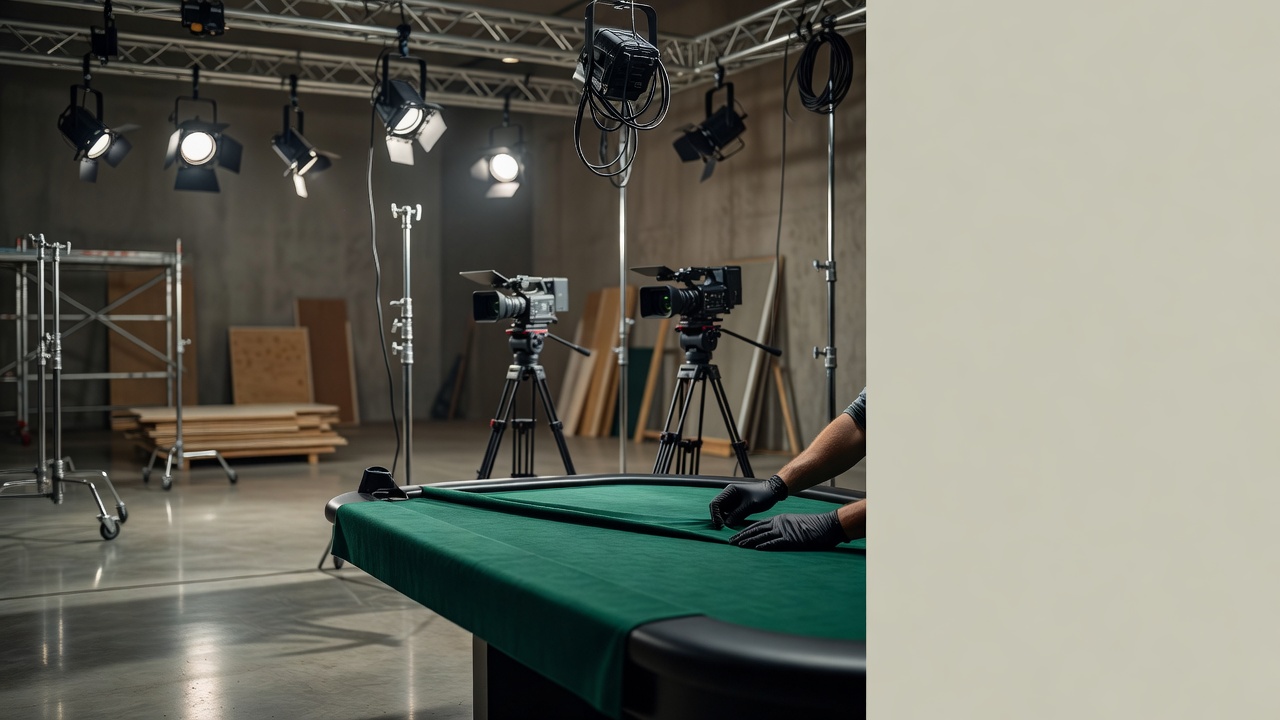
I went on a tour of a live dealer studio in Riga, Latvia, in 2019, on a sober trip I took to visit a friend who worked in payments. The tour was not promotional; my friend knew the floor manager and I got waved through. I want to describe what I saw, in answer to the questions readers might actually ask about how these studios work.
How big is the studio?
Smaller than a mid-sized TV newsroom. The Riga facility I saw had perhaps 120 tables spread across two floors of a converted industrial building. Each table occupies a station of maybe 8 by 10 feet including the dealer's workspace, the camera array, and the shuffle machine. Nothing about it looked like a casino. It looked like a broadcast operation.
How many cameras are at a single table?
Usually three to five. One wide shot, one focused on the cards, one on the wheel or the table center, and one or two adjustable angles for close-ups of specific actions. The cameras are connected to a control room that selects feeds and overlays graphics onto the output stream.
Who is in the control room?
Video directors, technical operators, and pit managers. A pit manager supervises a cluster of tables, responsible for resolving disputes and triggering replays. Video directors make the live cuts between camera angles. Technical operators monitor the encoders and the stream uplinks. The staffing ratio at the facility I toured was roughly one pit manager to 12 tables, one video director to 8 tables.
How is the dealer trained?
Dealers go through four to six weeks of training in a dedicated room before hitting a live table. Training covers card handling, chip placement, shuffle technique, wheel spin for roulette, and an extensive language module. Evolution dealers I met spoke varying combinations of English, Spanish, Italian, German, Russian, and Mandarin. The language assignment determines which market's feed the dealer appears on.
Are the dealers paid well?
By Latvian standards, yes. Starting dealers at the facility I visited earned roughly three times the local median wage. Experienced dealers on high-limit tables earned substantially more. Tips from players are pooled in many studios and distributed by shift. Contracts include non-compete clauses that prevent dealers from moving to competitor studios within a specific radius and time window.
Is the table being played at a real location?
Yes. There is a real wheel, real cards, real chips. The wheel spins with real momentum. The cards are dealt from a real shoe with real shuffle cycles. The only things that are not physical are the chips you place; those are digital, mapped to the dealer's screen so they know who bet what.
Who watches the dealer during play?
The pit manager watches multiple tables at once on a video wall. A separate surveillance function monitors dealer procedure for compliance. If a dealer deviates from the mandatory script (exposing a card too early, mis-paying a bet), the pit manager can interrupt the table and call a replay.
How does the audio work?
Dealers wear concealed microphones. Player voices are not transmitted; chat is text-only from the player side. The dealer responds to text messages verbally. Background ambient sound at the studio is added deliberately to the audio mix to create a casino feel, but the actual room is quite quiet.
Why are some tables branded for specific casinos?
Operators can purchase dedicated tables that display their brand on the felt and in the overlay graphics. These tables are fed only to that operator's players. The studio is the same, the staff are the same, only the branding layer differs. A smaller operator might share tables with other clients of the studio.
Can the dealer see the player?
No. The dealer sees a screen with table status, chip placements, and chat messages. Usernames appear when a player chats. The dealer does not see any video of the player, which is a one-way arrangement.
Does the studio ever go offline?
Occasionally, yes. Technical failures happen. The facility I toured had redundant power supply and redundant internet uplinks, but I was told there had been two or three outages per year lasting more than ten minutes. When a table goes offline, open bets are typically voided and returned to players. Longer outages sometimes trigger a failover to a backup studio.
What happens if a dealer makes a mistake?
The pit manager calls a pause, reviews the footage, and makes a ruling. If the dealer mis-paid a bet or exposed a card, the hand is usually voided. Players' stakes are returned. The dealer may be rotated off the table for retraining if the mistake is serious. Small errors happen more often than players realize; major errors are rare enough to be newsworthy on poker forums when they do happen.
Is the stream encrypted?
The stream delivery uses standard HTTPS encryption and is served through content delivery networks. The platform layer handling bets is tightly encrypted under the operator's security stack. The studio facility itself is physically secured, badge-access, with CCTV covering every corridor and surveillance covering every table from multiple angles.
I left that tour feeling strange. I had expected a casino. What I saw was a television production, executed well, with live card deals inside a studio that could have been producing financial news. The fact of it being so industrial was what stuck. I had spent years feeling like I was in a room with a dealer. I had always been watching a broadcast.